Don't worry! The contents here will appear on the published page.
What Is Financial Reporting? A CFO’s Guide

Woosung Chun
CFO
Woosung Chun
CFO
Woosung Chun is the CFO of DualEntry with experience in corporate finance, accounting, strategy, and acquisitions. He previously grew from scratch and led the M&A and Finance teams at Benitago, where he completed more than 12 acquisitions in 2 years. He graduated with a BS from NYU Stern. At DualEntry, Woosung writes about AI in accounting, revenue recognition, foreign currency accounting, hedge accounting, and ERP modernization for finance teams navigating complex, multi-entity environments.
Learn about our editorial policies.
Last updated
October 9, 2026
Reviewed by
Do San (Justin) Myung

Do San (Justin) Myung
Expert Accountant & Former Consulting CFO
Justin (Do San Myung) is Expert Accountant at DualEntry with 20+ years of hands-on experience managing general ledgers, financial close processes, and ERP implementations for mid-market and enterprise companies. As a former Consulting CFO and Controller, he has personally overseen month-end closes, SOX compliance programs, and multi-entity consolidations across technology, manufacturing, and services industries. Justin specializes in transforming manual accounting workflows into automated, AI-driven processes.
Learn about our editorial policies.

Summarize this article
Every number a business reports starts as a messy pile of transactions. Financial reporting is how that pile becomes something people can actually read and trust.
Those reports are what investors use to decide whether to back a company, what lenders check before funding it [1], and what a board reads to judge whether the plan is working. When they come late or wrong, every decision built on them does too.
This guide covers what financial reporting is, the two kinds every company deals with, the reports themselves, who has to produce them, and how they actually get made.
What is financial reporting?
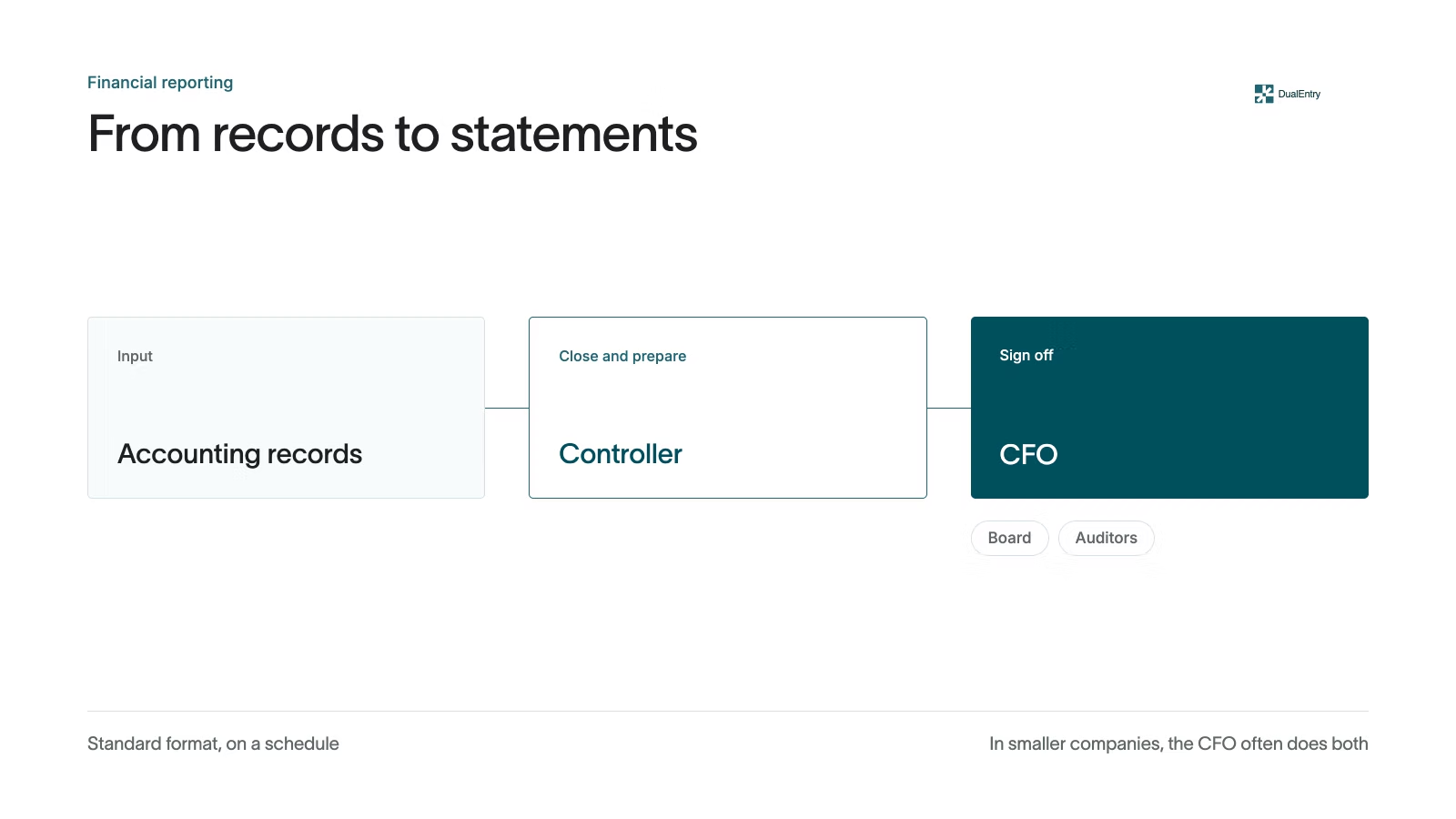
Financial reporting is the process of turning a company's accounting records into formal statements that people use to understand how the business is doing.
Those statements summarize the company's performance and position over a period, in a standard format that outsiders and insiders can both read.
In most companies the controller and their team do the actual work, closing the books and preparing the statements, while the chief financial officer (CFO) signs off and answers for the result to the board and the auditors [2]
In a smaller company without a controller, the CFO often handles both. Either way, the output is the same, a reliable picture of the business, produced on a schedule, that someone is on the hook for.
What financial reporting is for
Finance reporting exists to answer questions for the people who rely on the business:
- Investors and owners want to know whether the company is growing and worth backing.
- Lenders and creditors want to know whether it can pay what it owes [1].
- Management wants to know what's working and what needs fixing, in time to act on it.
- Regulators and tax authorities want to know that the numbers follow the rules.
The same underlying data serves all of them, but the reason each one reads it is different.
Benefits of financial reporting
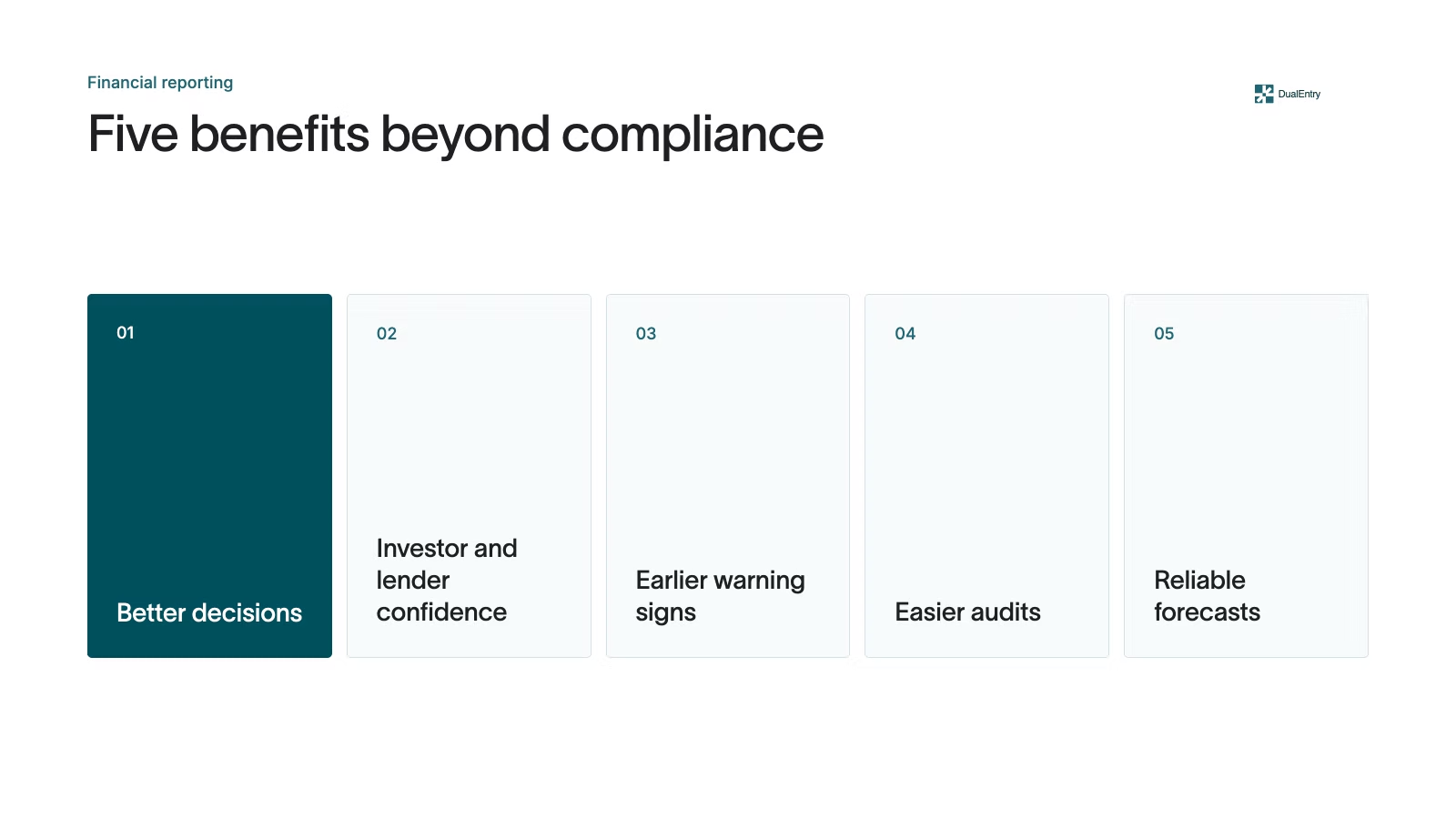
Good financial reporting does more than satisfy a filing requirement. Here are some of the other ways it helps a business:
Better decision-making
Reliable financial reports give management a clearer view of revenue, costs, margins, cash, and liabilities. That makes it easier to see what is working, where performance is slipping, and where the business can afford to invest or needs to pull back.
More confidence from investors and lenders
Investors and lenders use financial reports to judge performance, financial position, and risk [1]. Consistent reporting gives them a clearer picture of the business and makes it easier to assess whether the company is financially healthy and able to meet its obligations.
Earlier visibility into financial problems
Regular reporting can surface issues before they become harder to fix. Falling margins, weaker cash flow, rising receivables, or growing debt are easier to act on when they show up clearly from one reporting period to the next.
Easier audits and compliance
Well-maintained financial reports make regulatory compliance and audits easier because reported figures can be traced back to the underlying accounting records. That gives auditors, regulators, and finance teams a clearer audit trail and reduces the amount of reconstruction needed later.
More reliable planning and forecasting
Budgets and forecasts are only as useful as the historical numbers behind them. Accurate financial reporting gives finance teams a stronger baseline for projecting revenue, expenses, cash needs, and future performance.
Statutory reporting vs. management reporting
Almost everything in financial reporting falls into one of two buckets:
Statutory reporting covers the financial statements and disclosures a company is required to produce under applicable laws, regulations, and accounting principles.
Management reporting, on the other hand, is for people inside the company. These are the dashboards, budgets, and internal reports a finance team builds to run the business.
Financial reporting management involves making sure each of those reports reaches the right audience, in the right format and at the right time.
The types of financial reports
Here are the main financial reports and what each one shows:
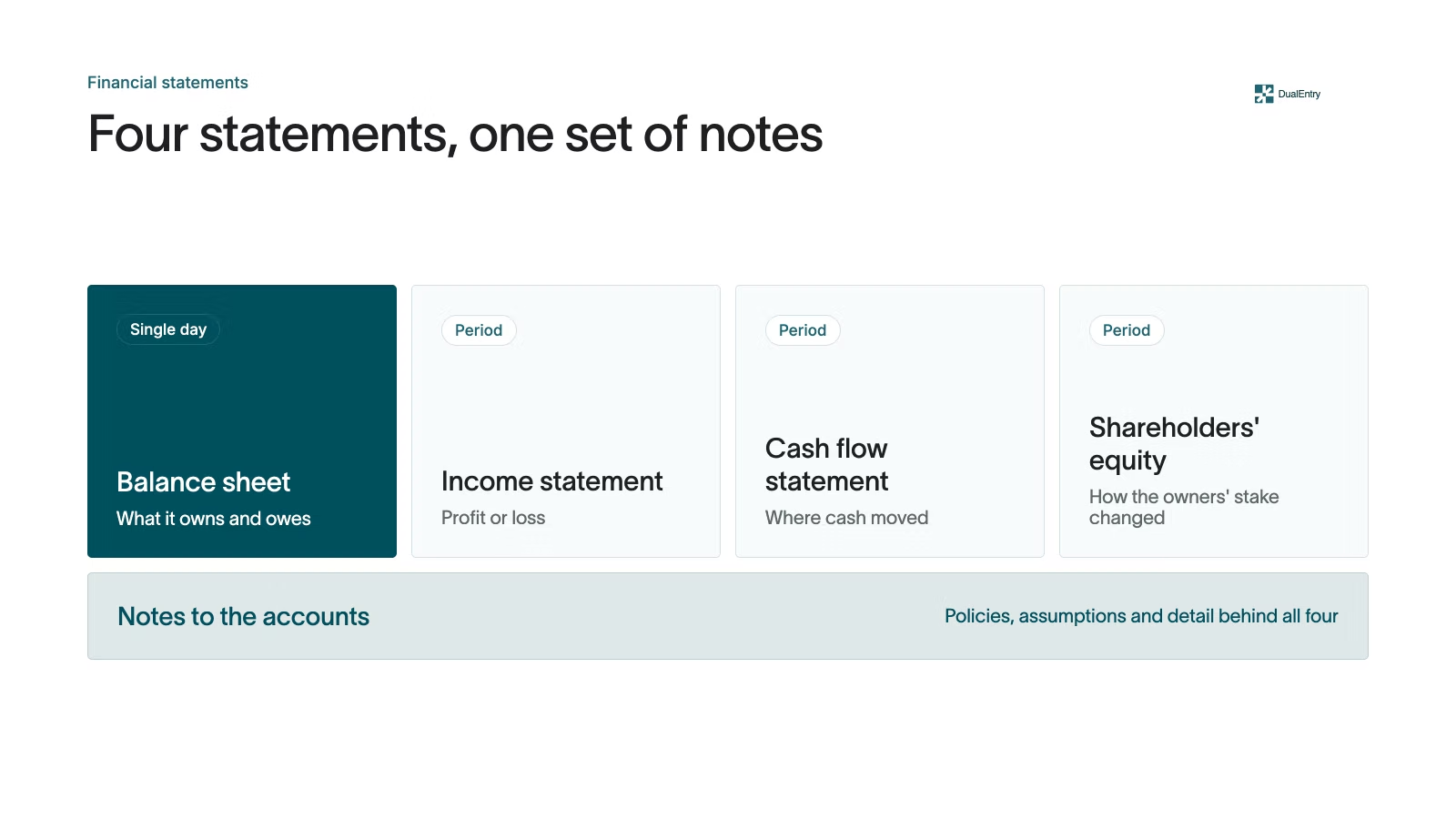
Balance sheet
The balance sheet is a snapshot of what the company owns and owes on a single day, with assets on one side and liabilities plus equity on the other. The two always balance, which is where it gets its name [4]. It's the statement lenders and investors read to judge how solid the business is right now.
Income statement
Also called the profit and loss statement, the income statement covers a stretch of time and works down to one number: profit or loss [4]. It starts with revenue and subtracts the cost of sales, operating expenses, and then items like interest and taxes to get there. It's the first thing most people look at, because it answers whether the business made money.
Cash flow statement
The cash flow statement follows the actual cash, split across operating, investing, and financing activities [4]. It matters because profit and cash aren't the same thing. A company can look profitable on its income statement and still run dry, and this is the statement that catches it [4].
Statement of shareholders' equity
This one tracks how the owners' stake changed over the period, through profits kept in the business, new shares issued, and money paid out. It's the fourth statement in the SEC's set [4], and it ties the income statement and the balance sheet together.
Notes to the accounts
The notes sit behind the four main financial statements, explaining the accounting policies, assumptions, and detail that a single figure can't carry. They're part of the financial statements, not an appendix to them: the SEC's rules define "financial statements" to include all notes to the statements, even though the notes aren't counted as a fifth primary statement [5].
Here's how they compare:
Who has to produce financial reports
Whether a company is legally required to report, and to whom, comes down mostly to whether it's public or private.
Public companies
U.S. public companies carry the strictest financial reporting and compliance requirements. They file quarterly reports on Form 10-Q and an annual report on Form 10-K with the Securities and Exchange Commission (SEC) [6], [7]. The quarterly financial statements are unaudited [8], though an independent accountant must review them before the 10-Q is filed [9], while the annual financial statements are audited [10]. Domestic issuers prepare them under US GAAP; the SEC presumes statements not prepared under GAAP to be misleading, and only foreign private issuers may file under IFRS instead [11].
Private companies
In the U.S., private companies have far fewer legal requirements. Most aren't obligated to file financial statements with any regulator [12], and a small owner-run business may never produce a formal set. (Outside the U.S. the picture is different: in the UK and much of the EU, even private companies must file annual accounts with a company registry [13], [14].)
But legal obligation isn't the whole story. The moment a private company takes on outside investors or borrows from a bank, it usually ends up producing GAAP financial statements anyway. Investors and lenders ask for them even when no regulator does.
A venture-backed software company with no filing duty at all will still close its books every month and produce a full set of statements, because its board and its lenders expect them. In practice, the trigger for real financial reporting is often outside money, not the letter of the law.
How financial reports actually get produced
Financial reports are the end result of a process that starts with the underlying books and works through the close [15]:
- Record the transactions. Everything that happened during the period, sales, bills, payroll, payments, is captured in the books as it occurs.
- Reconcile and adjust. The team checks the books against outside records, matching the bank statement, confirming balances, and posting adjusting entries for things like accruals and depreciation. This is where errors get caught, and it's the step that decides whether the reports can be trusted.
- Produce the trial balance. Once the accounts are reconciled, the general ledger is rolled up into a trial balance that confirms everything ties out before any statement is drawn from it.
- Prepare the statements. With clean, reconciled numbers, the balance sheet, income statement, and cash flow statement are drawn straight from the ledger. If the company has multiple entities, their books are consolidated into one set here.
- Review and file. Finance reviews the statements, the CFO signs off, and they go where they need to go: to the board, to investors, to an auditor, or to a regulator.
Where financial reporting goes wrong
.avif)
When reporting breaks, here are some of the causes that come up:
- The close runs late. When it takes two or three weeks to shut the books, the reports land so late they're history by the time anyone acts on them. For scale, APQC's cross-industry median is 6.0 calendar days from the trial balance to the consolidated statements, across 11,223 companies [16].
- Accounts feed the statements unreconciled. If reconciliation gets rushed or skipped, the errors flow straight into the reports, which look polished and are wrong.
- Consolidation is done by hand. Companies with several entities often stitch the numbers together in spreadsheets, which is slow and easy to get wrong, especially across currencies. Handling multiple entities in one system removes most of that risk.
- There's no audit trail. When you can't trace a number back to the transactions behind it, every audit and every board question turns into a scramble. Audit readiness means being able to show your work at any time, not reconstructing it after the fact.
- Reporting lives outside the ledger. One of the most common traps is running the real reporting in spreadsheets bolted onto the accounting system. Every export is a chance for the numbers to drift out of sync with the books they came from.
Reporting is only as good as the system behind it
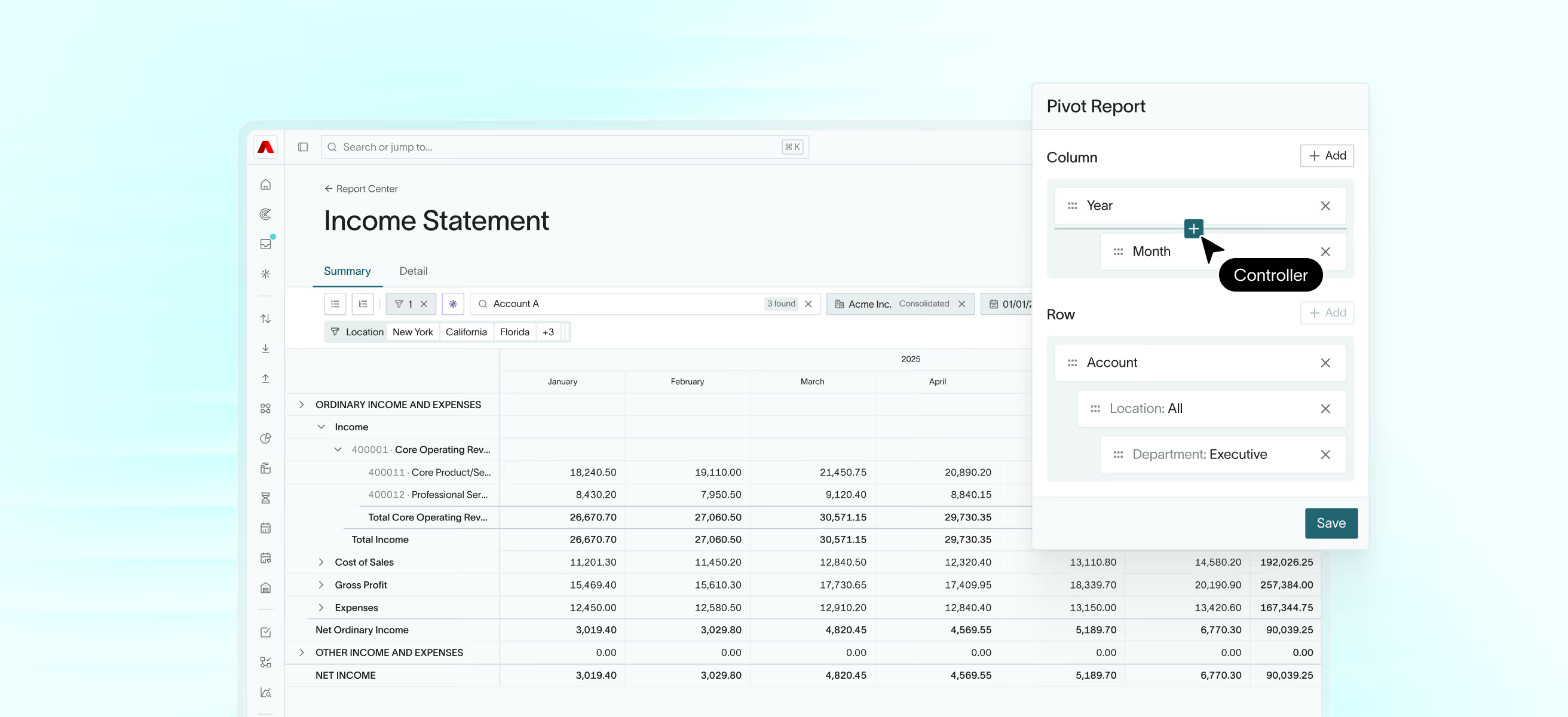
The fix for almost all of it is the same. When the close, the ledger, and the reports run in one system, the statements come straight off reconciled books instead of an export that started drifting the moment you made it.
That's what DualEntry is built for. Because financial reporting and the close that produces it run on the same ledger the business already uses:
- The reports come off the same ledger. DualEntry generates every report directly from the general ledger [17], which removes the spreadsheet exports and manual handoffs that let reporting numbers drift away from the books.
- Consolidation happens in place. Multiple entities and currencies roll up inside the system instead of being stitched together by hand: intercompany eliminations post when the transaction is recorded, and currency translation and the CTA are handled on the consolidated statements [18].
- Every figure keeps its audit trail. On the balance sheet and income statement, a detail view resolves each line to the journal entries, invoices, bills, and payments behind it [19], and every change in the system is logged in an immutable audit trail [20], so an audit or a board question isn't a scramble to reconstruct.
- The close and the reports move as one. Running the statements and exporting the close package are tasks you track on the same close checklist [17], not a separate job bolted on after the period is locked.
That takes out the disconnects that turn a routine month-end into a fire drill.
What Is Financial Reporting FAQs
See the full power of DualEntry in 30 minutes
Woosung Chun is the CFO of DualEntry with experience in corporate finance, accounting, strategy, and acquisitions. He previously grew from scratch and led the M&A and Finance teams at Benitago, where he completed more than 12 acquisitions in 2 years. He graduated with a BS from NYU Stern. At DualEntry, Woosung writes about AI in accounting, revenue recognition, foreign currency accounting, hedge accounting, and ERP modernization for finance teams navigating complex, multi-entity environments.