Don't worry! The contents here will appear on the published page.
SaaS Financial Statements: Income Statement, Balance Sheet & Cash Flow Explained

Woosung Chun
CFO, DualEntry
Woosung Chun
CFO, DualEntry
Woosung Chun is the CFO of DualEntry with experience in corporate finance, accounting, strategy, and acquisitions. He previously grew from scratch and led the M&A and Finance teams at Benitago, where he completed more than 12 acquisitions in 2 years. He graduated with a BS from NYU Stern. At DualEntry, Woosung writes about AI in accounting, revenue recognition, foreign currency accounting, hedge accounting, and ERP modernization for finance teams navigating complex, multi-entity environments.
Learn about our editorial policies.
Last updated
September 2, 2026
Reviewed by
Do San (Justin) Myung

Do San (Justin) Myung
Expert Accountant & Former Consulting CFO | DualEntry
Justin (Do San Myung) is Expert Accountant at DualEntry with 20+ years of hands-on experience managing general ledgers, financial close processes, and ERP implementations for mid-market and enterprise companies. As a former Consulting CFO and Controller, he has personally overseen month-end closes, SOX compliance programs, and multi-entity consolidations across technology, manufacturing, and services industries. Justin specializes in transforming manual accounting workflows into automated, AI-driven processes.
Learn about our editorial policies.

Summarize this article
If you're stepping into a SaaS finance role from a traditional background, the financial statements will look familiar at first glance… and then quickly stop making sense. Subscription revenue is recognized over time -- even though the cash already arrived. Deferred revenue is often the largest liability on the balance sheet. The company can show a GAAP loss while operating cash flow stays positive. And what used to be R&D expense may now sit on the balance sheet as an intangible asset.
In this guide, we'll walk through all three SaaS financial statements (income statement, balance sheet, and cash flow statement) line by line, with the SaaS-specific items that are often missed.
What are SaaS financial statements?
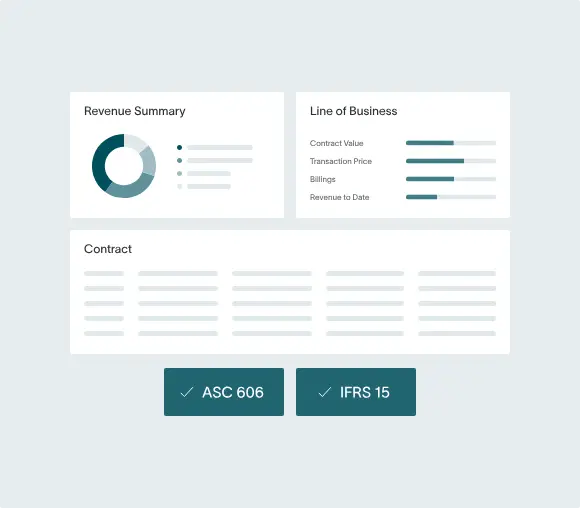
SaaS financial statements are the income statement, balance sheet, and cash flow statement prepared for a software-as-a-service company. They follow GAAP but are structurally different from traditional businesses because subscription revenue is recognized over time (per ASC 606 [1]), upfront billings create large deferred revenue liabilities, and significant R&D spend is often capitalized instead of expensed.
Why SaaS statements are different
- Revenue recognition timing isn't the same. Cash arrives upfront when the customer signs an annual contract, but ASC 606[1] requires you to recognize that revenue ratably over the service period. The gap between cash receipts and reported revenue is permanent for any growing SaaS company.
- Deferred revenue is the largest liability. On a traditional balance sheet, the biggest liability is often accounts payable or debt. On a SaaS balance sheet, deferred revenue usually eclipses both. Important to remember: deferred revenue isn't debt, but rather an obligation to deliver the service a customer has already paid for.
- There are capitalized costs unique to SaaS. Two standards move costs from the income statement to the balance sheet: ASC 350-40 (capitalized software development)[3] and ASC 340-40 (capitalized sale commissions)[4]. Both change how profitability appears.
- There's a disconnect between cash flow and profitability. In SaaS accounting, a company can post a GAAP loss while generating positive operating cash flow. This paradox often trips people up if they look at SaaS financials through a traditional lens.
The SaaS income statement (P&L), line by line
A deeper dive into revenue line items
- Subscription revenue: This is the core line that drives everything else. It's typically calculated as MRR × 12, or as the sum of monthly recognized amounts per ASC 606[1][2]. If your customer base covers materially different tiers or segments, you should break the line down further.
- Professional services revenue: This covers implementation fees, onboarding, training, and custom development. The recognition timing here varies depending on the contract -- it might be recognized on completion, or over the engagement period.
- Usage-based or overage revenue: When it exists, this is recognized as the customer consumes it. That's a different timing pattern from your base subscription, so it should be tracked on its own line.
COGS and gross margin
The cleanest test for what belongs in SaaS COGS is this: would the cost disappear if you had zero customers?
What passes the test: hosting and infrastructure, DevOps salaries, third-party data and API costs that flow through to customers, and payment processing fees. Customer success also belongs in COGS -- but only if the team is delivering the product rather than expanding accounts.
Subscription gross margin should fall between 70%–85%.[6] Below 70% suggests infrastructure inefficiency or an over-staffed CS function. See where that margin puts your break-even point. Professional services margins are typically lower, at around 10% to 30%[6] -- which is why you should always report subscription-only gross margin and blended gross margin separately. Investors care about subscription margin because it reflects a business's scalable unit economics. The blended number gets pulled down by low-margin PS revenue.
Operating expenses
Sales and marketing (S&M) covers SDR and AE compensation, marketing spend, content, and events. The most useful way to track S&M is as a percentage of new ARR added, not just the percentage of revenue. This tells you whether the spend is producing growth.
Research and development (R&D) includes engineering salaries (net of the portion capitalized), product management, and QA. Under ASC 350-40,[3] costs incurred during the "application development stage" have to be capitalized, i.e. moved to the balance sheet.
General and administrative (G&A) covers finance, legal, HR, facilities, and insurance. Unlike S&M and R&D, G&A should decrease as a percentage of revenue as you scale. At $10M+ ARR, a healthy company should have G&A below 15%.[13]
The SaaS balance sheet: key differences
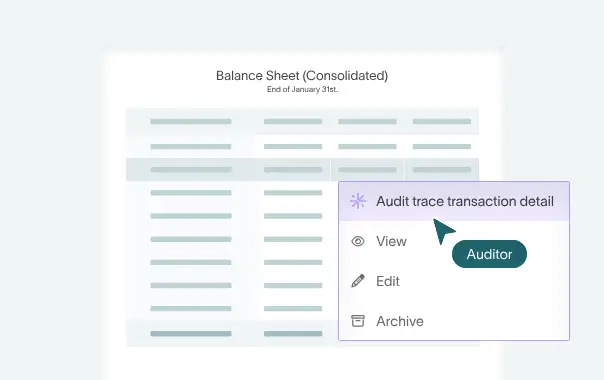
A SaaS balance sheet differs from traditional businesses in three key ways: deferred revenue is typically the largest liability (not debt), capitalized software development costs (ASC 350-40)[3] appear as intangible assets, and capitalized sales commissions (ASC 340-40)[4] create a prepaid asset that amortizes over the customer's expected life.
Assets unique to SaaS
- Capitalized software development costs: Under ASC 350-40,[3] application development stage costs are capitalized as an intangible asset and amortized over the software's useful life (typically three to five years). Preliminary and post-implementation costs stay expensed.
- Capitalized sales commissions: ASC 340-40[4] requires capitalizing commissions when the expected period of benefit (including anticipated renewals) exceeds one year, and amortizing them over that expected customer life. A commission paid today becomes a balance sheet asset that moves into the P&L over the customer's lifetime. Expensing it upfront distorts unit economics.
- Contract assets: When revenue is recognized before the customer is billed,[5] the gap shows up as a contract asset. Most common with milestone-based professional services or usage-based overages billed in arrears.
- Accounts receivable patterns: Annual upfront billing creates AR spikes at contract signing that decline as payment is collected. Net-30 or net-60 terms on annual invoices produce predictable aging profiles finance teams can plan around.
SaaS-specific liabilities
- Deferred revenue (current): Revenue collected but not yet recognized. For annual contracts billed upfront, the unrecognized portion sits here. On most SaaS balance sheets, this is the largest liability (important: not a debt).
- Deferred revenue (long-term): Multi-year contracts with prepayment create deferred revenue that won't be recognized within 12 months. Anything beyond the 12-month mark should be classified as non-current.
- Contract liabilities: Under ASC 606,[1] "deferred revenue" is technically a "contract liability." However, under GAAP both labels are acceptable -- so just pick one and keep it consistent in your reporting.
Equity considerations
Most SaaS companies carry a large accumulated deficit from years of investing ahead of revenue. That's normal and expected -- not a red flag in itself. The number to watch isn't the size of the deficit, but whether the rate of accumulation is slowing as the business scales.
Equity-based compensation deserves a callout because SaaS companies use it heavily. SBC hits the profit and loss statement as an expense but it doesn't affect cash flow, which creates another divergence between GAAP profitability and cash generation. VC-backed startups carry significantly more complexity in this section — SAFEs, preferred stock, and stock-based compensation all require specific treatment. See our guide to financial statement requirements for VC-backed startups.
Another thing worth watching: deferred revenue trends as a leading indicator of SaaS business health.[8] If deferred revenue is growing, this is a good sign of a growing future revenue pipeline. If it's declining, that's potentially an early churn signal.
The SaaS cash-flow statement, and why it tells a different story

SaaS companies can report a net loss on the income statement while generating positive operating cash flow. This happens because annual upfront billing collects cash before revenue is recognized, creating a working capital benefit. As long as new bookings exceed churn, cash flow stays positive even while the company invests aggressively in growth.
Operating cash flow in SaaS
Let's take an example of a $120,000 annual contract. The customer pays in full in month one, but you only recognize $10,000 of revenue that month per ASC 606.[1] The $110,000 difference flows into deferred revenue, and on the cash flow statement the increase in deferred revenue shows as a positive working capital adjustment. This is why growing SaaS companies often have positive operating cash flow despite net losses.
Non-cash adjustments add to the complexity. Stock-based compensation, depreciation of capitalized software, and amortization of capitalized commissions all get added back when reconciling net income to operating cash flow. The larger these non-cash charges, the wider the gap between reported GAAP losses and actual cash generation.
Working-capital changes: increases in deferred revenue add cash, and increases in AR subtract cash. Increases in capitalized commissions under ASC 340-40[4] also subtract cash. For growing SaaS companies billing annually, the net effect of these movements is usually positive.
Investing cash flow
The investing section is dominated by capitalized software development costs. Under ASC 350-40,[3] costs that would have appeared as R&D expenses on the P&L instead appear as CapEx in the investing section. The net effect? Operating cash flow looks better, but free cash flow is reduced.
This creates an opportunity for classification games. Some companies capitalize aggressively to inflate their operating cash flow. To check for this, you can compare capitalized development to total R&D spend. Anything over 30–40% calls for a closer look.[11][12]
Free cash flow vs. operating cash flow
Free cash flow = operating cash flow minus CapEx. For SaaS companies, CapEx is almost entirely capitalized software development (there are no factories, no inventory, and minimal physical assets). FCF margin is the cleanest measure of a SaaS company's ability to generate cash.
FCF margin benchmarks vary by stage.[6] For most cloud companies, FCF margins remain negative well into the growth phase -- approximately −65% at $1–10M ARR, −35% at $10–50M ARR, and −25% at $50–100M ARR (Bessemer proprietary data).[6] Top-quartile public SaaS companies with revenues above $100M achieve FCF margins of 26–31%, depending on growth tier.[7] The path to positive FCF is a function of growth rate slowing and cost leverage improving, not of crossing a specific ARR milestone. For a complete breakdown of OCF vs. FCF vs. Rule of 40 FCF margin — including ARR-stage benchmarks and a month-end analysis checklist — see our SaaS cash flow analysis guide.
Financial benchmarks by company stage
The ranges below come from public SaaS benchmarking data and reflect typical performance bands rather than hard targets.[6][7] Individual company context matters. The Rule of 40 (revenue growth rate + profit margin ≥ 40) is the most-cited SaaS health metric.[7]
S&M % of revenue tells you how much you're spending; the SaaS magic number tells you what that spend returned.
FCF margin row sourced from Bessemer "Scaling to $100M" (median cloud company data by ARR stage).[6] All other benchmarks sourced from Bessemer Cloud 100 Benchmarks Report 2025[6], McKinsey Rule of 40 study[7], and McKinsey NRR Advantage report[8]. Want to see where your company lands? Calculate your NRR and compare it against these stage benchmarks instantly.
Red flags to look for in SaaS financial statements

- Declining deferred revenue with stable reported revenue: The earliest warning sign of a slowdown. If deferred revenue is shrinking while recognized revenue stays flat, the company is living off its backlog without replacing it with new sales.
- COGS misclassification to inflate gross margin: Engineering salaries or customer success costs moved from COGS to operating expenses can artificially inflate gross margin. If a company's gross margin runs 10+ points above peers with a similar product, dig into the classification.
- Aggressive capitalization of development costs: Capitalizing over 30–40% of total R&D spend[11][12] inflates operating income and shifts expense recognition into future periods. Always check capitalized software as a percentage of total engineering spend.
- Revenue growing faster than deferred revenue: In a healthy SaaS company billing annually, deferred revenue should grow at a similar (or faster) rate than recognized revenue.[9] If recognized revenue is outpacing deferred revenue growth, the company is likely shifting toward shorter contracts or monthly billing -- which reduces cash-flow predictability.
- Burn multiple above 2x beyond Series A:[14] A burn multiple above 2x -- calculated as net burn divided by net new ARR -- means the company is spending more than $2 for every $1 of new ARR added. Beyond Series A, this indicates an efficiency problem.
- Negative NRR alongside aggressive new logo growth:[8] Net revenue retention below 100% means existing customers are shrinking faster than they're growing. Pairing that with heavy new logo acquisition is a leaky bucket. Acquisition cost eventually exceeds the ability to replace churned revenue.
Common reporting mistakes made by SaaS companies
- Recognizing annual contract revenue immediately: Probably the most recurring error. A $120,000 annual contract has to be recognized at $10,000 per month under ASC 606,[1] not $120,000 on day one. Getting this wrong is an audit finding and materially misrepresents the business.
- Mixing subscription and services revenue into one line: Investors and acquirers need to see subscription revenue separated from professional services. Blending them hides your true SaaS gross margin.
- Expensing all development costs: Under ASC 350-40,[3] costs from the application development stage must be capitalized. Expensing everything understates assets and overstates losses.
- Expensing multi-year sales commissions upfront: ASC 340-40[4] requires capitalizing commissions when the expected period of benefit (including anticipated renewals) exceeds one year, and amortizing them over that expected customer life. Expensing them upfront distorts unit economics, making CAC payback look worse than it is.
- Not splitting deferred revenue into current and non-current: Multi-year contracts require classifying the portion beyond 12 months as long-term. Putting everything into current liabilities misstates working capital and liquidity ratios.
- Ignoring stock-based compensation in profitability analysis: SBC is a real cost. Reporting "adjusted EBITDA" that excludes SBC without disclosing the impact creates a misleading picture of true profitability.
Building SaaS financial statements in DualEntry

Most of what we've covered in this guide -- separating subscription from services revenue, tracking deferred revenue current and long-term, applying ASC 606[1] ratably, capitalizing development under ASC 350-40[3] and commissions under ASC 340-40[4] -- is mechanical work that finance teams typically piece together across a chart of accounts, a subscription management software, and a stack of spreadsheets. DualEntry's built in financial reporting software unifies that work in one place.
Every new account starts with a SaaS-specific chart of accounts. Subscription revenue, deferred revenue, COGS sub-categories, and capitalized cost accounts are all pre-configured.
Connect your billing system (Stripe, Chargebee, or Zuora) and DualEntry auto-generates the deferred revenue entries and monthly recognition journal entries per ASC 606.[1]
The income statement, balance sheet, and cash flow statement update in real time, with subscription and services revenue separated, COGS broken out by line, and operating expenses categorized by department - all explorable through real-time financial analytics. SaaS metrics -- ARR, MRR, gross margin, NRR, burn multiple, Rule of 40 -- are calculated in the same place, pulling from the same data.
DualEntry is built for SaaS companies between $5M and $50M ARR. If you're pre-revenue or a solo founder, QuickBooks is probably all you need for now. If you're a public company managing complex multi-entity consolidation, an ERP probably fits better. DualEntry sits in the middle: for teams that have outgrown QuickBooks but don't need (or want) the complexity of legacy ERPs like NetSuite.
SaaS Financial Statements FAQs
See the full power of DualEntry in 30 minutes
Woosung Chun
CFO, DualEntry
Woosung Chun is the CFO of DualEntry with experience in corporate finance, accounting, strategy, and acquisitions. He previously grew from scratch and led the M&A and Finance teams at Benitago, where he completed more than 12 acquisitions in 2 years. He graduated with a BS from NYU Stern. At DualEntry, Woosung writes about AI in accounting, revenue recognition, foreign currency accounting, hedge accounting, and ERP modernization for finance teams navigating complex, multi-entity environments.
.webp)