Products
See DualEntry in action and discover how automations and AI insights can elevate your team's work.
Platform
Resources
Login
Schedule demo
Introducing DualEntry Inventory. Manage global inventory, automate inventory accounting, track costs, and accelerate your month-end close within one agentic ERP.
DualEntry launches a native Cubby integration to help self-storage operators sync facility transactions, automate accounting, and simplify financial reporting.
DualEntry’s native Deel integration maps legal entities, payroll items and cost centers to your GL, so global payroll flows into the books without manual entries.
DualEntry integrates with Drivetrain to connect accounting data with budgeting, forecasting, and financial reporting, helping finance teams reduce manual work.
DualEntry is opening its European headquarters in London, bringing AI-native ERP implementation and support closer to finance teams across Europe.
Learn how 3-way matching works in accounts payable, including the three documents, matching process, tolerance rules, journal entries, and examples.
Learn the 9 steps of the accounts payable process, from invoice verification to payment, with workflow examples, journal entries, and best practices.
Compare 15 of the best accounts receivable automation tools for 2026, including features, integrations, pricing, and collections capabilities.
Learn what the allowance for doubtful accounts is, how to calculate bad debt expense, and how to record journal entries with practical examples.
Learn what credit card reconciliation is, how to reconcile business credit card statements, and how to resolve discrepancies with practical examples.
Compare 12 of the best account reconciliation software tools for 2026, including features, integrations, pricing, and automation capabilities.
Compare the best month-end close software for 2026, including features, integrations, and pricing to help you choose the right solution.
Google dominates DualEntry's Accounting AI Benchmark, with Gemini 4 Neon tying Argon at 91.1% and three Gemini models ranking among the top five.
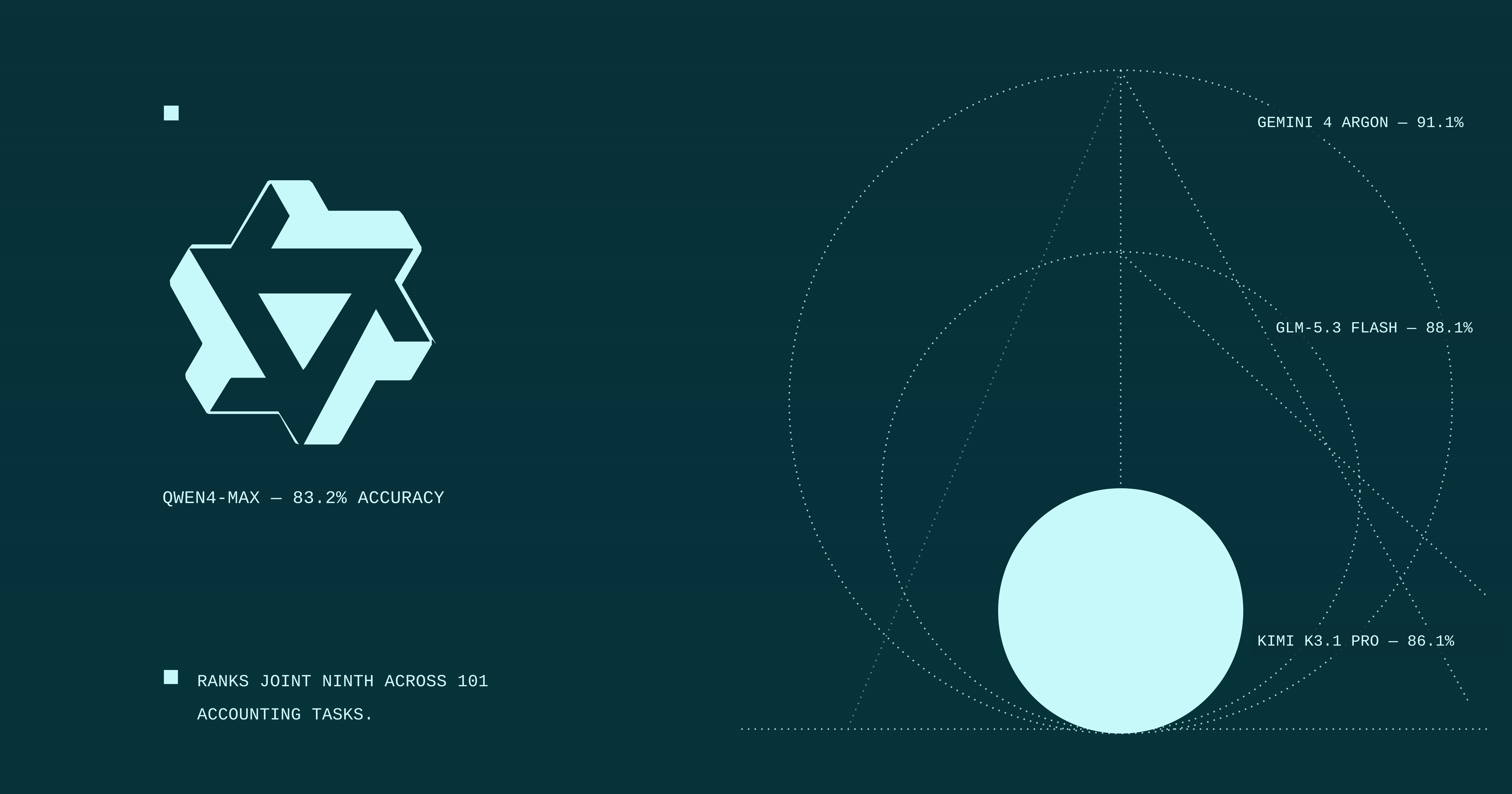
Qwen4-Max scored 83.2% on DualEntry's Accounting AI Benchmark, ranking joint ninth. See where Alibaba's latest model performed best and struggled.
Download a free revenue recognition schedule template for ASC 606, with deferred revenue calculations, revenue waterfalls, journal entries, and examples.
Learn what flux analysis is, how to calculate financial fluctuations, set review thresholds, and explain changes with practical accounting examples.
Learn what accrued payroll is, how to calculate unpaid wages and taxes, and how to record and reverse payroll journal entries with examples.
Learn what closing entries are, why they matter, and how to prepare closing journal entries with step-by-step examples.
Google now has two models leading the accounting AI race. See how Gemini 4 Carbon scored 88.1% and compares with OpenAI, Anthropic, and other models.
Claude Fable 5.2 scored 81.2% on the DualEntry Accounting AI Benchmark, trailing Fable 5.1. See how it performed across 101 accounting tasks.
Accrual vs. deferral explained with examples, journal entries, and the four timing adjustments behind accrued and deferred revenue and expenses.
Learn the difference between accounts payable and accrued expenses, how costs move between them, and how AP accruals work at month-end.
Learn how accrual accounting works, how it differs from cash accounting, common journal entries, and when businesses may need to use it.
Learn how prepaid expenses work, how to record and amortize them, and how to build a prepaid schedule that ties back to the general ledger.
Learn what accrued expenses are, how to record and reverse them, and how finance teams identify, true up, and reconcile accruals at month-end.
Learn how FP&A teams use AI across forecasting, variance analysis, scenarios and reporting, where it falls short, and where people still matter.
Learn what autonomous accounting means, how it differs from automation, what can run on its own today, and where finance teams still need to step in.
GPT-6.1 Terra scored 78.2% on the DualEntry Accounting AI Benchmark. It's the fastest OpenAI model we've tested and one of the cheapest, but it ranks near the bottom on accuracy and consistency.
Anthropic's S-1 reveals an $80.7B net loss, a $974M quarterly operating profit, and massive compute commitments. Here's what the numbers really mean.
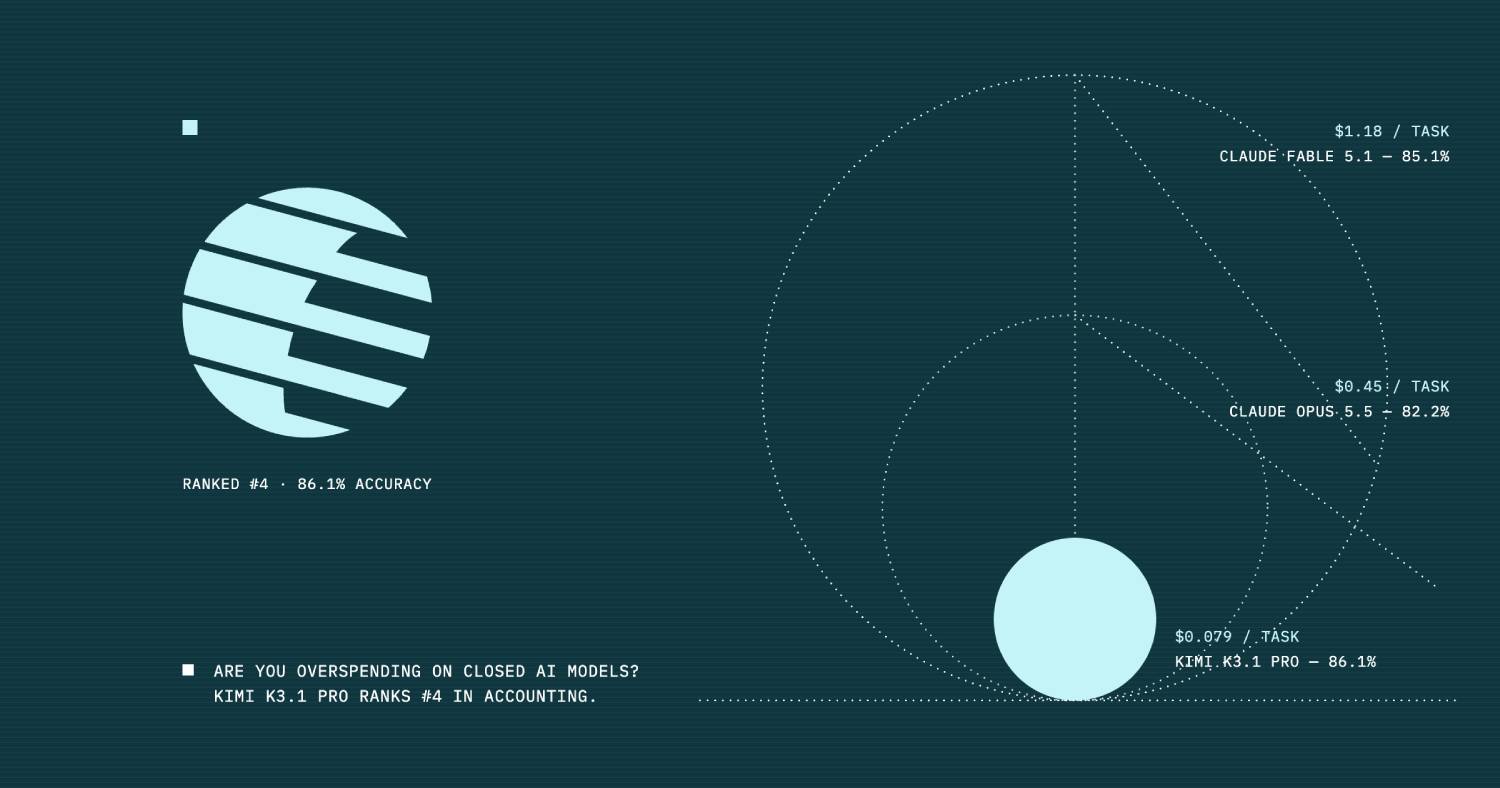
Moonshot AI's Kimi K3.1 Pro scored 86.1% on the DualEntry Accounting AI Benchmark, outperforming leading models from OpenAI and Anthropic.
Learn how agentic AI works across 9 AP steps, where agents can act alone, when humans should step in, and the controls finance teams need.
Learn how AI agents work in accounting, explore 8 common use cases, and understand the autonomy levels, risks, and controls finance teams should consider.
91.1% accuracy, #1 overall, and the most consistent model across 101 accounting tasks. Here's where Google's new frontier model leads and where it still struggles.
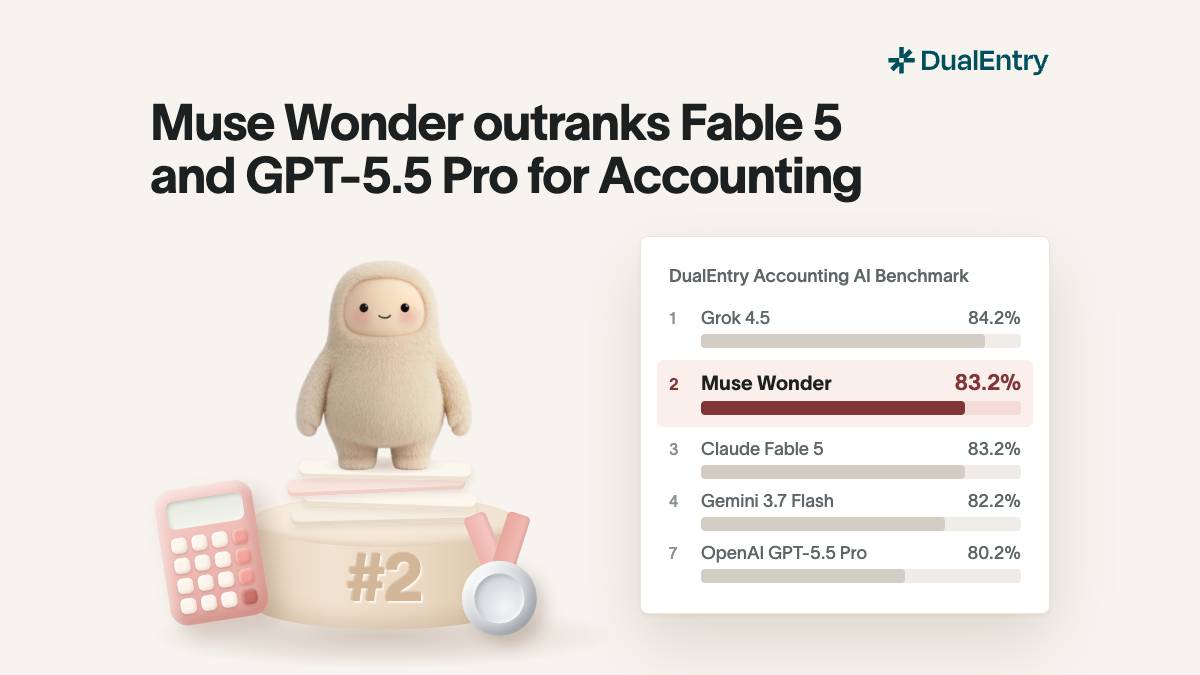
Meta’s Muse Wonder scored 83.2% on the DualEntry Accounting AI Benchmark, ranking #2 overall and ahead of every OpenAI, Anthropic and Google model tested.
Learn how AI agents work in finance, 12 practical use cases, their benefits and risks, and where they fit across accounting and finance workflows.
Financial reporting turns accounting records into statements investors, lenders, and boards can trust. Learn the types, who produces them, and how they’re made.
Learn what remaining performance obligations (RPO) are, how to calculate them, how RPO differs from ARR, backlog, and deferred revenue, and how to read RPO disclosures.
Learn what consolidated financial statements are, when they’re required, and how to prepare them with a step-by-step example covering eliminations and non-controlling interest.
Accounts receivable best practices: the AR process step by step, a KPI table with formulas and benchmarks, and how AR works for SaaS billing.
Compare cash vs. accrual accounting, see how each method records revenue and expenses, and learn which approach may be right for your business.
What software costs capitalize vs. expense under ASC 350-40, how ASU 2025-06 changes the start date, plus journal entries, amortization, and audit controls.
A CFO's guide to the month-end close process: the 8 steps, who owns each, how many days it should take, and how the close changes as you scale.
Accrued revenue is earned but unbilled. See the journal entry, how it differs from deferred revenue and AR, and when ASC 606 makes it a contract asset.
Learn the two-sided bank reconciliation formula, follow a worked example with journal entries, and use our decoder to find why your rec won't balance.
The CFO's step-by-step cutover plan for accounting software implementation: data migration, parallel run, opening balances, and go-live sign-off.
MRR × 12 doesn't always equal ARR. See when to report each metric, where the two diverge, and which one your board actually wants.
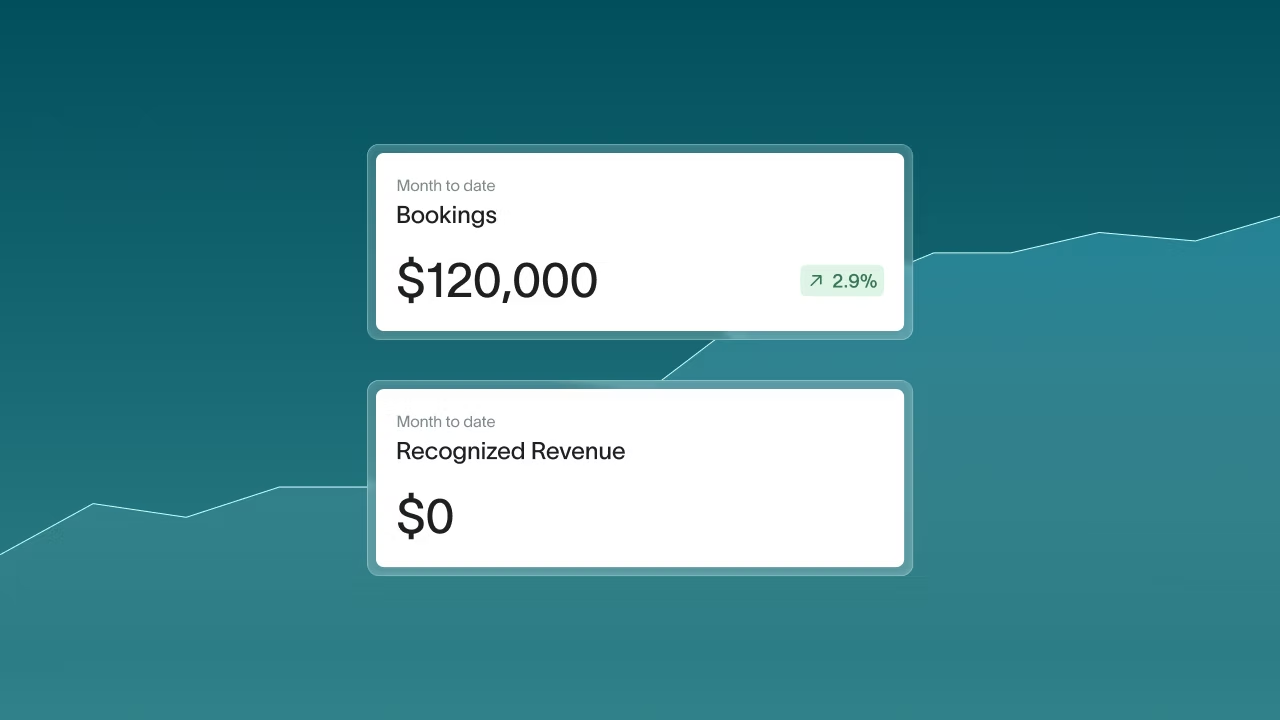
Bookings are signed contracts; revenue is what ASC 606 says you earned. Get the journal entries, the 12-month waterfall, and the 7 policy calls CFOs must lock in.
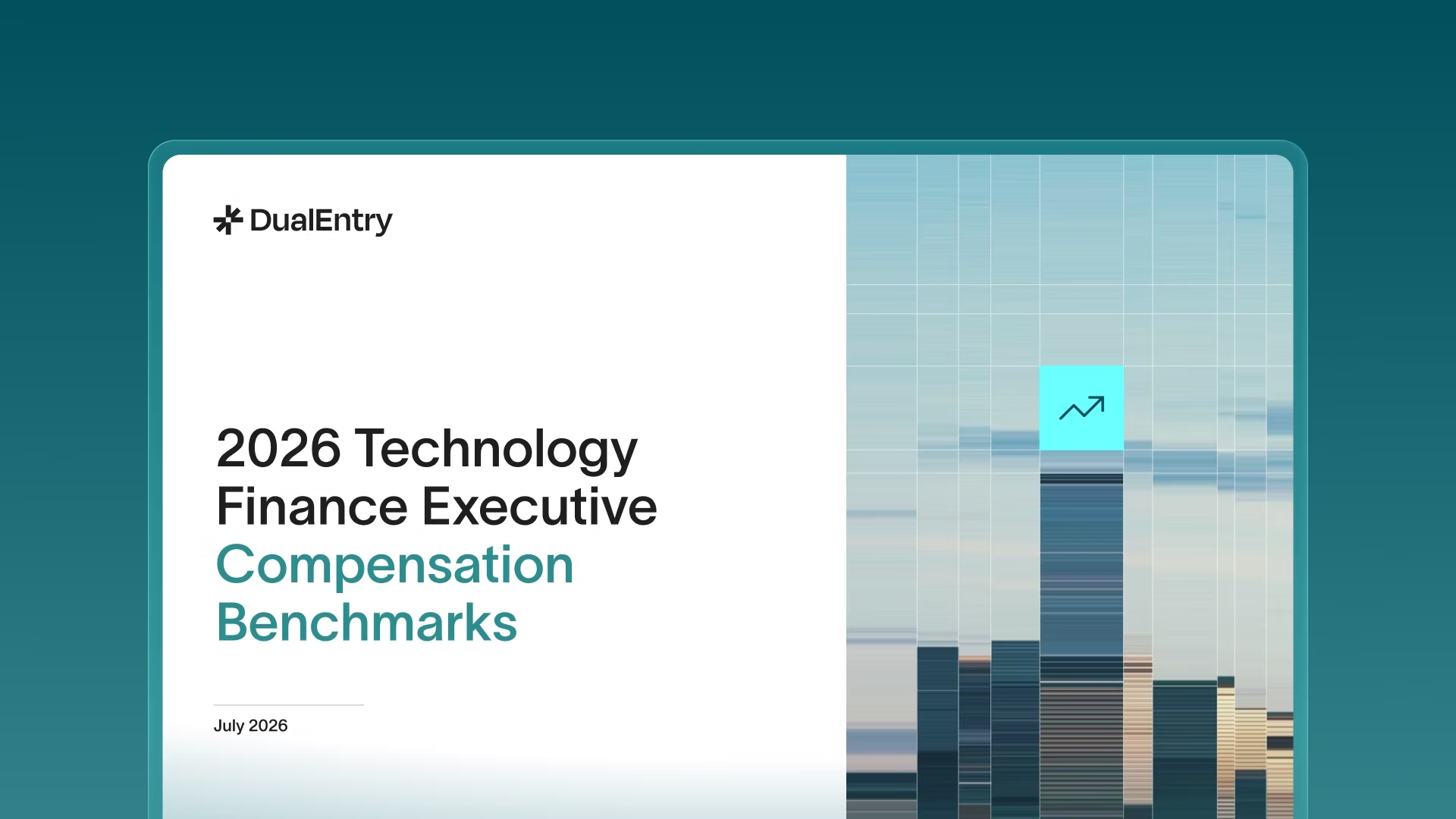
Median CFO equity is $1M a year against a $285K base. VP Finance gets $200K. 2026 benchmark data on equity value, ownership percentage, and vesting.
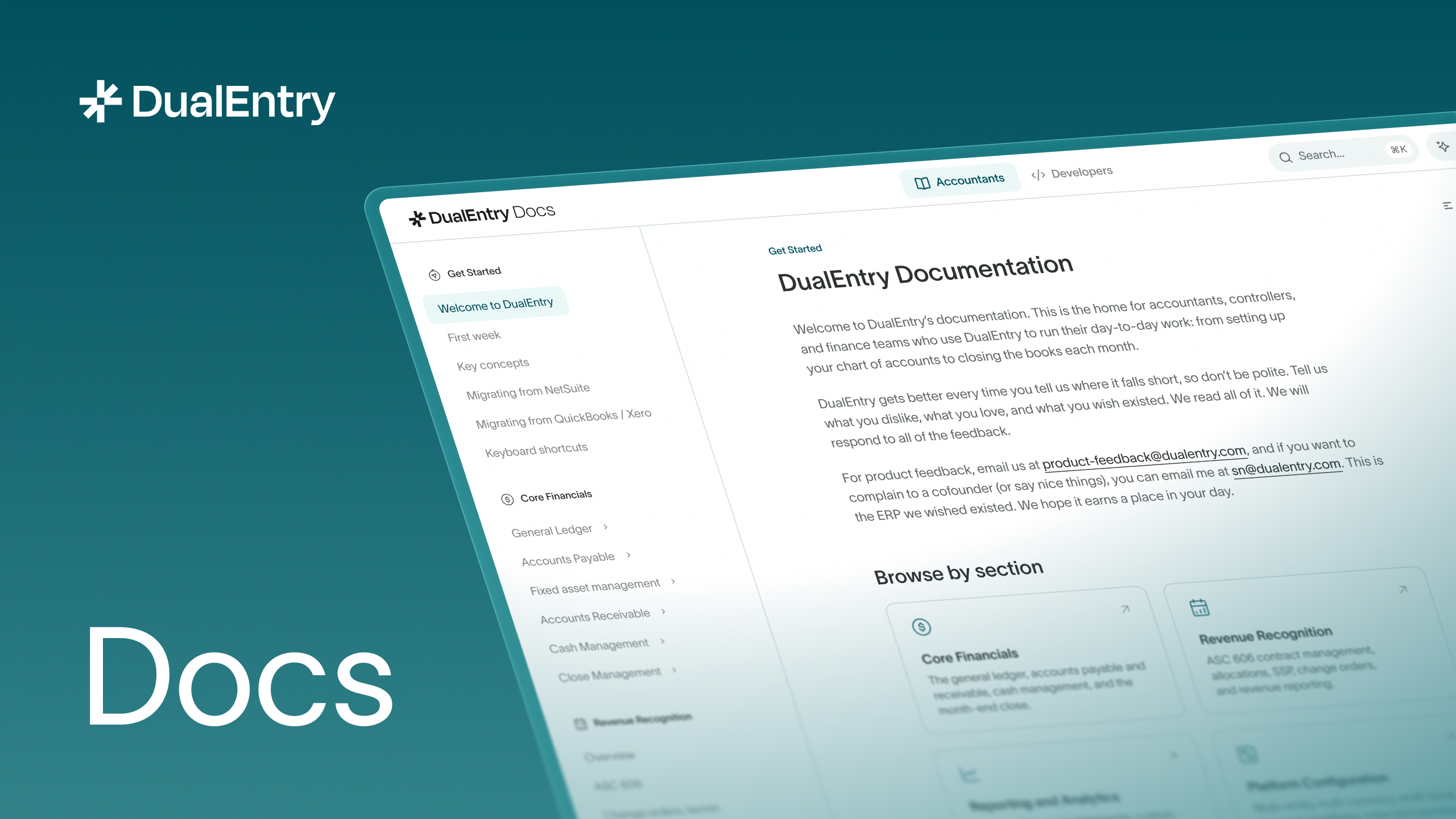
DualEntry's docs, MCP server, and in-product AI Accounting intelligence all run on the same content, so finance teams get accurate answers in minutes instead of support tickets.
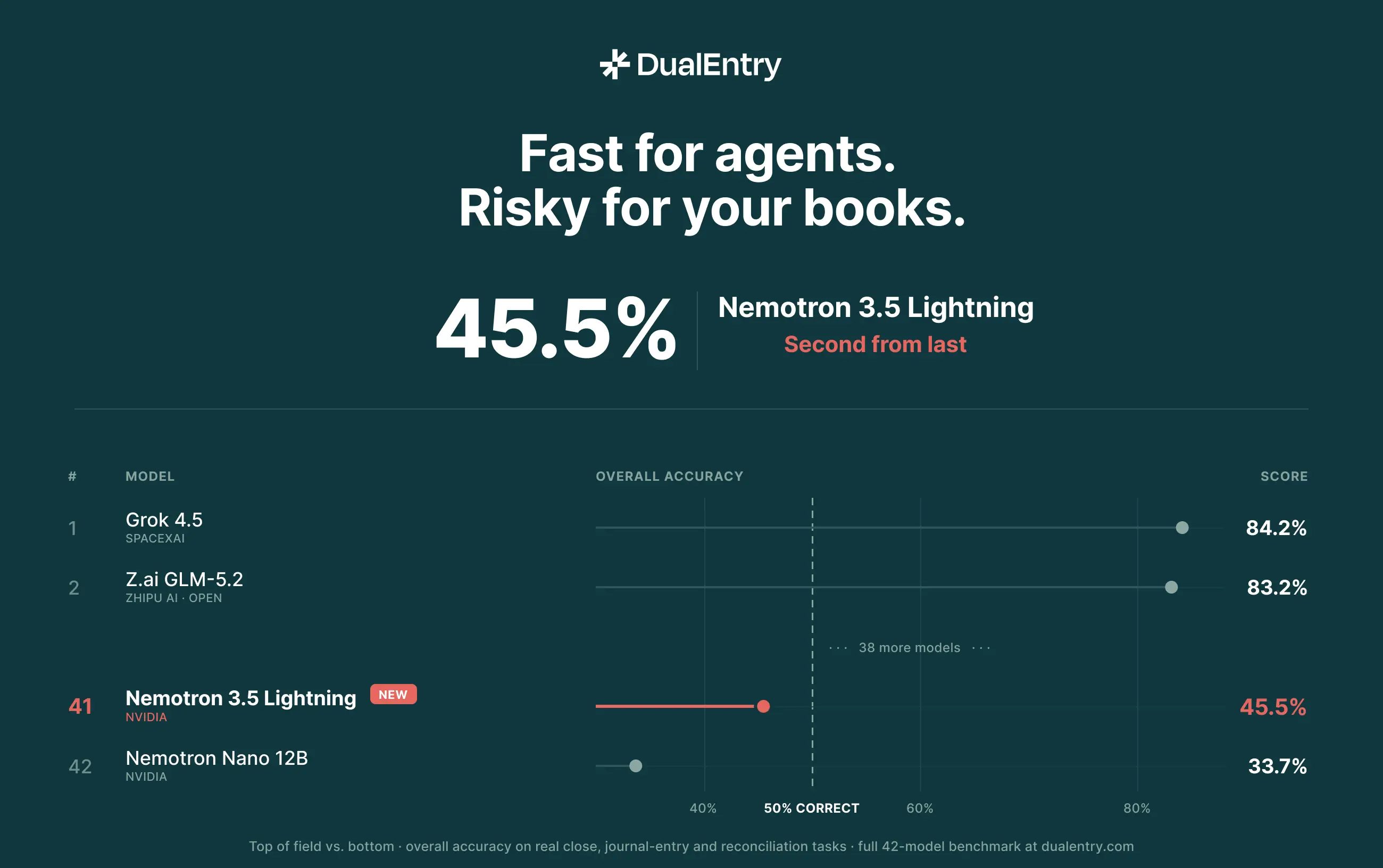
NVIDIA's Nemotron 3.5 Lightning is fast and cheap, but it scored just 45.5% on DualEntry's accounting benchmark. Here's what that means for finance teams.
Airtable grew 20% and still sold for a fraction of its 2021 peak. Why software's repricing just handed buyers real leverage at the next renewal.
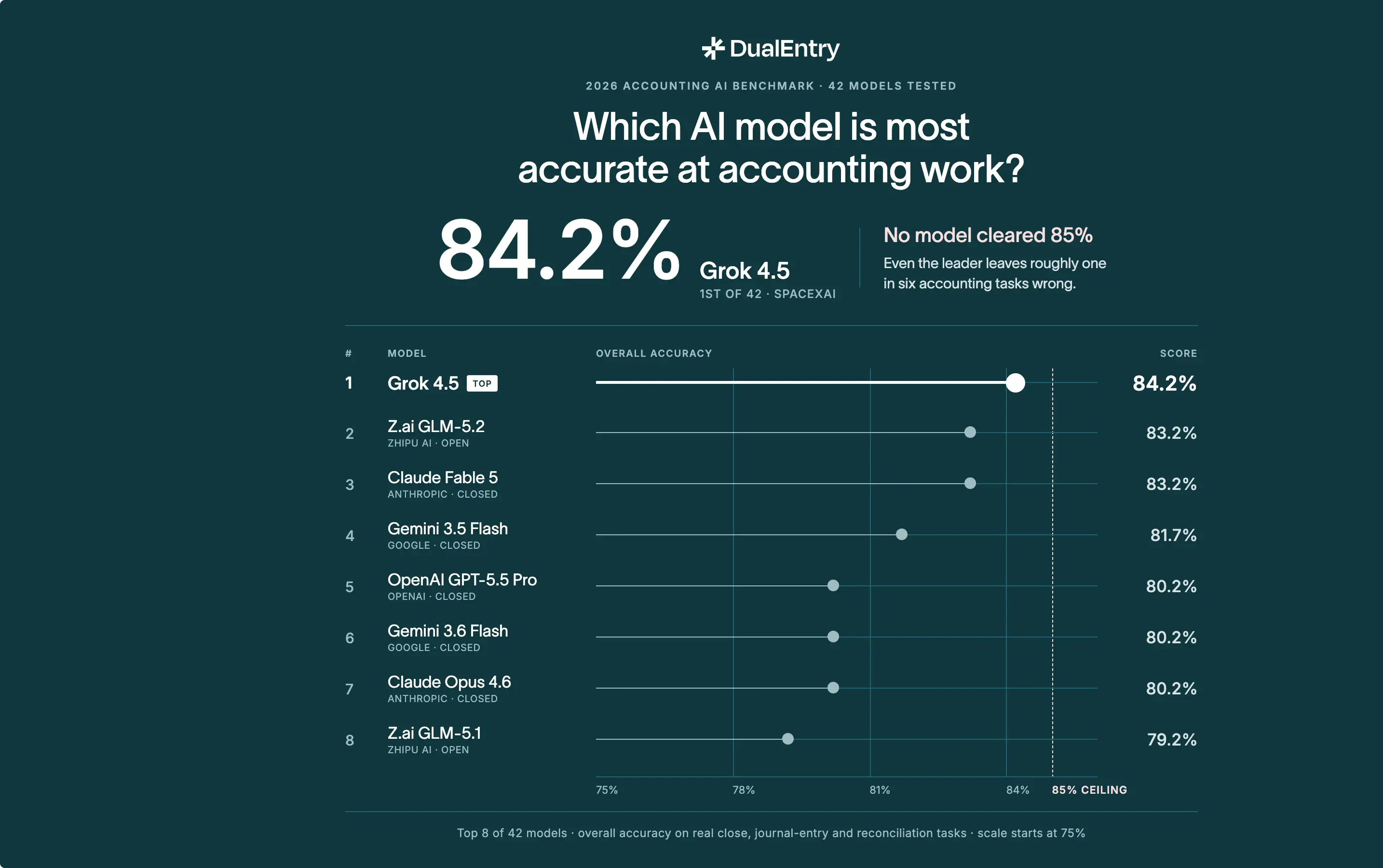
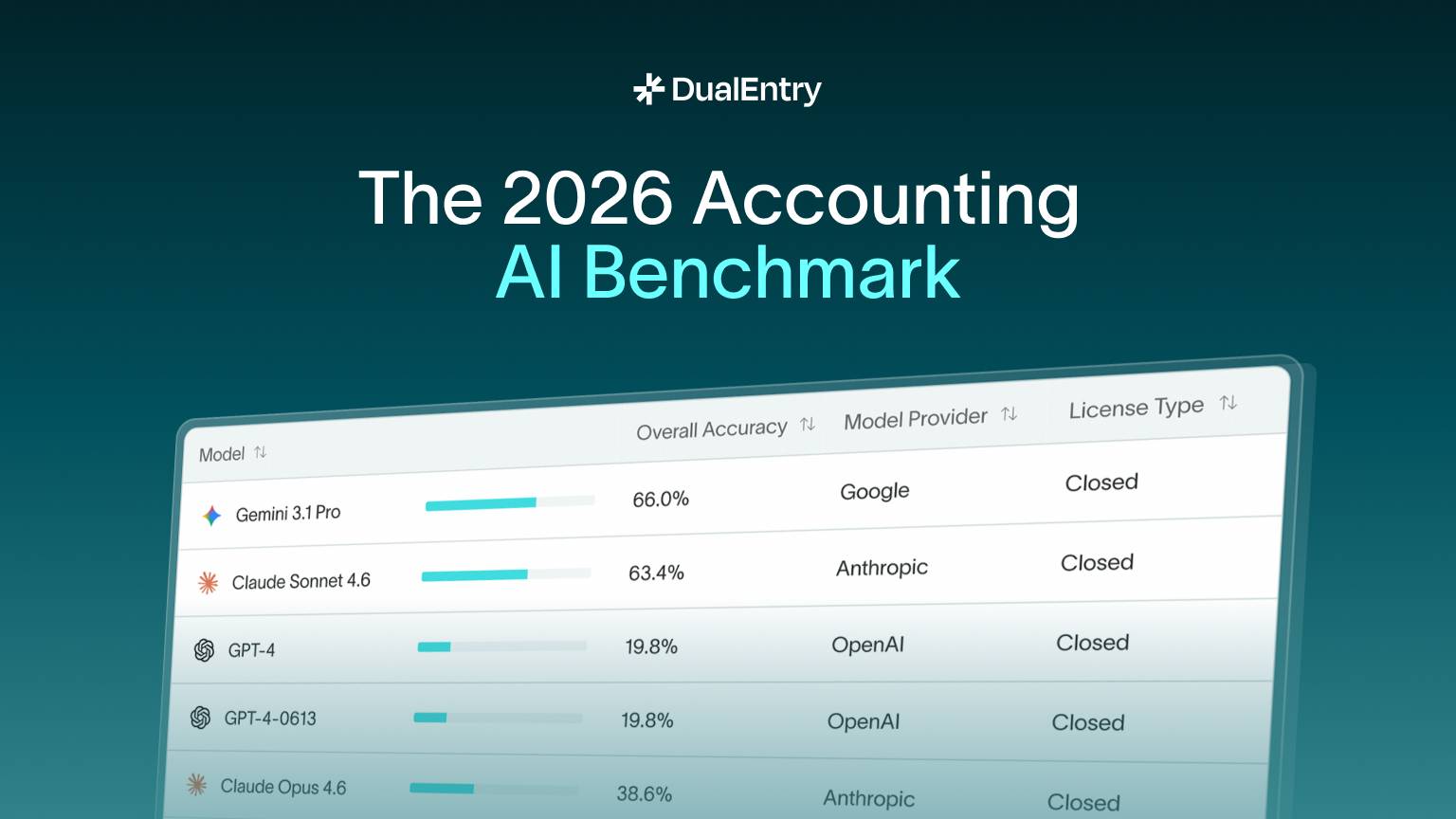
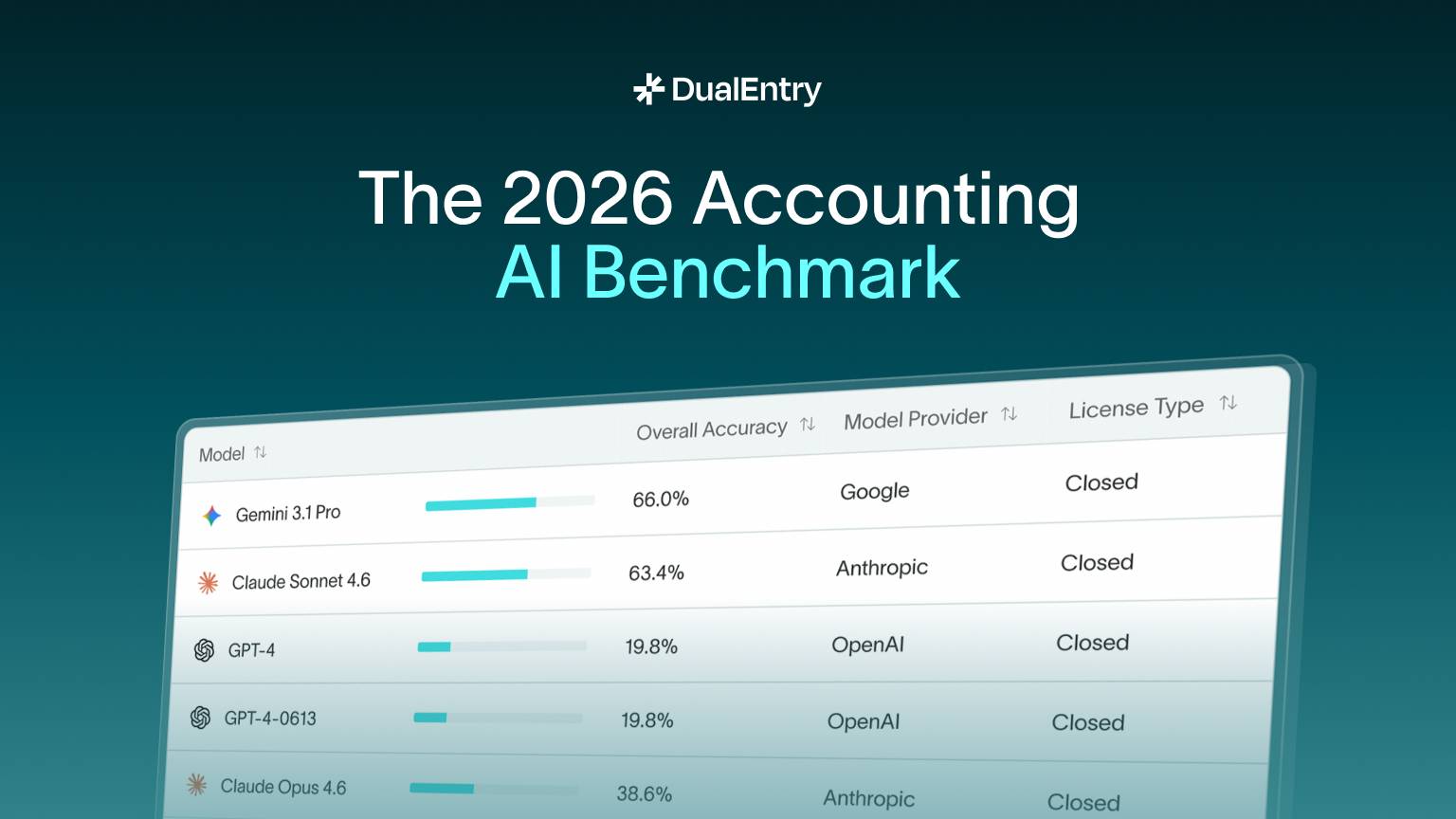
We tested 42 AI models on real accounting tasks. Grok 4.5 won at 84.2%, but no model cleared 85%. See the full 2026 accounting AI benchmark.
What belongs in SaaS COGS – and what doesn't. Get include/exclude tables, gross margin benchmarks by revenue stream, and where AI costs hit your P&L.
Lightspeed, Khosla, and Google each backed one of the three labs building the leading AI models. Here's why they're the best investors an AI founder can have.
See how the top 7 Campfire alternatives compare on multi-entity, automation, and pricing, plus a simple framework for choosing the right ERP.
A finance-led ERP migration playbook: what data moves, how to handle opening balances, when to cut over, run a parallel close – and what it costs.
How to choose an ERP system: a step-by-step framework for finance leaders covering when to switch, what it really costs, and how to score vendors fairly.
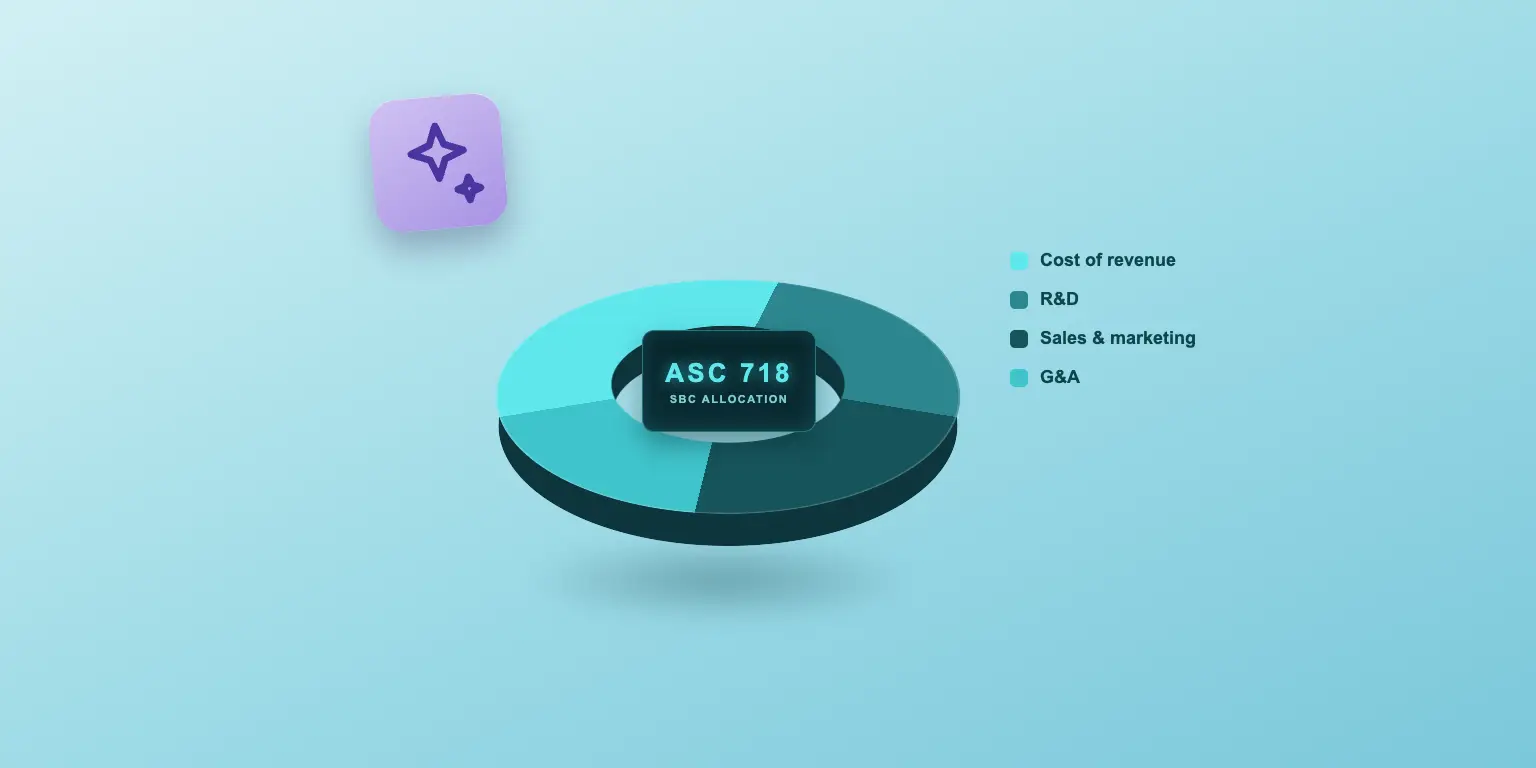
The operators’ guide to ASC 718. How to measure, book, allocate, and reconcile stock-based compensation – with exact journal entries and a month-end close checklist.
What to track on a SaaS metrics dashboard, the definitions that reconcile to your financials, and a build-vs-buy guide your board trusts. 2026.
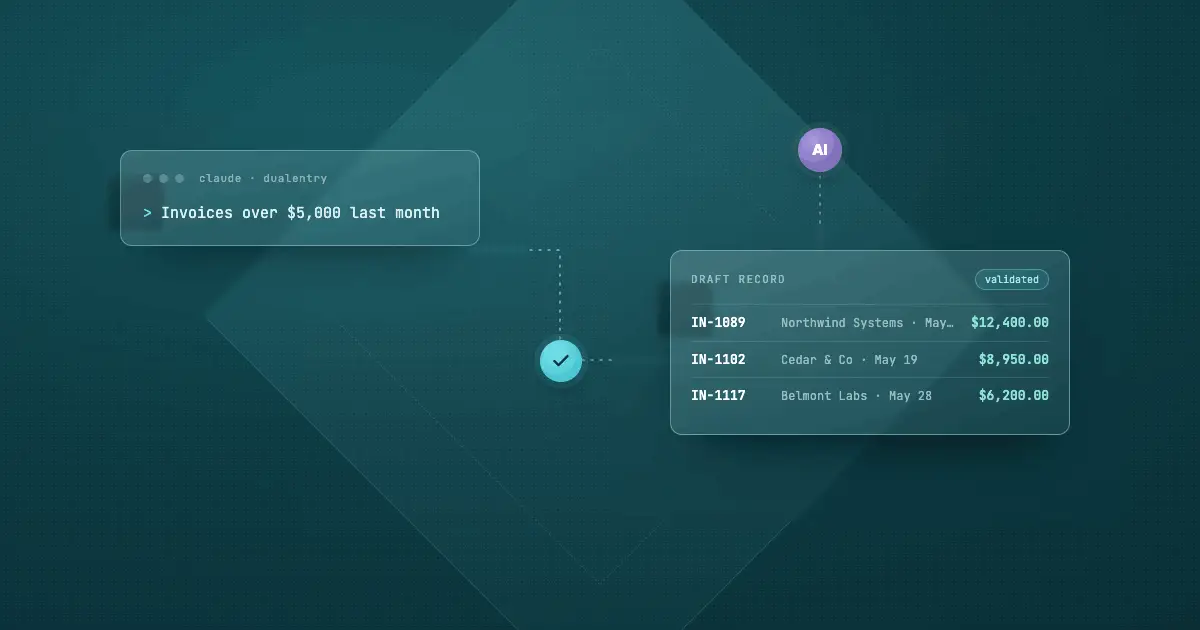
Connect Claude, Cursor, and any MCP client to your DualEntry data—draft, validate, and post accounting records in plain English, gated by your role.
ERP vs accounting software for SaaS finance leaders: a detailed comparison, 7 signs you've outgrown QuickBooks, and a framework for when to switch.
We scored the 7 best multi-currency accounting software tools on whether they actually consolidate entities and post the CTA, not just record FX.
Series A SaaS accounting, decoded: the GAAP, ASC 606, and 5-day-close standards investors check in diligence, and how to be ready before you raise.
The Citibank Revlon wire transfer mistake sent $894M out by accident. A CFO breakdown of how it happened—plus a 5-question payment controls audit.
Apply ASC 606 to SaaS deferred revenue: five-step model, multi-element contract journal entries, variable consideration, and contract modification accounting.
A stage-by-stage accounting guide for VC-backed founders—SAFE notes, ASC 718 stock comp, 409A valuations, and what getting it wrong costs before Series A.
Comparing Rillet alternatives? This guide routes you to the right option, legacy ERP vs. AI-native, based on your stage, not a generic feature list.
SaaS unit economics by ARR stage and GTM motion: fully loaded CAC, LTV:CAC, and payback benchmarks investors actually use in diligence.
Understand SaaS cash flow analysis — deferred revenue mechanics, OCF vs. FCF vs. Rule of 40 FCF margin, and ARR-stage benchmarks for your board.
ARR vs revenue aren't the same thing. See why the two metrics diverge, how to reconcile them under ASC 606, and which one to use for board reporting.
Learn how SaaS financial statements differ from traditional businesses. Income statement, balance sheet, and cash flow line by line, with benchmarks.
Build a SaaS chart of accounts for clean reporting, investor due diligence, and audit readiness—includes a full sample template with account numbers.
Learn how to calculate GRR, what investors expect by stage, and the two levers CFOs use to fix it before Series B and C diligence.
The best ERP system for tech startups depends on your stage, not your feature wishlist. Here's when to move off QuickBooks and what to buy next.
Will AI Replace CFOs? Here's What the CFOs Who Are Winning Actually Did.
Not all SaaS accounting software works at every stage. We map 9 tools to the ARR stage where they deliver, with honest reviews and a billing stack matrix.
What is SaaS ERP? Learn how SaaS ERP works, how it compares to cloud and on-prem ERP, key benefits, drawbacks, features, and top systems.
How to record a deferred revenue journal entry—step-by-step examples, SaaS scenarios, common mistakes, and when to automate.
SaaS accounting is different from traditional accounting. Learn ASC 606 revenue recognition, deferred revenue, key SaaS metrics, and common mistakes – with practical examples.
General ledger adjustments keep your financial statements accurate at close. Learn what they are, the most common errors, and a simple four-step process to handle them.
Claude Opus 4.7 dethroned GPT-5.4 hours after release, scoring 79.2% on real accounting tasks. Full leaderboard and breakdown.
Confused about the general ledger vs chart of accounts? Learn how they differ, how they work together, and see real examples to help you set up cleaner books.
GL account codes classify every transaction in your chart of accounts. Learn how they're structured, how they affect reporting, and how to set them up correctly.
A payroll ledger tracks employee pay, deductions, and liabilities at the transaction level. Learn how it works, how it flows into the GL, and how to keep it accurate.
Learn what a general ledger report is, how to read one, and how it connects to your trial balance and financial statements.
Find the best QuickBooks alternative for your specific situation - whether you're outgrowing its reporting, frustrated by pricing, or need software built for SaaS accounting.
NetSuite vs QuickBooks; a side-by-side comparison covering pricing, features, scalability & hidden costs. Plus the third option most guides miss. Updated for 2026.
A practical guide to intercompany reconciliation: common challenges, best practices for growing groups, and how AI-powered tools are streamlining the close.
A practical guide to account reconciliation best practices -- covering workflows, common pitfalls, and how modern finance teams keep their books clean at scale.
Compare 11 Sage Intacct alternatives for 2026 with verified pricing, migration timelines, and a quick-match guide to find the right fit for your company.
NetSuite alternatives for 2026: compare top ERP systems like DualEntry, Sage Intacct, Dynamics, and SAP. Find faster, cheaper, AI-powered options.
Balance sheet reconciliation explained: why it matters, common challenges, and how AI-powered automation improves accuracy, controls, and financial close efficiency.
Learn what account reconciliation is, how it works, and why it matters. Step-by-step process, examples, and best practices for accurate financial reporting.
Is NetSuite down? Learn how to check NetSuite system status, confirm outages, and see what to do when the platform stops working.
DualEntry’s AI Accounting Benchmark tests 19 AI models across 101 accounting tasks. OpenAI GPT-5.4 leads with 77.3% accuracy but reliability gaps remain.
DualEntry Labs finds AI models fail one-third of real accounting tasks. See what 66% accuracy means for autonomous finance.
Learn how a general ledger in ERP improves accuracy, automation, and reporting. Discover AI-powered GL features for growing teams.
General Ledger Postings explained: how journal entries move to the ledger, key posting rules, and why accurate postings matter for reporting.
General ledger vs. general journal explained: key differences, examples, and how modern ERP automation improves accuracy, posting, and reporting.
Outgrown QuickBooks? Learn the 7 signs, ERP readiness checklist, migration phases, timelines, and how to build the ROI case for the move.
Download a free accounts receivable aging report template for Excel and Google Sheets. Learn how to calculate, prepare, and read AR aging reports.
Download a free bank reconciliation template for Excel and Google Sheets with open items, journal entries, reviewer sign-off, and a worked example.
Download a free CFO board report template for Excel and Google Sheets to track financial performance, budget variances, cash runway, and SaaS KPIs.
A controller-grade month-end close checklist with an owner, close day, and evidence for every task. Download the free Excel and Google Sheets template.
The only SaaS metrics cheat sheet with formulas, stage-specific benchmarks, and real operator tips. 38 KPIs across revenue, retention, growth, and more.
Get our free ERP evaluation template for CFOs to objectively compare ERP vendors across functionality, integration, total cost of ownership, and implementation risk.
ownload 7 free general ledger templates for Excel, Google Sheets and PDF. No email required. Includes a worked January example that ties out to a trial balance.