Don't worry! The contents here will appear on the published page.
Accounts Receivable Best Practices: Process & KPIs

Do San (Justin) Myung
Expert Accountant & Former Consulting CFO
Do San (Justin) Myung
Expert Accountant & Former Consulting CFO
Justin (Do San Myung) is Expert Accountant at DualEntry with 20+ years of hands-on experience managing general ledgers, financial close processes, and ERP implementations for mid-market and enterprise companies. As a former Consulting CFO and Controller, he has personally overseen month-end closes, SOX compliance programs, and multi-entity consolidations across technology, manufacturing, and services industries. Justin specializes in transforming manual accounting workflows into automated, AI-driven processes.
Learn about our editorial policies.
Last updated
October 8, 2026
Reviewed by
Woosung Chun

Woosung Chun
CFO
Woosung Chun is the CFO of DualEntry with experience in corporate finance, accounting, strategy, and acquisitions. He previously grew from scratch and led the M&A and Finance teams at Benitago, where he completed more than 12 acquisitions in 2 years. He graduated with a BS from NYU Stern. At DualEntry, Woosung writes about AI in accounting, revenue recognition, foreign currency accounting, hedge accounting, and ERP modernization for finance teams navigating complex, multi-entity environments.
Learn about our editorial policies.
Summarize this article
A business can be profitable on paper and still struggle to make payroll, because the money it has earned is tied up in unpaid invoices instead of sitting in the bank.
That money is its accounts receivable, and how well a finance team manages it usually decides whether cash comes in on time or gets stuck.
This guide covers the accounts receivable process step by step, the practices that keep it healthy, and the metrics that show whether it's working. It also looks at what changes when you run AR at a subscription business, where the usual monthly playbook starts to fall apart.
What are accounts receivable?
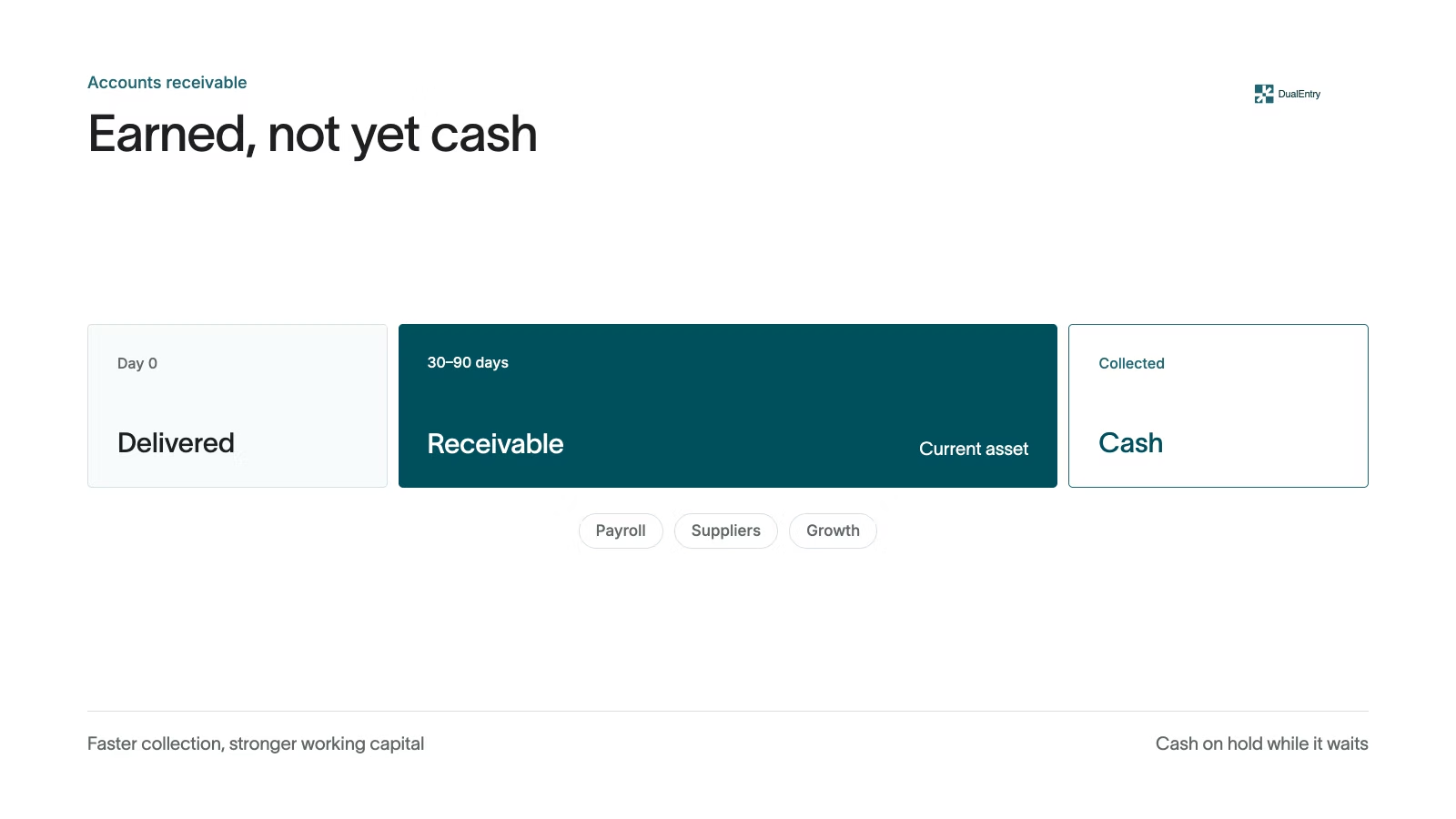
Accounts receivable (AR) is the money customers owe your business for goods or services you've already delivered but haven't yet been paid for. It sits on the balance sheet as a current asset [1], and payment terms usually run from 30 to 90 days depending on the industry. [2]
AR matters because it's revenue you've earned but can't spend yet. Every dollar sitting in receivables is a dollar not covering payroll, suppliers, or growth.
How quickly and reliably you turn receivables into cash is one of the clearest signals of whether a finance function is running well, which is why collections speed feeds directly into working capital and cash flow forecasts.
The accounts receivable process, step by step
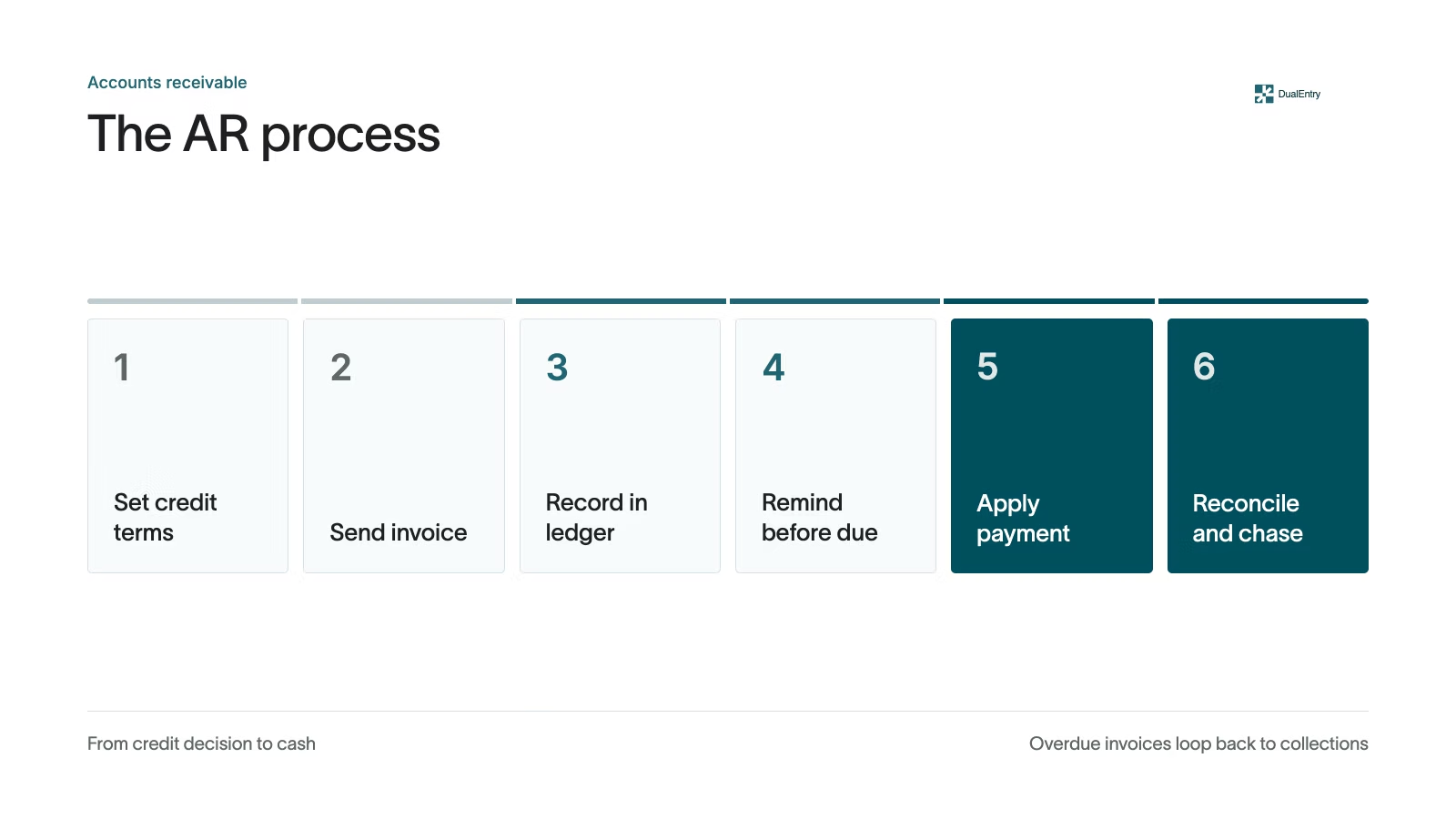
A receivable is created the moment you let a customer pay later instead of upfront. From there, the job is to turn that promise into cash and record it correctly.
Here's how the process runs, step by step:
1. Check the customer and agree terms
A customer wants to buy on credit, so before you commit, decide whether to extend it and on what terms. Run a quick credit check, set a credit limit, and put the payment terms in writing. This is the cheapest place to prevent a bad debt, because you're weighing the risk before any money is owed.
2. Deliver and send the invoice
Once you've delivered the goods or service, send an invoice that shows exactly what's owed and when it's due. Include the invoice number, the dates, the line items, the total, the due date, and how the customer can pay.
3. Record the receivable in your books
Post the invoice to your general ledger straight away. That way, the amount owed shows up in your books and on your aging report the moment it's issued, not weeks later at month-end.
4. Remind the customer before it's due
A short, friendly reminder before the due date does more to get you paid on time than chasing after the fact. Sending it automatically means it never gets forgotten when the team is busy.
5. Receive and apply the payment
When payment arrives, match it to the correct invoice and mark it paid. This step is where errors creep in at scale, especially with partial payments or customers paying several invoices at once, so it needs to be done carefully.
6. Reconcile and chase what's left
Check your AR against the ledger to make sure everything lines up, then follow up on anything still unpaid. Whatever's overdue goes back onto your aging report and into your collections queue.
The smoother that loop runs, the less cash gets stuck along the way.
Accounts receivable best practices
While the process above tells you what to do, these practices tell you how to do it well.
If you're looking at how to collect accounts receivable faster, most of the gains come from fixing the process before an invoice becomes overdue.
Here are the ones that make the biggest difference:
Set a clear credit policy
A credit policy is the rulebook for who gets credit, how much, and on what terms. The standard way to size up a customer is the five C's of credit [2]:
- Character: their track record of paying on time
- Capacity: their ability to pay based on cash flow
- Capital: the financial reserves behind the business
- Collateral: any assets backing the debt
- Conditions: the wider economic picture
What good looks like is simple: score every new customer against the same criteria before credit is extended. Base their credit limits on how safe they are to lend to, not just on the size of the deal.
Agree payment terms upfront
Vague terms are one of the easiest causes of late payment to prevent, because the delay often isn't really the customer's fault. State the terms plainly on the contract and on every invoice: the due date, accepted methods, and any late fee or early-payment discount.
Tightening default terms is one of the fastest levers you have. If you offer net 30 by default, try net 15 on new customers, since onboarding is the natural moment to set the expectation.
Invoice promptly and accurately
An invoice you send a week late is a payment you receive a week late. Send invoices the moment work is delivered or the billing period closes, and make them complete enough to pay on sight.
But remember, speed means nothing without accuracy. Sending a fast invoice with a billing error is worse than sending it late, because a mistake completely freezes the payment process while it gets sorted out.
Automate payment reminders
Manual follow-up is slow, uneven, and the first thing to slip when the team is busy. An automated reminder sequence, sent on a schedule before and after the due date, keeps the cadence steady no matter the workload and frees the team to spend its time on more important tasks.
Offer multiple payment methods
Every extra step between "I'll pay this" and the payment clearing is a chance for it to stall. Accepting cards, ACH, and bank transfer, and putting a payment link right in the invoice, removes friction at the exact moment the customer is ready to act. Where it fits the customer, a card-on-file setup gets the cash deposited quickly instead of waiting out net terms. [2]
Establish a formal client onboarding process
Before starting work, have every new customer complete a quick onboarding form to capture their exact billing email, required purchase order (PO) formats, and accounts payable contact. Securing the right administrative details upfront ensures your very first invoice routes cleanly to the person who actually pays the bills.
Review the aging report regularly
The aging report groups open receivables by how overdue they are; it's one of the most useful documents for deciding where to spend collections effort. Review it at least weekly. A handy trigger is the 10% rule that lenders use for cross-aging: when 10% or more of a customer's balance is more than 90 days old, treat the whole account as high-risk and act on it. [3]
Match collections effort to risk
Not every overdue invoice deserves the same attention. Focus on the accounts that are both large and slow, and let automation handle routine reminders for the rest. A million-dollar invoice 45 days late is a different problem from a hundred-dollar one a day late.
Reconcile receivables often
Reconciling AR against the ledger catches misapplied payments, duplicate invoices, and errors before they pile up into a messy close. Doing it continuously rather than only at month-end keeps the aging report trustworthy and the audit trail clean.
Automate your accounts receivable workflow
Manual AR doesn't scale. As volume grows, invoicing, matching, and reminders eat more hours and produce more mistakes.
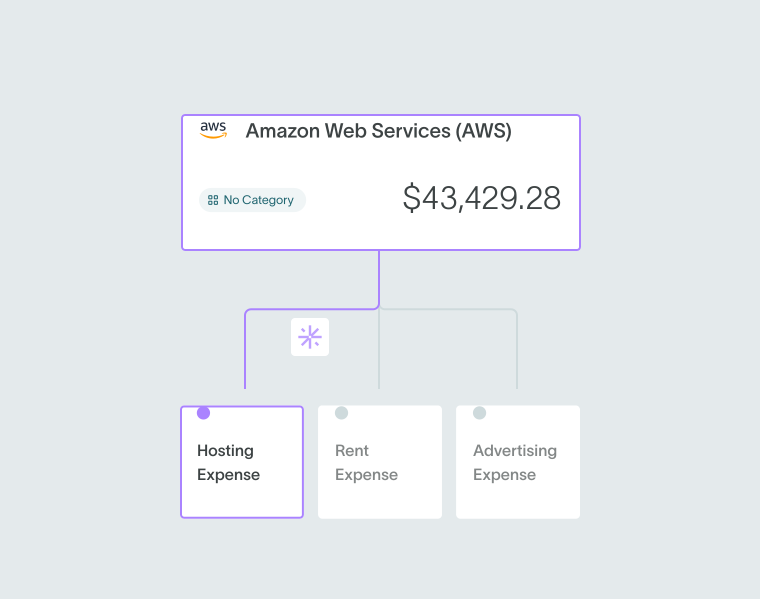
Automating the workflow, from invoice generation through cash application, is what lets a lean team hold its collection speed steady while the business grows. AR automation sends reminders on a schedule you set and uses AI to suggest payment matches for review [4], [5], leaving the team to work the accounts that need judgment.
The AR metrics that matter
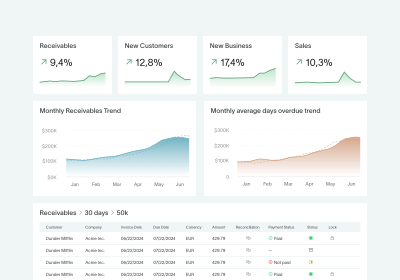
No single accounts receivable KPI tells you whether AR is healthy, so it helps to track a few together.
Here are the ones worth watching:
These metrics are most useful when you track them alongside the wider numbers that show how the business is performing, rather than looking at AR in isolation. A good SaaS reporting setup makes it easier to see how collections are affecting cash flow, growth, and the rest of the business.
Building a collections and dunning sequence
A dunning sequence is just your follow-up routine written down as steps. It ensures your team handles past-due invoices the exact same way every time, so no account slips through the cracks. The aim is to stay friendly while the invoice is fresh and get firmer as it ages.
A simple sequence looks like this:
- A few days before the due date: a short, friendly heads-up that payment is coming
- On the due date: a polite note that it's due today
- Within a week overdue: a direct follow-up asking for payment or an update
- Two to three weeks overdue: a firmer email, then a phone call
- Past your risk threshold: a formal notice, with the account flagged for a credit hold
Consistency is one of the most important collections best practices. A clear sequence gives everyone the same rules for when to send a reminder, when to escalate, and when an overdue account needs human attention.
How accounts receivable aging works
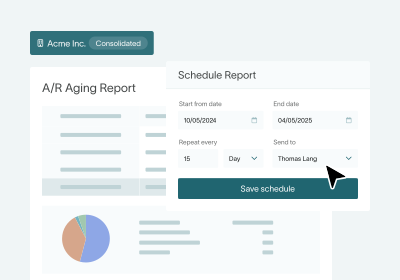
An aging report groups your open invoices into time buckets based on how overdue they are, showing you exactly where your cash is trapped.2 A common breakdown uses five buckets: Current (not yet due), 1–30 days, 31–60 days, 61–90 days, and 90+ days past due.
AR leads use it two ways:
- To prioritize collections. The older and larger a balance, the more urgent it is, since invoices get harder to collect the longer they sit. [11]
- To forecast bad debt. The size of the tail past 60 and 90 days is the earliest signal of what you may eventually write off, and it feeds your allowance for credit losses (the CECL name for what used to be called the allowance for doubtful accounts). [12]
A healthy report keeps most of its value in the current bucket with a thin tail. A tail that thickens month over month is a sign collections aren't keeping up with billing.
What is different about AR at a SaaS company
Most AR advice is written for businesses that send an invoice and wait for a check. Subscription billing breaks several of those assumptions, and a SaaS finance team runs into problems the standard playbook doesn't cover:
Billing is continuous
Instead of a handful of discrete invoices, you have renewals firing throughout the month and usage charges that can change from one billing cycle to the next.
That means AR is less like a stack of invoices to chase and more like a stream to manage. Metrics need to be read against that billing rhythm.
Failed payments are an AR problem
Recurring billing creates a problem where payments can fail even when the customer intends to stay: an expired card, a bank fraud flag, or insufficient funds at renewal. Across Recurly's subscription network, SaaS businesses have recovered more than $155 million through automated dunning that would otherwise have been lost to failed payments. [13]
Treating failed payments as an AR problem, rather than simply a retention problem, gives finance teams a chance to recover that revenue through retries, reminders, and updated payment details.
Billing and revenue diverge
SaaS finance teams also have to keep billing, revenue, and cash separate. Service you've delivered but haven't billed yet is still an asset: an unbilled receivable when only the passage of time stands between you and payment, or a contract asset when payment still depends on further performance. [14], [15]
Service you've billed ahead for but haven't delivered is deferred revenue, a liability. [16] That distinction becomes especially important when looking at cash flow, where revenue alone doesn't tell you how much money is actually available.
Scale adds complexity
As a SaaS company expands across entities, currencies, and markets, AR becomes harder to reconcile.
Receivables between related entities have to be tracked separately and eliminated in consolidation [17], while payments may also need to be matched across different currencies, processors, and bank accounts.
AR affects the close
All of that eventually feeds into the financial close. Invoices, cash application, failed payments, credits, allowances, and intercompany balances all need to reconcile before the books can close cleanly.
If the AR process is slow or messy, those unresolved balances become a bottleneck at month-end.
The accounting platform built to run your AR
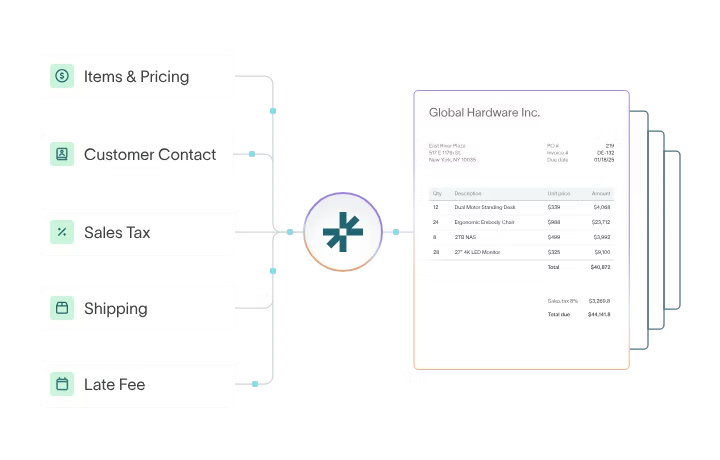
Everything above is easier when AR lives directly inside your accounting system rather than in a separate tool. Keeping it there means less data moving between systems and fewer gaps to clean up later.
DualEntry brings that work into the ERP itself. Its accounts receivable automation handles the workflow from invoicing and scheduled payment reminders through payment application and bank reconciliation [18], so a lean finance team can keep collections moving as volume grows.
A few things set it apart:
- Automated invoicing. Approved sales orders convert to invoices in one step, tax is calculated on each line, credit limits are checked when an order is entered, and invoices post directly to the ledger. [19], [20]
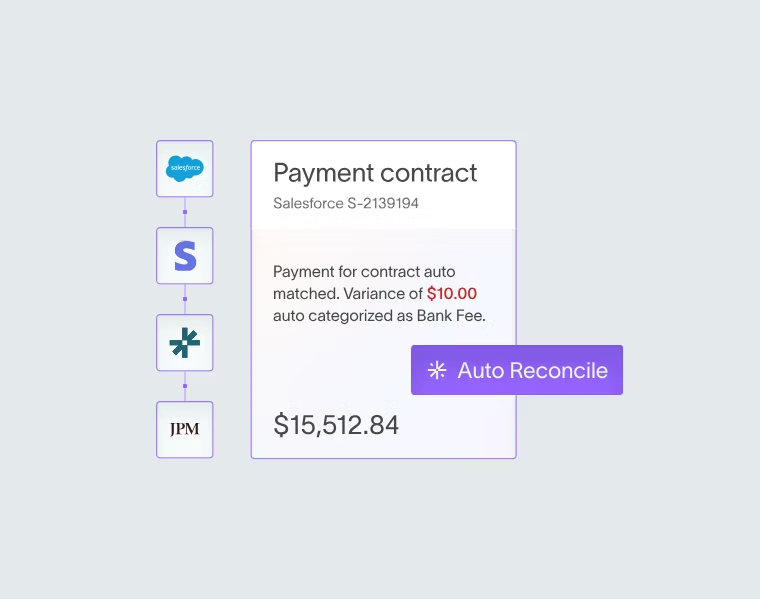
- Connected to your stack. Salesforce and HubSpot turn closed-won deals into draft contracts, HubSpot shows invoice and payment status on the deal [21], and Stripe syncs customers, invoices, payments, and fees into the ledger. [22]
- Built for global scale. Multi-currency invoicing, FX accounting, and multi-entity support let finance teams manage receivables as the business expands. [23]
The bigger advantage is that AR does not sit on its own. Payments can be matched and reconciled against the same ledger the rest of finance runs on [5], while receivables feed into the wider financial close.
Instead of shuttling numbers between an AR tool, a billing system, and the general ledger, the work stays on one platform, making month-end faster and cleaner.
Accounts Receivable Best Practices FAQs
See the full power of DualEntry in 30 minutes
Justin (Do San Myung) is Expert Accountant at DualEntry with 20+ years of hands-on experience managing general ledgers, financial close processes, and ERP implementations for mid-market and enterprise companies. As a former Consulting CFO and Controller, he has personally overseen month-end closes, SOX compliance programs, and multi-entity consolidations across technology, manufacturing, and services industries. Justin specializes in transforming manual accounting workflows into automated, AI-driven processes.