Don't worry! The contents here will appear on the published page.
SaaS Cash Flow Analysis: The CFO's Guide to OCF, FCF & Rule of 40

Woosung Chun
CFO, DualEntry
Woosung Chun
CFO, DualEntry
Woosung Chun is the CFO of DualEntry with experience in corporate finance, accounting, strategy, and acquisitions. He previously grew from scratch and led the M&A and Finance teams at Benitago, where he completed more than 12 acquisitions in 2 years. He graduated with a BS from NYU Stern. At DualEntry, Woosung writes about AI in accounting, revenue recognition, foreign currency accounting, hedge accounting, and ERP modernization for finance teams navigating complex, multi-entity environments.
Learn about our editorial policies.
Last updated
September 23, 2026
Reviewed by
Do San (Justin) Myung

Do San (Justin) Myung
Expert Accountant & Former Consulting CFO | DualEntry
Justin (Do San Myung) is Expert Accountant at DualEntry with 20+ years of hands-on experience managing general ledgers, financial close processes, and ERP implementations for mid-market and enterprise companies. As a former Consulting CFO and Controller, he has personally overseen month-end closes, SOX compliance programs, and multi-entity consolidations across technology, manufacturing, and services industries. Justin specializes in transforming manual accounting workflows into automated, AI-driven processes.
Learn about our editorial policies.

Summarize this article
SaaS cash flow analysis is the process of reconciling subscription revenue timing with actual cash movement. It's critical because annual contracts, deferred revenue, and ARR growth create gaps between what a P&L shows and what a bank account holds.
A SaaS company can invoice $1.2M in January, post $200K of net income for the quarter, and still be running out of cash. Why? Because traditional cash-flow intuition breaks down in subscription businesses, where annual contracts, deferred revenue, and ASC 606 timing rules collide with the bank account.
To dive deeper into SaaS cash flow management, this guide is for finance leaders who already know the basics and need to do the work. We'll cover why SaaS cash flow diverges from net income (with the journal entries), how to read SaaS financial statements line by line, when to use OCF vs. FCF vs. Rule of 40 FCF margin, how to bridge deferred revenue, and what 'good' looks like depending on your ARR stage.
Why SaaS cash flow looks wrong… and why that's normal

SaaS cash flow diverges from net income because subscription revenue is recognized ratably over the contract period, not at cash receipt.[1] A $12,000 annual contract paid on Jan 1 generates $12,000 of operating cash in January but only $1,000 of recognized revenue per month — creating a 12-month timing gap.
Deferred revenue journal entry mechanics
Two journal entries explain the divergence between P&L and cash.
- First: cash receipt creates Deferred Revenue (a liability).
- Second: monthly revenue recognition draws that liability down.
Until a contract is fully delivered, cash sits on the balance sheet as deferred revenue while the income statement only sees a sliver of it.
Deferred revenue cash vs. revenue timing (annual contract example)
High-growth SaaS companies signing large annual contracts can show positive operating cash flow while still reporting a net loss. This is a sign of health, not distress.
That's also why SaaS cash flow analysis always starts with the balance sheet change in deferred revenue, not the income statement. A growing deferred revenue balance is a cash source, even though it looks like a liability.
Another point worth noting is that monthly contracts don't produce deferred revenue. Cash and revenue land in the same period. So, a company shifting its mix from annual to monthly billing will see OCF spike before revenue catches up. If your SaaS cash flow forecast doesn't factor in this billing-frequency mix, it'll be wrong.
The SaaS cash flow statement line by line
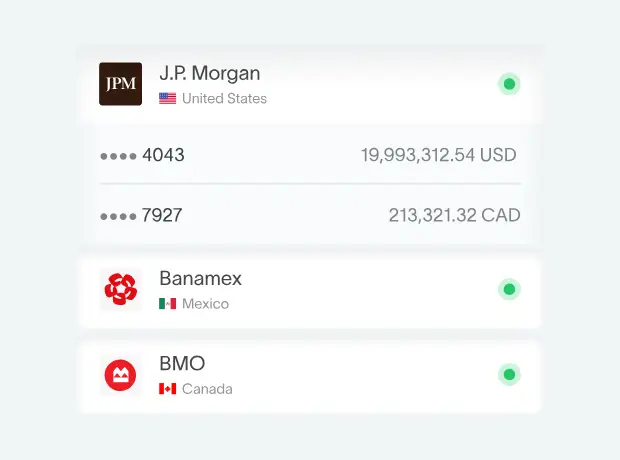
A SaaS cash flow statement follows the standard three-section structure (operating, investing, financing), but three line items behave differently than in traditional businesses: changes in deferred revenue, changes in accounts receivable from ARR billing cycles, and capitalized software development costs under ASC 350.[2]
SaaS cash-flow statement with subscription-specific annotations
The Deferred Revenue line in the operating section is probably the most misread line in SaaS accounting. A $2M increase in Deferred Revenue is $2M of cash already collected — a cash inflow — although it's a liability on the balance sheet. Boards that only read the P&L miss this entirely. Getting it right starts with a properly structured chart of accounts that separates deferred revenue, accounts receivable, and capitalized software costs cleanly.
OCF vs. FCF vs. Rule of 40 FCF margin: which metric for which audience?
OCF, FCF, and Rule of 40 FCF margin are three distinct cash flow metrics serving three different audiences. OCF is for auditors and internal accounting teams. FCF is for investors and board members. Rule of 40 FCF margin is for benchmarking against public SaaS peers and VC portfolio comps.
That audience split is the same logic behind a layered SaaS metrics dashboard, where operators, executives, and the board each see a different cut of the numbers. Investors reviewing your cash flow will typically cross-reference these FCF benchmarks against your LTV:CAC and unit economics -- for the full framework, see our SaaS unit economics guide.
Cash-flow metric by audience, formula, and benchmark
OCF is part of the audit conversation. It's the number your accounting team reconciles and your auditor ties out. Your close also depends on it.
FCF is key for investors and the board, showing what subscription growth actually costs after you fund capitalized software development and infrastructure. Read alongside gross revenue retention (GRR), it shows if growth is durable or not. A company with $5M of OCF and $4M of capitalized engineering spend has $1M of FCF. This matters more to a board than the OCF figure alone.
How to calculate Rule of 40 FCF margin
Rule of 40 FCF margin = revenue growth rate (YoY%) + FCF margin (FCF/revenue %).[3]
A company growing at 80% ARR YoY with a -30% FCF margin scores 50 – above the 40 threshold. A company growing at 20% with a -25% FCF margin scores -5, which is a red flag for late-stage investors.
Use the Rule of 40 FCF variant (not the EBITDA margin variant) when you're presenting to growth equity investors or prepping for a secondary. Since the 2022 market reset, public SaaS multiples have correlated more tightly with the FCF version,[4] so it's a number late-stage investors consider closely.
Reading deferred revenue on the balance sheet alongside cash flow
To analyze SaaS cash flow accurately, always read the deferred revenue balance alongside the cash flow statement. The period-over-period change in deferred revenue reconciles the gap between cash collected and revenue recognized. It also signals whether annual contract momentum is accelerating or decelerating.
Deferred revenue bridge (annual contract billings vs. revenue recognition)
A rising deferred revenue balance is one of the most misunderstood positive signals in SaaS. Each quarter's increase is unreported operating cash flow (cash that the company's already collected but hasn't recognized on the income statement yet). A CFO who can confidently build and present this bridge will win the board's trust. It's a clean, clear way to explain why a company's cash position is healthier than its P&L suggests.
Watch also for the opposite signal. If deferred revenue's flat or shrinking but revenue's growing, the company is converting annual customers to monthly billing. This is a cash flow risk that won't appear in ARR metrics until churn materializes.
ARR-stage cash flow benchmarks
A “good” FCF margin for a SaaS company completely depends on ARR stage and growth rate. Early-stage companies ($1M–$5M ARR) burning -50% to -80% FCF margin aren’t failing — they’re investing.[5] By $25M–$50M ARR, top-performing companies have FCF margins of -35% or better; -20% or above is top-quartile performance at this stage.[5] At $100M+ ARR, the median FCF margin at IPO is approximately -20%; breakeven-to-positive is the top-quartile expectation.[5]
SaaS FCF margin benchmarks by ARR stage*
Source: Bessemer Venture Partners, "Scaling to $100 Million" (bvp.com); High Alpha / OpenView, "2025 SaaS Benchmarks Report" (highalpha.com); SaaS Capital, "2025 Benchmarking Research" (saas-capital.com). Ranges synthesized across surveys; individual results vary.
These benchmarks assume an 80%+ gross margin.[6] In SaaS accounting, companies running lower (under 65%) — think hardware-attached SaaS or services-heavy models — will structurally underperform on FCF margin, and these cases should be communicated explicitly to investors with a gross-margin-adjusted Rule of 40.
Cash-flow red flags for CFOs, and a month-end analysis checklist
The most common SaaS cash-flow red flags are deferred revenue declining faster than revenue growth, OCF being positive while FCF's getting worse (capex creep), AR DSO rising beyond 45 days on annual contracts (a widely cited practitioner rule of thumb), and a declining Rule of 40 score despite revenue growth. These all indicate structural cash efficiency problems that won't be obvious in the P&L.
Red flags
Noticed any of these? Stop and investigate immediately.
- Deferred Revenue growing slower than ARR: Signals a shift from annual to monthly billing (or a collections failure)
- OCF positive but FCF worsening quarter over quarter: Shows that capitalized software spend is consuming cash faster than the subscription engine generates it
- AR DSO above 45 days on annual contracts (a widely cited practitioner rule of thumb; industry range is 30–60 days): Indicates a collections failure, or channel billing delays
- Financing activities increasingly funding operating shortfalls: Burn is being covered by equity, not subscription economics
- Rule of 40 score declining despite revenue growth: A sign that FCF margin is deteriorating faster than revenue growth improves
Month-end cash-flow analysis checklist
- Reconcile ending Deferred Revenue to billed ARR schedule (variance here suggests a billing or recognition error)
- Rebuild the Deferred Revenue bridge (see Table 4 above) to confirm QoQ change aligns with your bookings data
- Calculate OCF, FCF, and FCF margin (report all three with QoQ and YoY changes)
- Compute your Rule of 40 score (flag if falls below your ARR-stage benchmark — see Table 5 above)
- Review AR aging, and escalate anything over 45 days on annual contract invoices
- Confirm capitalized software costs are properly separated from expense-period R&D
- Prepare the 13-week cash forecast, updating weekly actuals vs. forecast variance
Summary
We hope you'll come away from this guide with three takeaways.
Firstly, that deferred-revenue distortion is normal and healthy in annual-contract SaaS. Once you see it, the gap between P&L and cash flow stops being confusing.
Secondly, that OCF, FCF, and Rule of 40 FCF margin are different tools for different audiences, and conflating them is how CFOs lose board credibility.
And finally, that raw cash flow numbers don't mean much without ARR-stage benchmarks to put them in context.
DualEntry's cash flow management software automatically reconciles deferred revenue to your cash flow statement, calculates OCF, FCF, and Rule of 40 FCF margin, automates revenue recognition with software that handles the waterfall automatically and closes your books in five days — so your board deck is ready before the quarter ends. Schedule a demo to see how that would work in practice for your company, whatever your ARR stage. For broader SaaS accounting practices, see our guide
SaaS Cash Flow Analysis FAQs
See the full power of DualEntry in 30 minutes
Woosung Chun
CFO, DualEntry
Woosung Chun is the CFO of DualEntry with experience in corporate finance, accounting, strategy, and acquisitions. He previously grew from scratch and led the M&A and Finance teams at Benitago, where he completed more than 12 acquisitions in 2 years. He graduated with a BS from NYU Stern. At DualEntry, Woosung writes about AI in accounting, revenue recognition, foreign currency accounting, hedge accounting, and ERP modernization for finance teams navigating complex, multi-entity environments.