Don't worry! The contents here will appear on the published page.
ARR vs Revenue: Differences and Reconciliation

Woosung Chun
CFO, DualEntry
Woosung Chun
CFO, DualEntry
Woosung Chun is the CFO of DualEntry with experience in corporate finance, accounting, strategy, and acquisitions. He previously grew from scratch and led the M&A and Finance teams at Benitago, where he completed more than 12 acquisitions in 2 years. He graduated with a BS from NYU Stern. At DualEntry, Woosung writes about AI in accounting, revenue recognition, foreign currency accounting, hedge accounting, and ERP modernization for finance teams navigating complex, multi-entity environments.
Learn about our editorial policies.
Last updated
August 27, 2026
Reviewed by
Do San (Justin) Myung

Do San (Justin) Myung
Expert Accountant & Former Consulting CFO | DualEntry
Justin (Do San Myung) is Expert Accountant at DualEntry with 20+ years of hands-on experience managing general ledgers, financial close processes, and ERP implementations for mid-market and enterprise companies. As a former Consulting CFO and Controller, he has personally overseen month-end closes, SOX compliance programs, and multi-entity consolidations across technology, manufacturing, and services industries. Justin specializes in transforming manual accounting workflows into automated, AI-driven processes.
Learn about our editorial policies.

Summarize this article
The ARR slide says $10M. The income statement says $8.2M. Which one is right? Actually, both are correct, and that's the problem.
These two numbers measure two different things, and they're commonly confused by SaaS founders who are new to the game. Unfortunately, mixing them up can cause due-diligence problems and uncomfortable questions from investors.
This guide explains why ARR vs revenue look different, featuring a walkthrough of a real-world reconciliation example -- so you can see how the same company reports both numbers — and a look at the scenarios where ARR can be higher or lower than recurring revenue under GAAP. We're also including an ARR bridge format you can copy into your next board deck, a CARR comparison, and the calculation mistakes that mislead investors most often.
What is ARR?
.webp)
Annual recurring revenue (ARR) is the annualized value of a company's active subscription contracts at a point in time. It includes only recurring subscription fees and excludes one-time charges, professional services, and usage overages. ARR is an operating metric, not a GAAP measure,[4] and represents the forward-looking revenue run rate.
The ARR formula
The basic formula is straightforward:
ARR = MRR * 12Or the sum of all active annual subscription contract values. A customer on a $10K/month plan contributes $120K of ARR.
What's included is recurring subscription fees only: monthly subscriptions annualized, annual subscriptions at contract value, and multi-year subscriptions valued at the current year's annual rate.
What's excluded is everything non-recurring. Think implementation fees, professional services, training, usage overages without a committed minimum, hardware, and physical goods.
The most important thing to understand about ARR is that it's a point-in-time snapshot. It tells you what the company would earn over the next 12 months if nothing changed (no new sales, churn, or expansions). It's a forward-looking metric that investors lean on for evaluating growth.
What is GAAP revenue?
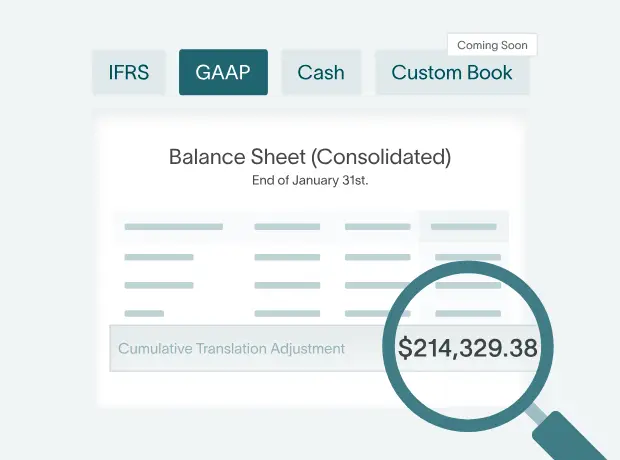
GAAP revenue is the amount recognized on the income statement under ASC 606 [1] after performance obligations are satisfied. Unlike ARR, it includes professional services and one-time fees, reflects actual delivery (not contract value), and it's a backward-looking measure of revenue already earned during a specific period.
Revenue recognition under ASC 606
ASC 606 establishes a five-step model [1] for recognizing revenue:
- Identify the contract
- Identify the performance obligations in the contract
- Determine the transaction price
- Allocate the transaction price to the performance obligations
- Recognize revenue when (or as) each obligation is satisfied
For subscriptions, revenue is recognized ratably over the service period.[1] In SaaS accounting, subscription revenue spreads month by month. Professional services are recognized on delivery (or at milestones),[1] usage charges are recognized with consumption,[1] and one-time setup fees are typically recognized over the contract term unless they represent a distinct performance obligation.[1]
The timing difference is what creates the gap with ARR. For example: a $120K annual contract signed on July 1st contributes $120K to ARR immediately, but only $60K to GAAP revenue in that calendar year. The remaining $60K rolls into next year.
TL;DR: Revenue answers "how much did we earn last quarter?", and ARR answers "what's our current run rate?"
ARR vs revenue: a side-by-side comparison
When ARR and revenue differ
ARR and GAAP revenue diverge because ARR is a point-in-time annualization of active contracts, while revenue is recognized ratably over the service period.[1] In the example below, a company finishing the year with $9.7M in ending ARR reports $9.975M in full-year GAAP revenue — higher than ARR — because non-recurring revenue streams such as professional services, onboarding fees, and usage overages are included in GAAP but excluded from ARR.
Real-life example: $9.7M ending ARR vs. $9.975M full-year GAAP revenue
To break down the main differences here...
- Mid-year contracts create the biggest gap. The 20 new customers signed July 1 added the full $2M to ARR the moment they signed — but ASC 606 [1] only allows you to recognize the months of service actually delivered. 6 months in, that's $1M of GAAP revenue. The other $1M stays in deferred revenue and is recognized next year.
- Churned customers are removed from ARR instantly but keep generating GAAP revenue. The 5 customers who churned on September 30 came out of ARR the same day. However, they still contribute GAAP revenue for the months they were active.
- Professional services and one-time fees boost GAAP revenue, but don't appear in ARR. Pro services ($400K), onboarding fees ($200K), and uncommitted usage overages ($150K) are all recognized through the income statement, but they're excluded from ARR.
In this example, GAAP revenue actually comes in higher than ending ARR because of the non-recurring revenue streams. Churned customers are removed from ARR instantly but keep generating GAAP revenue.
The ARR bridge (and how to build it for your board)
The churn and contraction lines in this bridge are the same inputs that determine your gross revenue retention rate — the metric investors use to assess revenue stability at Series B and C diligence.
Every credible SaaS board deck includes an ARR bridge, which shows how ARR moved from the start of the period to the end. Net new ARR is among the most closely watched metrics in SaaS fundraising.[3] It captures the company's ability to grow its recurring base after accounting for churn. The ARR bridge is one panel of a larger board view — see how it fits alongside NRR, Rule of 40, and runway on a board metrics dashboard. Pairing net new ARR with CAC payback period gives investors a complete picture of acquisition efficiency -- both metrics are covered in our SaaS unit economics framework. The SaaS magic number expresses that same efficiency as a single quarterly ratio.
Most boards review the ARR bridge quarterly. Fast-growing companies often run it monthly. The format doesn't change with the period — only the columns do.
CARR vs ARR vs revenue
Committed annual recurring revenue (CARR) includes signed contracts that haven't started generating revenue yet — like a deal closed in December that goes live in February. ARR only counts active, delivering contracts. CARR is always equal to or higher than ARR because it includes the pipeline of signed, but not yet live, subscriptions.
CARR is most useful for enterprise SaaS companies, where time-to-live can be significant after a contract is signed. For self-serve or PLG SaaS, where contracts go live the moment the customer signs up, CARR and ARR are effectively the same number, so there's no point reporting both.
Common ARR calculation mistakes
- Including professional services in ARR: ARR is recurring subscription revenue only. Combining it with implementation, onboarding, or training fees inflates the number and tells investors your revenue is higher quality than it actually is.
- Annualizing a single strong month: If December was your best month ever, annualizing December's MRR overstates ARR. Use your actual active contract base instead.
- Not removing churned contracts: A customer who gives 90-day notice in October should drop out of ARR when notice is given (or when service ends, depending on your policy). Leaving them in until the last day of service inflates the number, hiding churn.
- Counting multi-year deals at total contract value: A 3-year $300K contract is $100K of ARR, not $300K.
- Including usage overages in ARR: Variable usage charges aren't recurring unless the customer has a committed minimum.
- Confusing bookings with ARR: Bookings represent total contract value. ARR represents the annualized recurring portion. The two aren't interchangeable.
Tracking ARR and revenue together in DualEntry
Many SaaS companies between $5M and $50M ARR are managing reconciliation in spreadsheets: pulling contract data from their billing system, manually tagging customer movements, and hoping nothing falls out of sync before the board meeting.
DualEntry connects directly to your billing system — Stripe, Chargebee, Zuora, or others — and calculates both ARR as an operating metric and GAAP revenue under ASC 606 [1] from the same underlying contract data. No manual tagging, no separate spreadsheets, no reconciliation at month-end or compare your options in our revenue recognition software guide
Every board period, it generates the ARR waterfall (new, expansion, churn, contraction) automatically. Live ARR, MRR, NRR, and CARR sit alongside your GAAP income statement, balance sheet, and cash flow statement. Everything updates in real time as contracts change.
You'll know it's time to make the switch when your finance team is spending more time maintaining your ARR model and SaaS chart of accounts than analyzing them… or when an investor asks for an ARR-to-revenue reconciliation and you're not confident in the numbers.
If your ARR and revenue numbers live in different places, that's the problem DualEntry solves. Schedule a demo to see how SaaS companies at your stage run both metrics from a single source of truth.
ARR vs Revenue FAQs
See the full power of DualEntry in 30 minutes
Woosung Chun
CFO, DualEntry
Woosung Chun is the CFO of DualEntry with experience in corporate finance, accounting, strategy, and acquisitions. He previously grew from scratch and led the M&A and Finance teams at Benitago, where he completed more than 12 acquisitions in 2 years. He graduated with a BS from NYU Stern. At DualEntry, Woosung writes about AI in accounting, revenue recognition, foreign currency accounting, hedge accounting, and ERP modernization for finance teams navigating complex, multi-entity environments.
.webp)