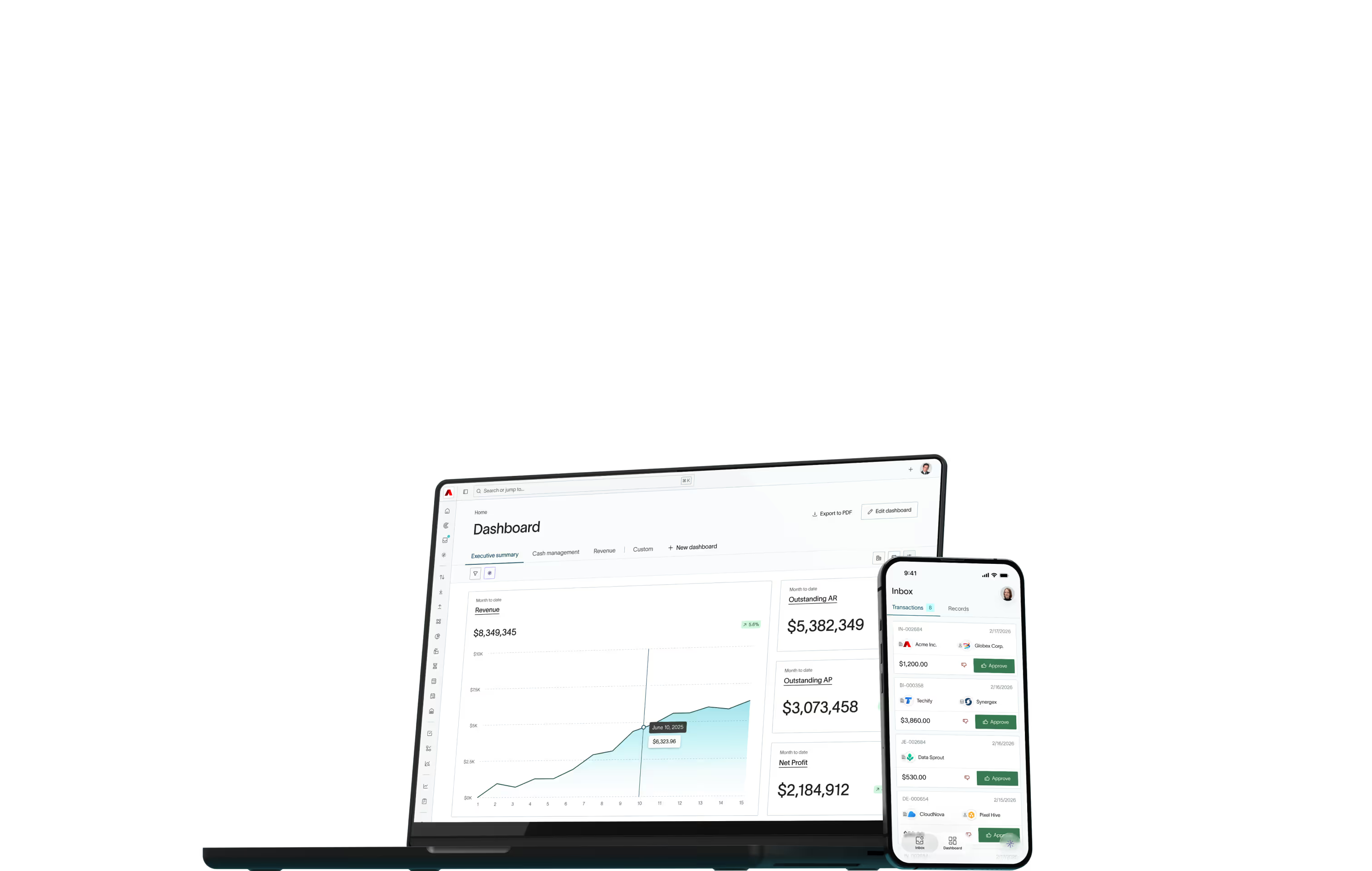
DualEntry AI ERP dashboard for SaaS companies

Rewriting Saas

The AI ERP for modern
SaaS companies

Automate revenue recognition, subscription billing, reconciliations, and reporting, all in one real-time ledger.

Thank you! Your submission has been received!
Oops! Something went wrong while submitting the form.

By clicking "Schedule Demo" you agree to the use of your data in accordance with DualEntry's Privacy Notice, including for marketing purposes.

Built for every SaaS revenue model

Why SaaS finance teams switch to DualEntry

Close Faster

Reduce month-end close time with automated reconciliations.

Consolidate Natively

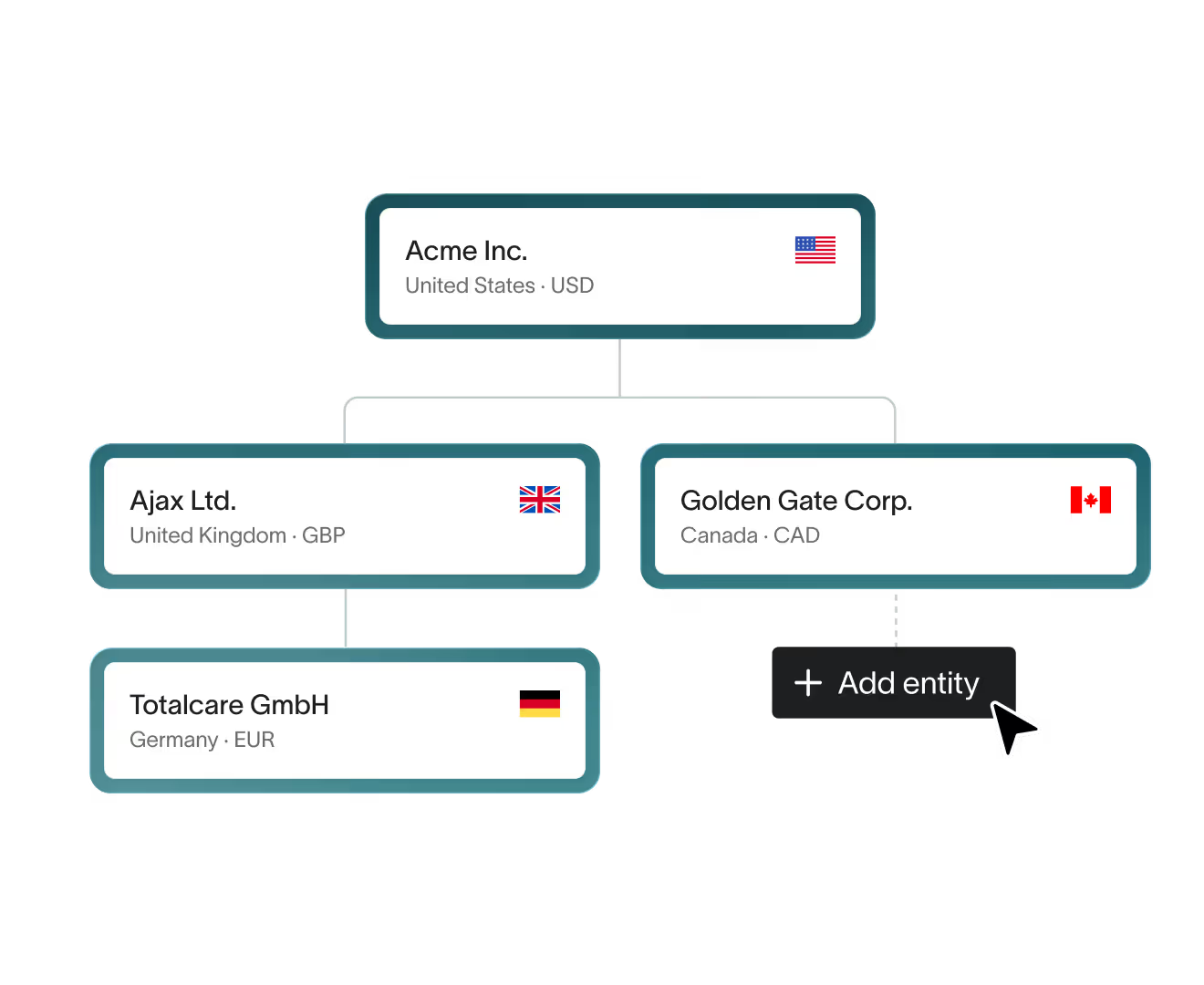
Multi-entity reporting built directly into the ledger.

Stay Audit-Ready

Built-in audit trails, permissions, and compliance controls.

One Source of Truth

RevRec, AP/AR, billing, and reporting in one platform.

Built for every stage
of SaaS growth

Scaling

For fast-growing teams outgrowing QuickBooks and spreadsheets.

Mid-Sized

For companies managing multiple products, entities, or pricing models.

Enterprise

For finance teams operating globally with complex workflows and compliance requirements.

IPO-Ready

For organizations preparing for audits, SOX readiness, or public-market reporting standards.
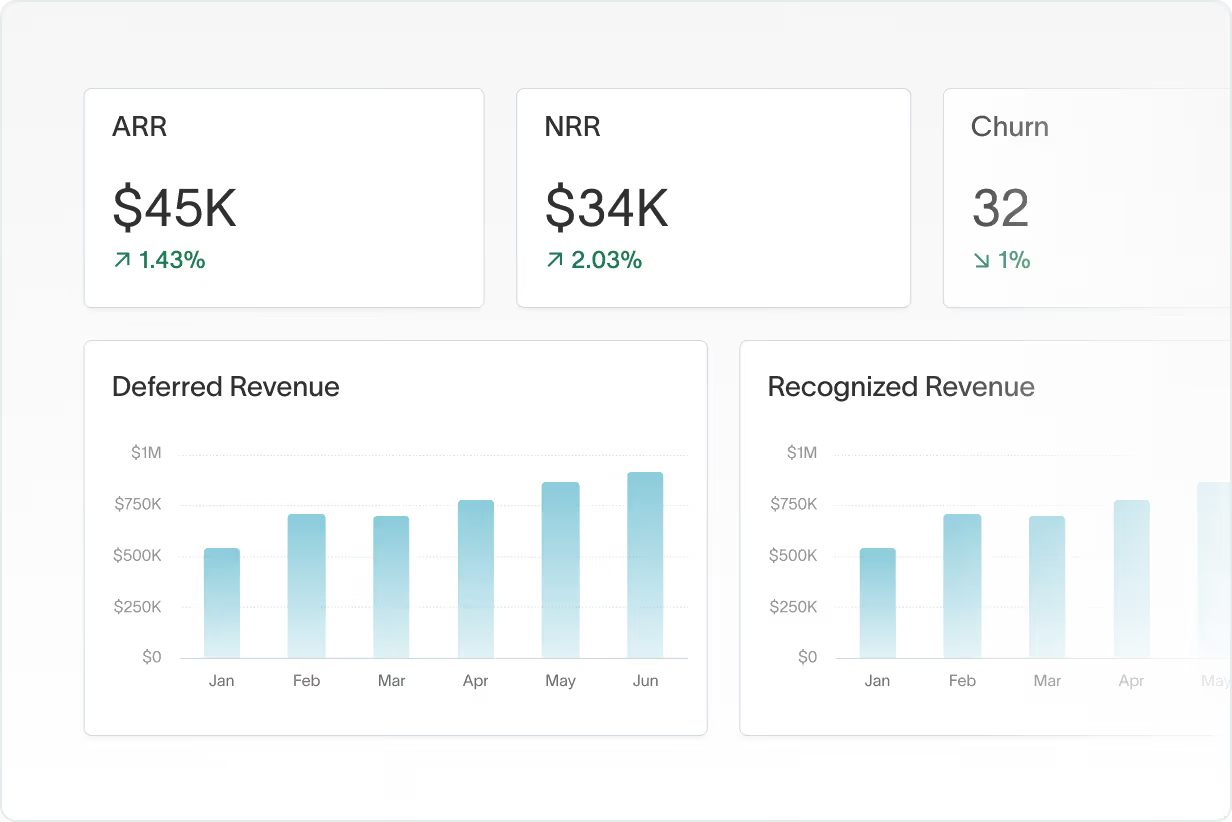
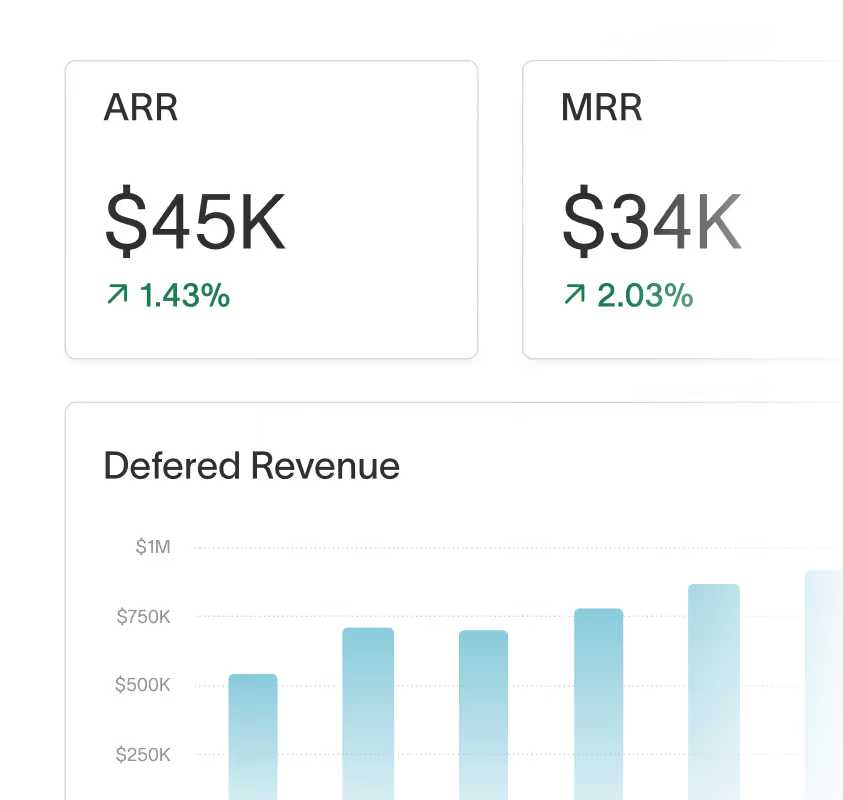
Real-time SaaS metrics in DualEntry: ARR, NRR, churn, and deferred revenue

Real-time metrics without spreadsheets

DualEntry posts directly into the ledger in real time.

ARR
MRR
Churn
Deferred revenue
CAC & LTV
Revenue waterfalls
Security & Compliance

Enterprise-grade security & compliance

SOC 2 Certified
GDPR compliant
AES-256 encryption
Role-based permissions
Audit logs
SOX-ready controls

How Slash runs a $140M company on a finance team of one

Watch video
Read case study

Connect your entire SaaS stack

Sync CRM, billing, payments, banking, and BI tools into a single finance workflow.

Explore 13,000+ integrations

Your SaaS finance system should scale with your business

Replace spreadsheets, disconnected tools, and manual reconciliations with a real-time ERP built for modern SaaS companies.

Thank you! Your submission has been received!
Oops! Something went wrong while submitting the form.

By clicking "Schedule Demo" you agree to the use of your data in accordance with DualEntry's Privacy Notice, including for marketing purposes.

AI ERP for SaaS Companies

What is an ERP for SaaS companies?

An ERP for SaaS companies is the financial system a software business runs on once spreadsheets stop keeping up. One cloud platform handles revenue recognition, subscription billing, reconciliations, and reporting. Unlike generic accounting software, it's built around recurring revenue. DualEntry does all of it on a single real-time ledger.

What should a SaaS company look for in an ERP?

The first thing a SaaS company should look for in an EPR is revenue: native ASC 606 recognition, plus billing that handles both subscriptions and usage-based pricing. Second, it should look for usual suspects that break at scale: multi-entity consolidation, live SaaS metrics like ARR, MRR and churn, and an audit trail clean enough for SOX and an eventual IPO. Finally one thing that gets underrated most of the time is setup time. While legacy ERPs can run for months; DualEntry goes live in 24 hours.

Which ERP is best for SaaS companies?

There's no single best answer, but the shortlist usually comes down between old players like NetSuite, Sage Intacct, and the newer AI-native ERP platforms like DualEntry. NetSuite brings the most breadth and the longest, priciest rollouts. Sage Intacct is a solid mid-market finance system. The AI-native options trade some breadth for speed and SaaS-specific revenue recognition, and that's the group DualEntry sits in, built for finance teams on a real-time ledger.

How is DualEntry different from NetSuite for SaaS companies?

NetSuite is the proven incumbent, and it shows its age. Powerful, yes, but slow to implement and running AI on architecture designed years ago. DualEntry is AI-native from the ground up, lives on a real-time ledger, and is up in 24 hours instead of months. Multi-entity consolidation and multi-book reporting across GAAP, IFRS and tax are built in, not configured after the fact.

Is DualEntry better than QuickBooks for SaaS companies?

It is not about being better but more about your growth stage. QuickBooks is the tool most SaaS companies start on and outgrow after a funding round or two. This is because it has no native ASC 606 revenue recognition, no real multi-entity consolidation, and no live SaaS metrics, meaning as you scale you will have to add multiple addons making your stack easy to break. DualEntry on the other hand is a full AI-native ERP that automates recognition and consolidation in one ledger, so you're not bolting point tools onto QuickBooks to fill the gaps.

How does DualEntry handle ASC 606 revenue recognition?

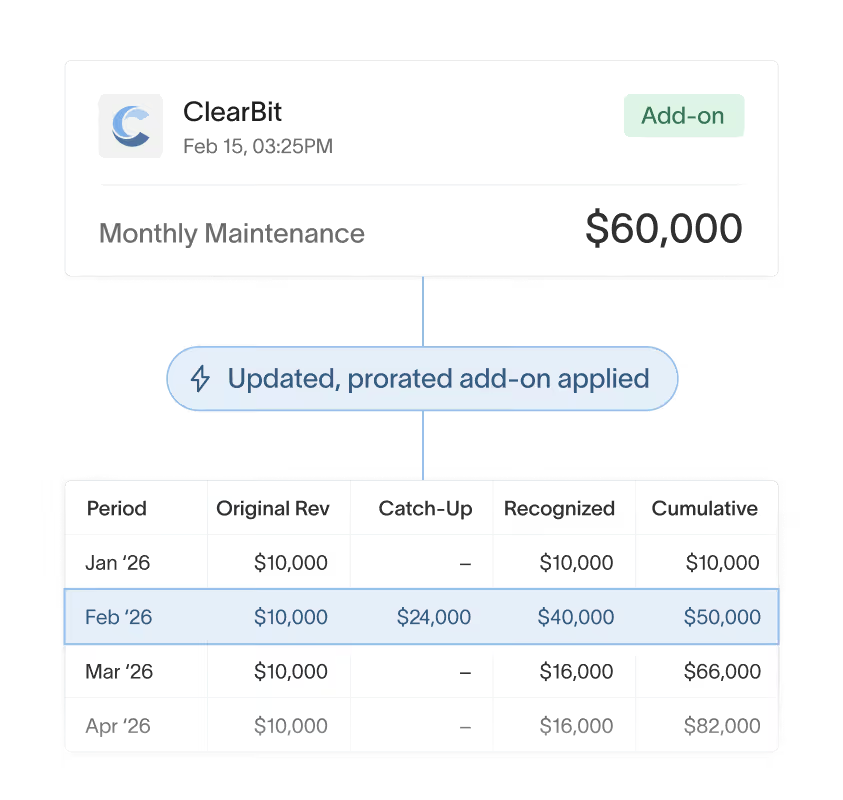
DualEntry handles both ASC 606 and IFRS 15 automatically. No spreadsheets, no manual workarounds. After signing a deal DualEntry will automatically set up the deferred revenue schedule; change that contract halfway through and rework the schedule and re-post to the live ledger without anyone stepping in. Subscriptions, usage-based deals, hybrids: same treatment across the board. Recognition just keeps going, so it's no longer something that piles up and waits for the month-end.

How does DualEntry manage deferred revenue?

DualEntry manages deferred revenue as money you've been paid but haven't earned yet: a liability on the balance sheet until the service is delivered, then released to revenue across the contract term. DualEntry does that releasing for you. Schedules and amortization recalculate in real time, so the balance sheet and your revenue waterfall stay right without anyone cutting journal entries by hand.

Which SaaS revenue models does DualEntry support?

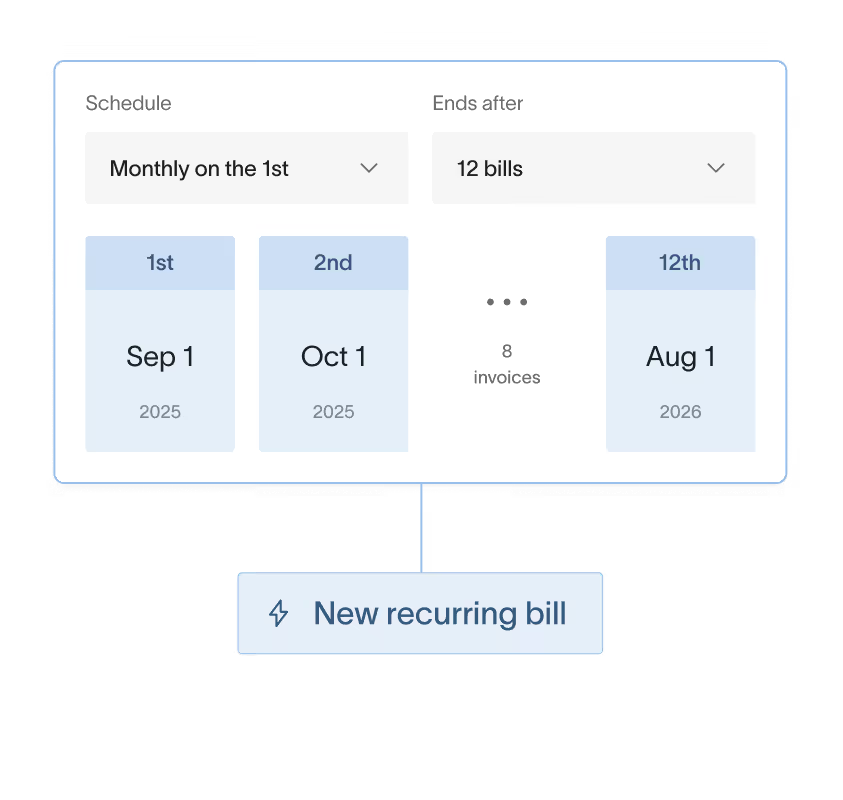
All three: subscription, usage-based, and hybrid. A single contract can carry a base subscription, professional services, add-ons, and metered usage at the same time, and DualEntry works out the right revenue treatment for each line. The renewals, upgrades, downgrades, cancellations, and recurring invoices behind them run on their own, not off a finance team's manual checklist.

What SaaS metrics can DualEntry report on?

DualEntry can report on metrics like: ARR, MRR, churn, deferred revenue, CAC, LTV, revenue waterfalls. They reflect what posted a minute ago, not what someone last exported to a spreadsheet. And because consolidation is native, the figures already account for every entity and currency before you open the report.

How long does DualEntry take to implement?

Twenty-four hours. That's the design goal, and it's the sharpest break from legacy ERPs like NetSuite, where rollouts stretch across months. DualEntry migrates you off QuickBooks, spreadsheets, and whatever scattered tools sit in between, without the drawn-out project.

Is DualEntry secure and audit-ready?

Yes DualEntry is 100% secure and audit ready as it holds SOC 2 certification and is GDPR compliant, with AES-256 encryption, role-based permissions, and full audit logs underneath. It's built for SOX too, so when a growing SaaS company hits the IPO track and auditors start digging, the controls already hold up.

Does DualEntry integrate with our existing stack?

DualEntry connects through 13,000+ native integrations, like: CRM, billing, payments, banking, and BI tools into one finance workflow on a single ledger, so the ERP reflects what's actually happening across the business.