Don't worry! The contents here will appear on the published page.
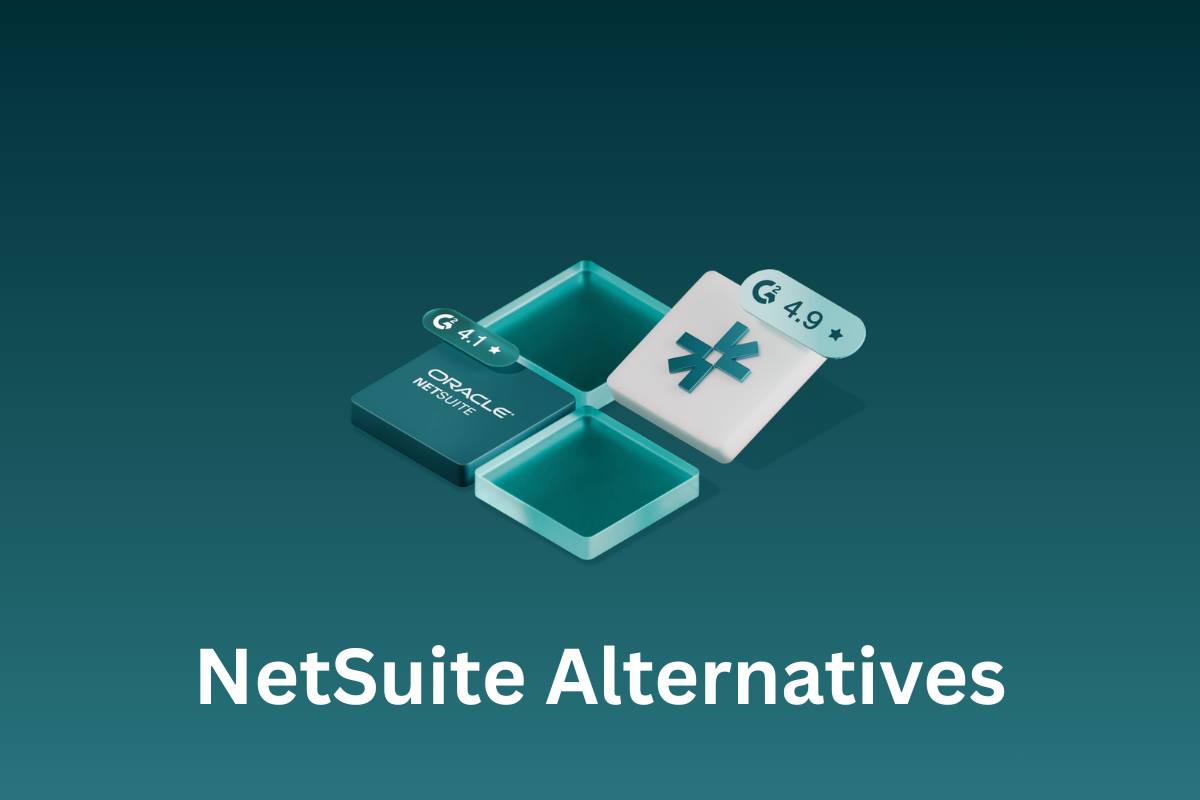
NetSuite Alternatives: 8 Better ERP Systems for Growing Companies (2026)

Woosung Chun
CFO, DualEntry
Woosung Chun
CFO, DualEntry
Woosung Chun is the CFO of DualEntry with experience in corporate finance, accounting, strategy, and acquisitions. He previously grew from scratch and led the M&A and Finance teams at Benitago, where he completed more than 12 acquisitions in 2 years. He graduated with a BS from NYU Stern. At DualEntry, Woosung writes about AI in accounting, revenue recognition, foreign currency accounting, hedge accounting, and ERP modernization for finance teams navigating complex, multi-entity environments.
Learn about our editorial policies.
Last updated
August 27, 2026
Reviewed by
Do San (Justin) Myung

Do San (Justin) Myung
Expert Accountant & Former Consulting CFO | DualEntry
Justin (Do San Myung) is Expert Accountant at DualEntry with 20+ years of hands-on experience managing general ledgers, financial close processes, and ERP implementations for mid-market and enterprise companies. As a former Consulting CFO and Controller, he has personally overseen month-end closes, SOX compliance programs, and multi-entity consolidations across technology, manufacturing, and services industries. Justin specializes in transforming manual accounting workflows into automated, AI-driven processes.
Learn about our editorial policies.
Summarize this article
Oracle NetSuite is the ERP that over 43,000 companies chose when they outgrew QuickBooks. It puts financials, inventory, CRM, and operations into one cloud platform. For a long time it was the obvious next step for mid-market businesses that needed a real system.
But the landscape looks different now. Pricing balloons once you start stacking modules. Implementations blow past six months. Small changes still require outside consultants. Finance teams that want real-time reporting and built-in automation are feeling the age of the architecture.
The market for ERP alternatives to NetSuite has split into two camps: traditional NetSuite competitors like Sage Intacct, Dynamics, and SAP that play on similar terms, and AI-native finance platforms built from scratch around automation and speed. That split shapes everything from implementation timelines to long-term cost. It's part of a broader move toward AI in accounting, where automation handles the manual work end to end.
This guide covers the best NetSuite alternatives in both categories and gives you a framework to figure out which NetSuite competitors actually fit your company.
Quick List: Best NetSuite Alternatives in 2026
The difference between these two groups isn't just branding. It shows up in how long implementation takes, how much manual work the finance team does after go-live, and how pricing scales as the company grows. Traditional ERPs tend to follow the same playbook NetSuite does: modular pricing, consultant-driven customization, and timelines measured in quarters. AI-native platforms compress all of that by building automation into the core of the system rather than layering it on top.
The right NetSuite alternative depends on where your company sits today. A $5M SaaS startup picking its first real ERP has different needs than a $200M multi-entity operation trying to get out of a bloated NetSuite deployment. The detailed breakdowns below cover each platform in depth, but if you already know your company type, skip ahead to the Best NetSuite Alternatives by Company Type section.
What NetSuite Is (And Who It's Built For)
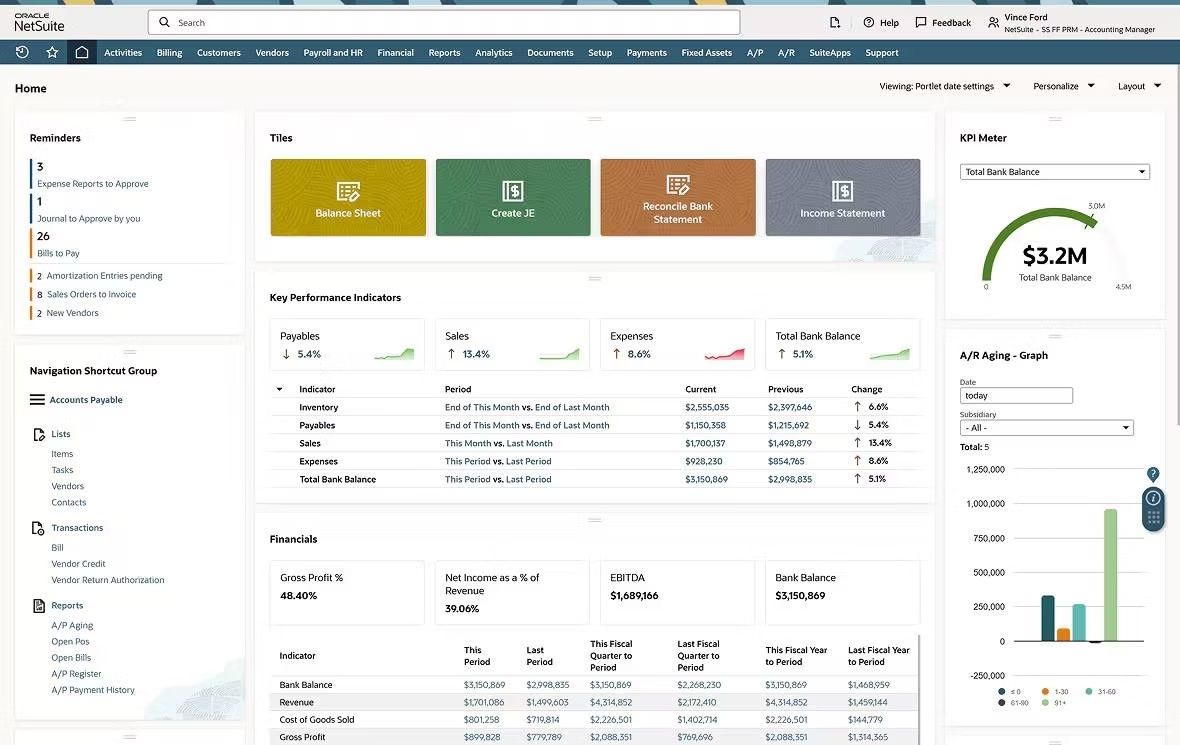
Before evaluating alternatives, it's worth understanding what NetSuite actually does well - and where it was designed to operate.
Overview of NetSuite ERP
NetSuite has been around since 1998. That's before most people had broadband. Oracle bought it in 2016 for roughly $9.3 billion, which tells you how seriously they view it as a cloud ERP asset.
At its core, NetSuite is a financial system - general ledger, AP, AR, and reporting. Everything else gets added on top. CRM, inventory, procurement, order management, ecommerce - these are all separate modules you bolt onto the base platform as your operations demand it.
That modular design is both the product's greatest strength and its most common source of frustration. It means you can build exactly the ERP footprint you need. It also means every time you add a module, your licensing bill goes up, your implementation gets more involved, and your system gets harder to manage without outside help. Companies rarely talk about that second part during the buying process. They feel it twelve months in.
Companies That Typically Use NetSuite
Most NetSuite customers sit in the $10M to $500M revenue range. They outgrew QuickBooks. They looked at SAP and couldn't justify the price tag. NetSuite is where they landed. If you're weighing the two, read our full breakdown: NetSuite vs. QuickBooks.
You'll see it in SaaS companies, ecommerce brands, distributors, manufacturers, service businesses. Pretty much any industry where the books get complicated fast.
But the real lock-in happens when companies start running multiple entities across borders. Once you've got subsidiaries in three countries, intercompany transactions piling up, and a CFO asking for consolidated reporting by the 10th of every month, that's NetSuite's wheelhouse.
The OneWorld module handles multi-entity consolidation and multi-currency accounting better than most competing platforms at this price point. It's one of the genuine reasons people stay even when other parts of the platform frustrate them.
Why NetSuite Became Popular
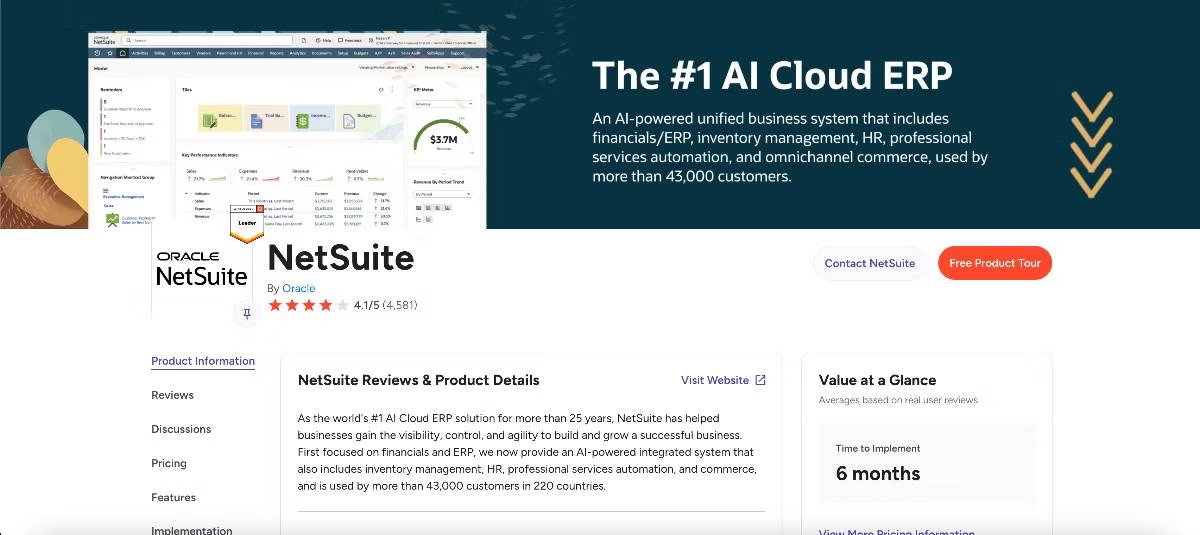
NetSuite’s rise wasn’t accidental. In the mid-2000s, it stood out as one of the few ERP systems delivered entirely through the cloud that could still handle complex accounting structures. Multi-entity consolidation, global tax compliance, and consolidated reporting were all available without running servers on-premise. At the time, that was a significant advantage.
Another factor was the partner ecosystem that grew around the platform. A large network of NetSuite Solution Providers and SuiteCloud developers began building integrations, vertical extensions, and implementation practices on top of the platform. Over time, that ecosystem made NetSuite one of the most common recommendations for companies entering the mid-market ERP category.
Where NetSuite Starts Showing Limitations
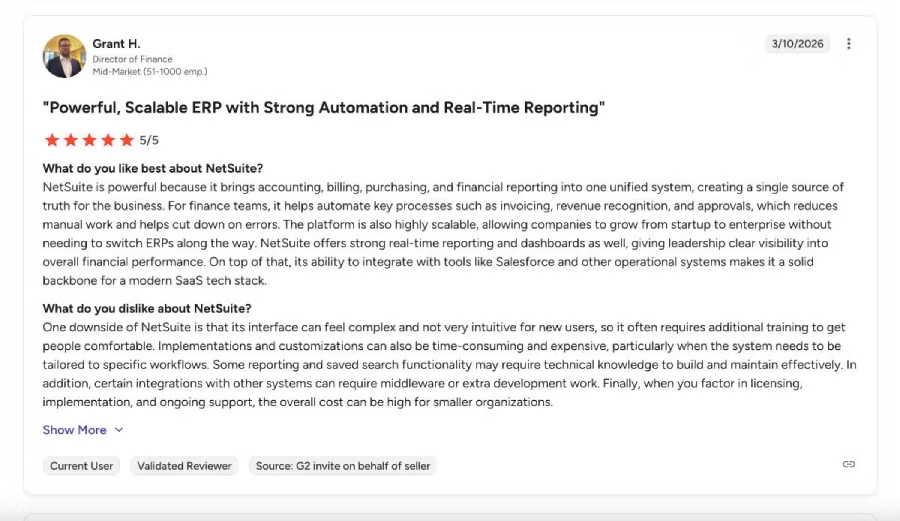
The same architecture that made NetSuite powerful a decade ago can also create friction today. Implementations regularly extend beyond six months. Reporting often relies on an additional BI layer. Pricing typically involves custom quotes and ongoing negotiations. Customization can require outside consultants even for relatively small adjustments.
For finance teams that expect real-time reporting, embedded automation, and faster deployment timelines, the system can start to feel dated. Many companies now want an ERP they can deploy in weeks rather than quarters.
That shift in expectations is one of the reasons modern NetSuite alternatives are gaining attention.
Why Companies Look for NetSuite Alternatives
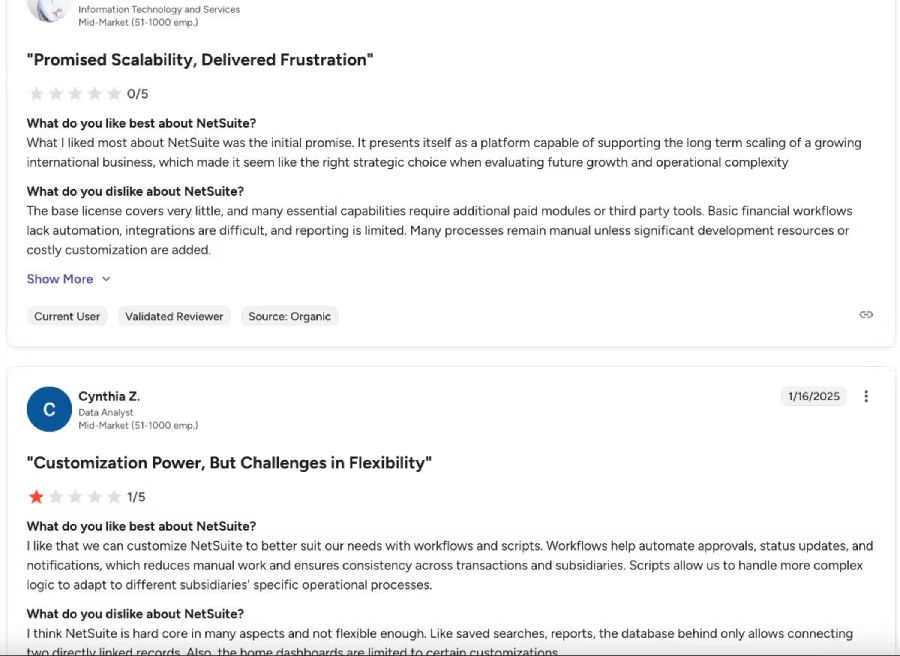
Most articles about NetSuite alternatives skip over this part. They mention that NetSuite is expensive or complex and jump straight to product lists. The real reasons companies leave are more specific, and understanding them matters because they should shape what you look for in a replacement.
1. High Total Cost of Ownership
NetSuite's pricing looks reasonable at first. Base platform starts around $999 per month, user licenses run $99 to $199 per month. But that's the starting line.
The real cost includes module add-ons priced separately and renegotiated annually, implementation services commonly running $75,000 to $250,000, customization billed at $150 to $300+ per hour through consulting partners, and ongoing support adding $10,000 to $100,000+ per year. A mid-market company with 25 to 50 users can easily spend $150,000 to $400,000+ in year one.
Renewal negotiations add pressure. Contracts are typically three-year terms, and Oracle's quarterly deal cycles are when discounts of 20 to 40 percent are available. Outside those windows, leverage drops fast.
This is the single biggest driver behind the search for cheaper alternatives to NetSuite. The platform is capable. The total cost just outpaces the value for companies using a fraction of its modules.
2. Complex, Lengthy Implementations
Nobody budgets six months for an ERP rollout and thinks "that sounds great." But that's the reality for most mid-market NetSuite deployments. And six months is the optimistic end.
The process is heavy. Scoping, configuration, data migration, integrations, custom workflows, testing, training. NetSuite's SuiteSuccess framework helps at the margins, but three to six months is still standard. Multiple entities, custom SuiteScript, or complex integrations? Plan for nine to twelve months.
Meanwhile your team runs two systems at once, reporting improvements are months away, and every week the implementation drags is another week stuck in the manual workflows that made you want to switch.
3. Heavy Dependence on Consultants and Partners
NetSuite runs on a customization engine called SuiteScript. It can do a lot. The problem is your finance team can't do any of it themselves.
So you call a NetSuite Solution Provider at $150 to $300 an hour. You want to change an approval workflow, and suddenly there's a scoping call. You need rev rec rules updated for a new contract structure, and now there's a statement of work. Two weeks later, maybe it's done. Maybe there's a change order.
You sign up thinking you're buying a platform. What you're actually buying is a platform plus an ongoing consulting relationship that controls how fast anything changes. Most companies don't realize how much they're spending on this until they pull the numbers at renewal time.
4. Slow Reporting and Data Access
It's 2026. Your CFO should be able to pull consolidated financials on demand. With NetSuite, that's often not how it works.
Out of the box, you get saved searches and SuiteAnalytics workbooks. Fine for basic reporting. But try building a consolidated dashboard across five entities, or a custom P&L that matches how your board reads the numbers. You'll hit the wall fast. Most companies end up buying Tableau or Power BI just to get what they need. Another vendor. Another integration. Another budget line that wasn't in the original business case.
The whole point of an ERP is to be the single source of truth. When your team exports data to spreadsheets to answer basic questions, the system is creating work.
5. Limited Native Automation
This is where the gap between NetSuite and newer platforms has become hardest to ignore.
NetSuite offers SuiteFlow for basic workflow automation. But AI-driven transaction categorization, automated bank matching, intelligent receipt parsing, anomaly detection, automated journal entries? Those require third-party tools or custom development.
The difference is architectural. In traditional ERPs like NetSuite, automation gets layered on top. In AI-native ERPs, automation is the platform. That determines how much manual work finance teams do daily and how easily companies handle growing transaction volumes without adding headcount.
Most companies start looking at alternatives because not just because Netsuite is down regularly but because of cost or complexity. But the thing that closes the door on NetSuite is usually the automation gap. Once someone on the finance team sees a platform that reconciles automatically, flags anomalies before the close, and generates journal entries without a human touching a spreadsheet, the conversation shifts from "should we switch?" to "why are we still doing this manually?"
How to Evaluate a NetSuite Alternative
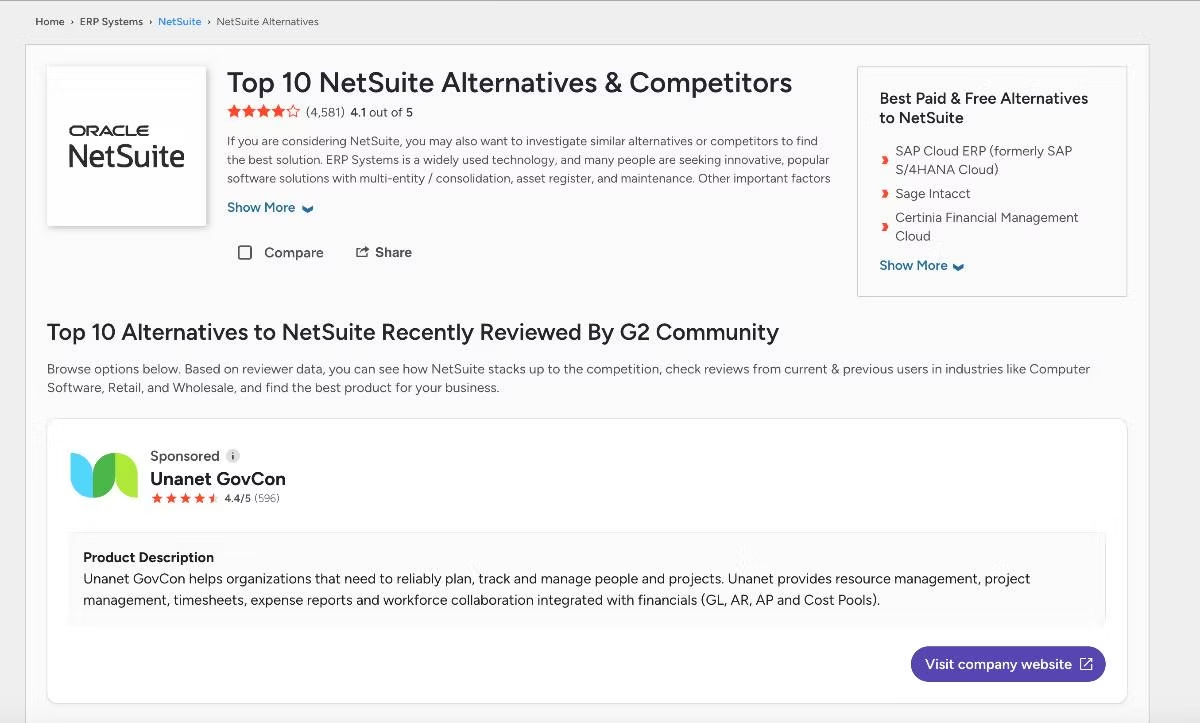
An ERP migration is not like swapping out your project management tool. Get it right and your finance team closes faster, touches fewer spreadsheets, and gives the board numbers they trust. Get it wrong and you're living with the consequences for years. Workarounds become permanent. The consultants never fully leave. A structured ERP selection process is how you avoid ending up in the second group.
Financial Management Capabilities
The fundamentals need to be solid. General ledger, AP, AR, cash management, fixed assets. Table stakes.
Differentiation starts in the complex stuff. Multi-entity consolidation with intercompany eliminations and currency translation. Revenue recognition that supports ASC 606 natively, not through add-ons. The question isn't whether the ERP does accounting. It's whether the financial layer handles your structure, compliance, and reporting needs without constant workarounds.
Automation Capabilities
Basic automation should be built in: AP workflows, automated bank reconciliation, recurring journal entries, configurable approval workflows.
Then there's the tier that changes how many people you need. Some platforms read an uploaded invoice, pull out the vendor and line items, and code it without anyone touching it. They categorize thousands of transactions using pattern recognition. They flag outliers before the close instead of after, when it's already a fire drill.
If your ERP still needs a human to match every bank feed and hand-build journal entries, you're running an expensive general ledger with extra steps.
Implementation Timeline
A nine-month implementation means nine months running two systems, nine months before reporting improves, nine months before anyone sees a return. Push past the go-live date vendors quote you. Ask how migration actually works, who does it, and what "live" really means. Some vendors count go-live as the day the system turns on, not the day your team uses it for a real close.
Integration Ecosystem
Your ERP has to talk to everything else. CRM, payroll, banking, expense management, BI tools. If those connections don't work, your team ends up exporting CSVs between systems.
What matters isn't just how many integrations exist, but whether they sync in real time, flow data both directions, and are maintained by the vendor. Check the API too. A clean, well-documented API means your developer ships a custom integration in a week. A bad one means a quarter-long project.
Reporting and Analytics
You'll know within two weeks whether the reporting is good enough. Either your team pulls what they need from the system or they're back in Excel building reports the ERP was supposed to replace.
For multi-entity companies, the real test is consolidated reporting. Can the system roll up subsidiaries automatically with currency translation and intercompany eliminations? Or does someone still pull data into a master spreadsheet? That workflow should've died five years ago. If multi-currency consolidation is your priority, see our best multi-currency accounting software comparison.
Pricing Transparency
After dealing with NetSuite's pricing model, most finance teams walk into the next evaluation with one demand: tell me what this costs before I get on a sales call.
The biggest trap is implementation. Some platforms include it. Others charge separately, and that bill can land anywhere from $25,000 to $250,000. Ask about user limits too. Per-seat pricing means costs scale with every hire. Unlimited-user models don't. Over three years that difference is massive. Same goes for renewal terms. Find out now what the price can do at renewal, not after you've migrated your general ledger onto the platform.
Best NetSuite Alternatives and Competitors (Detailed Comparison)
Nobody switches ERPs because everything is going well. There's always a trigger. Maybe the implementation dragged on for a year. Maybe the renewal quote came in 30% higher. Maybe the new CFO can't believe how much manual work the finance team is doing.
The platforms below are organized into the same two categories from earlier: AI-native finance platforms and traditional ERP competitors.
AI-Native Finance Platforms
These systems were designed from the ground up around automation and real-time data processing. Implementation is measured in weeks. Automation is the default.
1. DualEntry – Best Modern NetSuite Alternative
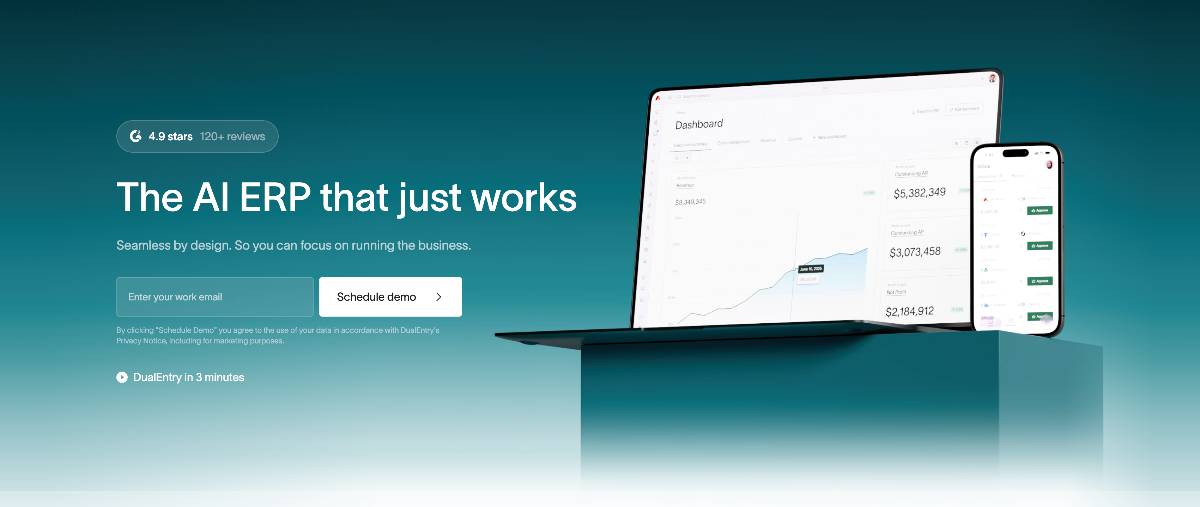
G2 rating: 4.9/5 (122)
Overview
DualEntry is an AI-native ERP built for modern finance teams. Unlike traditional systems that added automation after the fact, DualEntry was designed with it at the core. The company is based in New York and positions the platform as a direct replacement for legacy ERPs like NetSuite and Sage Intacct.
Key Features
The platform covers the full financial stack: general ledger, AP, AR, cash management, tax, purchase orders, close management, reconciliation, order management, and revenue recognition. That maps to most of what companies access through NetSuite's base platform plus several add-on modules.
The automation layer is where it separates. AI-powered OCR reads uploaded invoices and codes them as transactions. The reconciliation engine matches bank transactions with minimal manual review. An AI assistant categorizes and routes transactions based on predefined rules. Intercompany allocations and eliminations are automated as well.
All plans include unlimited entities, users, and transactions. No per-user fees that scale with headcount.
Strengths
Speed is the headline. DualEntry says it can migrate data from supported systems within 24 hours, with most companies fully live inside four weeks. Implementation, setup, and migration are all included in the subscription. No separate onboarding bill. Compare that to a NetSuite rollout that regularly costs $75,000 to $250,000.
The platform connects to over 13,000 services including live bank feeds, with an open API for custom builds. Security covers SOC 2, GDPR, CCPA, AES-256, and both IFRS and GAAP. The company reports processing over $100 billion in transactions to date.
Limitations
DualEntry hasn't been around as long as NetSuite. The partner ecosystem is smaller, and the platform focuses on financial operations rather than the full operational ERP stack. Manufacturing, warehouse management, and complex inventory workflows aren't its focus. Companies that need one system running both production and finance should look at Acumatica or SAP Business One.
Best For
High-growth companies, SaaS businesses, and multi-entity organizations where speed, automation, and predictable pricing matter more than operational module breadth.
Traditional ERP Competitors
These platforms compete with NetSuite on similar terms: modular architecture, broad operational coverage, and established partner ecosystems.
2. Sage Intacct – Best for Accounting-Focused Organizations
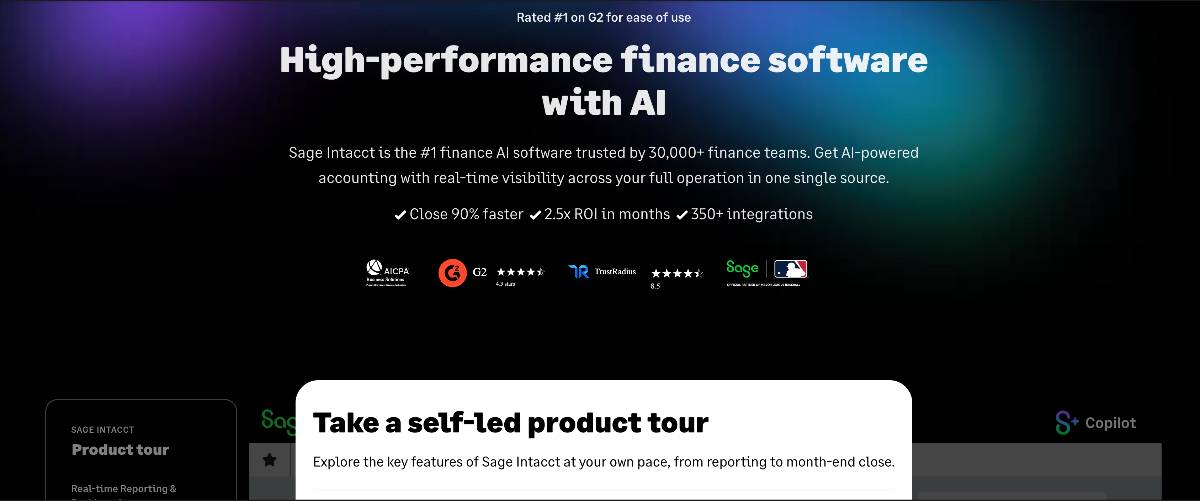
G2 rating: 4.3/5 (4099)
Overview
Sage Intacct is not a full ERP. What it is, though, is one of the best pure financial management platforms at the mid-market level. The AICPA named it their preferred financial application provider.
Key Features
The core is accounting: GL, AP, AR, cash management, rev rec, and project accounting. What sets it apart is the dimensional reporting. You can cut your financial data by department, location, project, customer, or any custom tag you create, and nobody has to write a single line of code to make that happen. Multi-entity consolidation goes head to head with NetSuite OneWorld.
Strengths
Financial reporting depth is best-in-class for this segment. Native Salesforce integration is a pull for CRM-heavy organizations. On cost, most estimates put Sage Intacct at 20 to 40 percent cheaper than NetSuite when you're comparing similar financial management capabilities.
Limitations
You won't find inventory tracking, manufacturing tools, or warehouse management here. Getting started costs real money too. Most partners charge 1x to 1.5x your annual subscription for implementation, and with subscriptions running $25,000 to $75,000 a year, that adds up fast. Sage has been rolling out AI through Copilot, but it's still early compared to platforms where AI was the starting point, not an addition.
Best For
Services firms, nonprofits, SaaS businesses. Finance teams that care about accounting depth over operational breadth.
To learn more about Sage check our breakdown of Sage Intacct alternatives.
3. Microsoft Dynamics 365 Business Central – Best for Microsoft Ecosystem
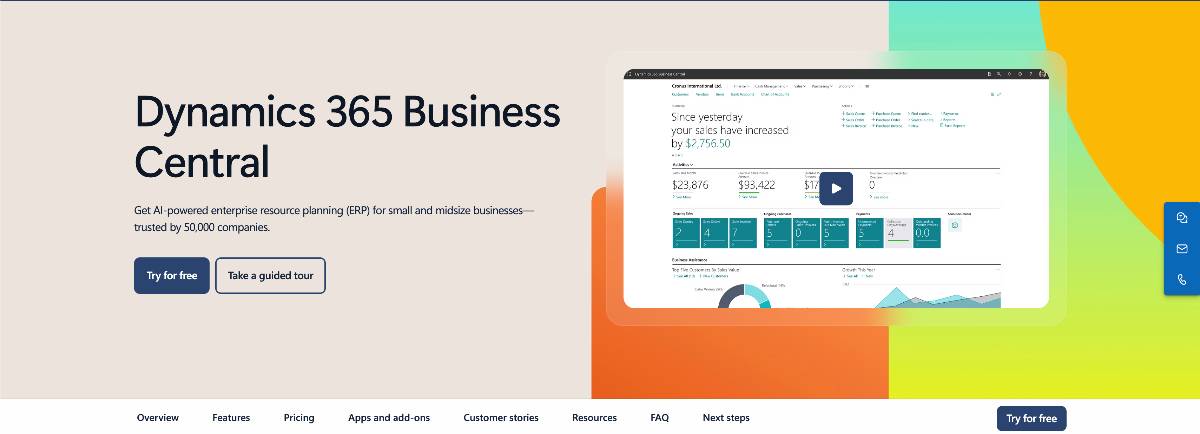
G2 rating: 4.0/5 (897)
Overview
Business Central grew out of Dynamics NAV and rebuilt it for the cloud. The honest reason most companies pick it isn't the feature set. It's that their entire company already lives inside Microsoft.
Key Features
Financials, supply chain, sales, project accounting, basic manufacturing. Power BI plugs in natively. Power Automate handles workflow automation. Copilot AI is showing up for expense categorization and anomaly detection. Early days, but the trajectory is clear.
Strengths
If you're a Microsoft shop, the integration advantage is real. Data moves between systems without middleware. Licensing starts around $70 per user per month, and Microsoft's partner network is enormous, so finding an implementation team for your specific industry usually isn't hard.
Limitations
Rev rec and serious project accounting aren't included out of the box. You'll need add-ons or third-party tools for those. And because pricing is per seat, the bill grows every time someone new needs access. Implementations run four to eight months. Can feel over-engineered for companies that mainly need financial management.
Best For
Mid-market organizations already on Microsoft 365 that want ERP connecting financials, operations, and reporting in the same ecosystem.
4. Acumatica – Best for Operational Mid-Market Companies
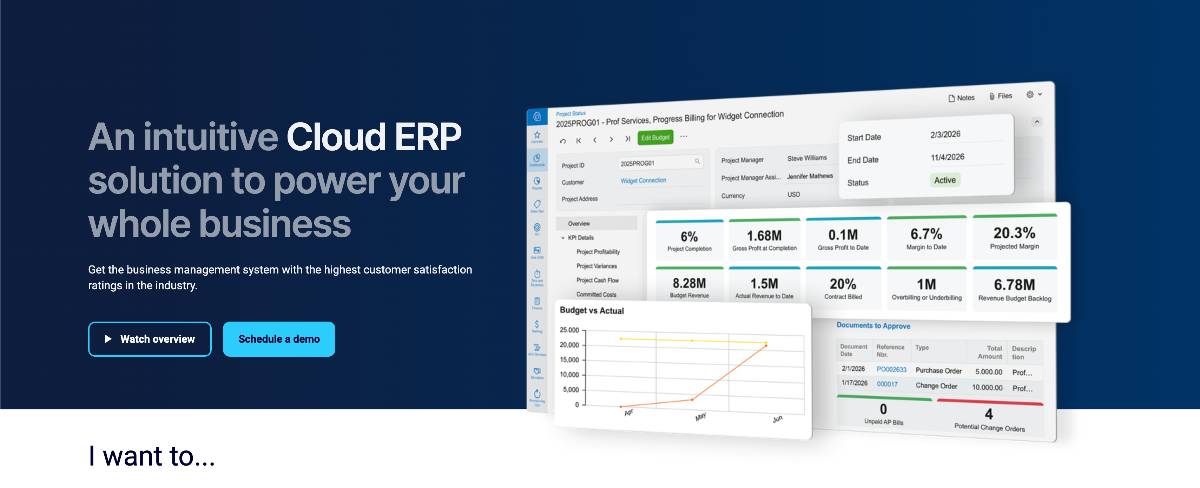
G2 rating: 4.4/5 (2000)
Overview
Acumatica was built for mid-market companies where operations drive the business, not just finance. The pricing works differently from most ERPs. Instead of a per-seat model, you pay based on how much the system actually processes. Transaction volume and computing resources determine the cost. Everyone in the company can log in without adding to the license fee.
Key Features
The platform ships in different flavors depending on your industry: distribution, manufacturing, construction, retail, professional services. Each shares core financials while adding industry-specific workflows. You can run it in the public cloud, a private cloud setup, or on your own servers if your IT team prefers that.
Strengths
Unlimited-user pricing is the headline. If you've got 80 people in a warehouse who need system access, per-user licensing kills you. Acumatica sidesteps that. On the operations side, inventory, warehouse, and manufacturing modules punch well above what you'd expect from a mid-market ERP. Most companies end up paying somewhere between $20,000 and $100,000 a year depending on the edition and how much volume they push through.
Limitations
The financials do what they need to do, not more. If you want better accounting or consolidation, look at Sage Intacct or DualEntry. Implementation runs $50,000 to $150,000. Consumption pricing can spike if transaction volume jumps unexpectedly.
Best For
Manufacturers, distributors, and operations companies where warehouse management and production scheduling matter as much as the general ledger.
5. Odoo – Best for Modular ERP Customization
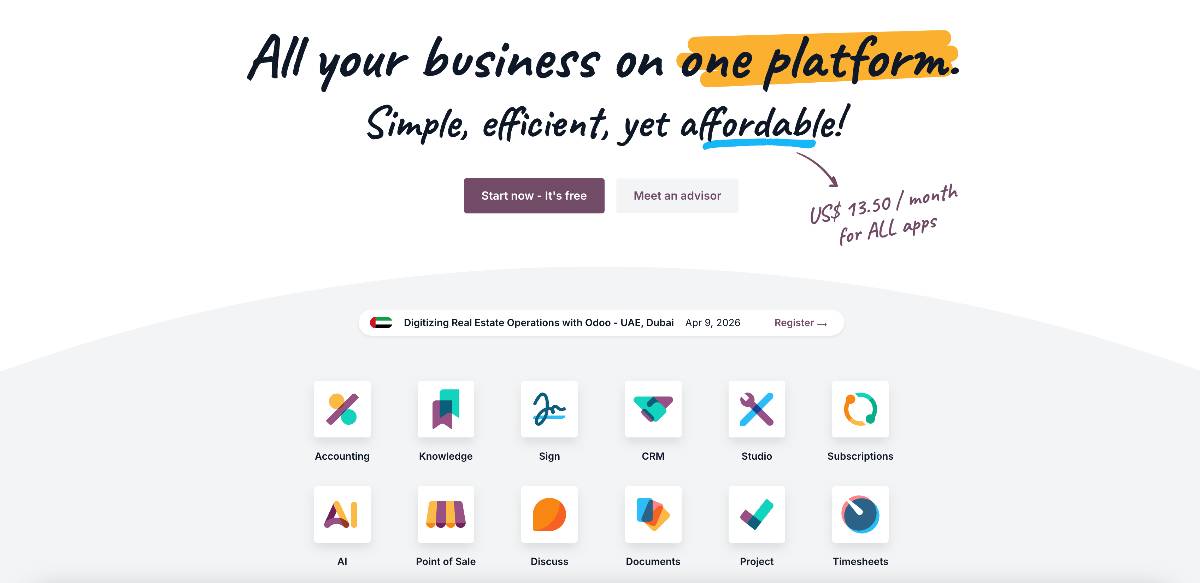
G2 rating: 4.3/5 (329)
Overview
Odoo launched in 2005 out of Belgium. You don't buy one big ERP. You pick from over a hundred individual apps and deploy what your business actually uses. The Community Edition is free and open source. Enterprise costs money but earns it with better automation, actual vendor support, and the stuff you'll eventually outgrow Community for.
Key Features
What's in the box: accounting, CRM, inventory, ecommerce, manufacturing, HR, and about ninety other things. Enterprise unlocks the features that save real time. AI reads your invoices. Bank reconciliation handles most of the matching on its own. Multi-currency works natively. And there's a visual workflow editor that doesn't get talked about enough. It means someone in operations can change how approvals or routing work without waiting on a developer.
Strengths
The Enterprise pricing is hard to beat: $7 to $31 per user per month depending on configuration. Community costs zero. 16,000+ third-party apps sit in the ecosystem, which gives you options most ERPs can't touch. Got developers who like getting their hands dirty? Odoo is probably the only mid-market ERP where they can actually rebuild how the system works to match your operations, not the other way around.
Limitations
Flexibility costs complexity. Custom modules can break on major updates. If you put the accounting module next to Sage Intacct or DualEntry and start testing multi-entity consolidation or GAAP/IFRS compliance, the gaps show up quickly. No single module goes as deep as purpose-built software.
Best For
Startups and small businesses with technical capability that want a low-cost, customizable ERP. Not the right pick if accounting depth is the priority.
6. SAP Business One – Best for Manufacturing and Global Operations
G2 rating: 4.4/5 (922)
Overview
SAP Business One exists because most mid-sized companies can't afford S/4HANA and don't need it. You see it in manufacturers with complex production requirements and companies with international operations needing SAP's compliance infrastructure.
Key Features
Production orders, bills of materials, MRP, demand forecasting, quality control. Multi-currency accounting, intercompany transactions, and compliance tooling across jurisdictions. The HANA database provides fast in-memory analytics.
Strengths
Production tools are real. Planning, scheduling, and optimization built for people who run factories. The SAP ladder lets companies upgrade to S/4HANA without starting from zero.
Limitations
Nothing quick or cheap. Licenses start around $95 per user per month. Implementation costs more than the software. Six to twelve months to go-live. Interface still feels dated.
Best For
Manufacturers, distributors, and international companies that need production management and plan to stay in the SAP ecosystem.
7. Epicor – Best for Industrial Operations

G2 rating: 3.9/5 (569)
Overview
Epicor builds ERP for people who make things. Recently went cloud-first with Kinetic. Launched Prism AI with 200+ manufacturing-specific use cases. One of the few vendors where the AI story is grounded in production workflows.
Key Features
Production scheduling, shop floor control, supply chain planning, quality management. Prism AI adds predictive maintenance, automated parts procurement, and production optimization. Financials, CRM, and HR exist in the platform. They're not the reason anyone buys Epicor.
Strengths
Job shops, engineer-to-order, make-to-order. Epicor understands those environments. Prism AI extends that with manufacturing-specific predictive analytics. Carbon cost tracking ties emissions to production activity natively.
Limitations
Financial management is adequate, not exceptional. Implementations run six to twelve months. Classic UI has been sunset, forcing migration to Kinetic.
Best For
Industrial manufacturers and mid-sized production companies needing deep shop-floor visibility.
8. Xero + Finance Stack – Best Small Business Alternative
G2 rating: 4.4/5 (1599)
Overview
Xero doesn't belong on the same list as NetSuite. Different weight class. But it shows up in "NetSuite alternatives" searches because many companies searching that term don't actually need an ERP.
Key Features
Invoicing, bank reconciliation, AP, expense tracking, fixed assets, multi-currency. Over 1,000 integrations. The interface works for accountants and non-accountants alike.
Strengths
$29 to $78 a month. Live in days. Pair it with Dext, ApprovalMax, and Fathom and a company doing $3M to $8M can run a surprisingly tight operation without an ERP.
Limitations
Xero hits a wall. Multi-entity consolidation, advanced rev rec, intercompany transactions. Companies that stack too many tools on top end up with five apps that sort of talk to each other and a spreadsheet tying them together. The move to a real ERP becomes when, not if.
Best For
Small businesses under $10M. Single-entity companies. Founders who need clean books without a six-figure commitment. If you're still in that range and not sure which direction to go, our breakdown of QuickBooks alternatives covers the options worth considering before committing to an ERP.
NetSuite vs Modern ERP Platforms
By now the pattern should be clear. The alternatives in this guide don't all compete with NetSuite the same way, and pretending they do leads to bad decisions.
Traditional ERP competitors like Sage Intacct, Dynamics 365, Acumatica, and SAP Business One play on NetSuite's turf. They offer modular architecture, broad operational coverage, and large partner ecosystems. Choosing one of these means you're swapping one traditional ERP for another. The modules might be better suited to your industry. The pricing might be lower. But the fundamental model stays the same: you buy modules, you hire consultants to configure them, and you measure implementation in months.
AI-native platforms like DualEntry operate on different assumptions entirely. Automation isn't something you build on top of the platform. It's how the platform works out of the box. Transactions get categorized by machine learning. Reconciliations match automatically. Journal entries generate from rules and patterns. The finance team spends its time on exceptions and analysis, not data entry.
Here's where that difference shows up in practice:
Neither category is better in absolute terms. If your company runs manufacturing, warehouse operations, ecommerce, and global supply chains out of a single ERP, the traditional model still makes sense. NetSuite, SAP, and Dynamics exist for a reason.
But if your primary need is financial management and you're paying for a system built to do fifteen things when you really use five, the math stops working. That's the gap AI-native platforms were built to fill.
The shift tracks with what happened in CRM ten years ago. Salesforce didn't beat SAP CRM by offering more customization options. It won because it was faster to deploy, easier to use, and designed around what sales teams actually did every day. AI-native ERPs are making the same bet on finance teams. Whether that bet pays off long-term is still playing out. But the early results, especially on implementation speed and automation, are hard to argue with.
Best NetSuite Alternatives by Company Type
Choosing an ERP usually has less to do with feature lists and more to do with where a company currently sits in its growth stage. The needs of a small startup are very different from those of a multi-entity company operating across several countries. Because of that, the same ERP won't work for everyone on this list. A startup and a 200-person multi-entity operation are buying different products even if they're reading the same article.
Here's how the platforms stack up against specific company profiles.
NetSuite Alternatives for Startups
DualEntry and Odoo come up the most in early-stage ERP conversations, but for very different reasons.
DualEntry is the pick for startups that can already see the complexity coming. Maybe they're planning to add entities, or they know reconciliation volume will grow fast, or they want consolidated reporting before the board starts asking for it. Starting on a platform that handles all of that from day one means you're not migrating again in 18 months. It also deploys in weeks and doesn't charge per user, so the cost doesn't jump every time the team grows.
Odoo is for the startup that needs more than just accounting. CRM, inventory, ecommerce, HR, all in one system, and they want to pay almost nothing for it upfront. The free Community Edition makes that possible. The catch is you'll need someone technical on the team to set it up and keep it running as things change. To navigate the decision by funding stage, see our stage-gated ERP selection guide for tech startups.
Earlier-stage teams often shortlist Campfire here too; see our Campfire alternatives guide.
NetSuite Alternatives for SaaS Companies
SaaS finance is its own animal. Most ERPs weren't built for it.
ASC 606 revenue recognition is the obvious one. But subscription billing, MRR and ARR tracking in real time, and reporting that reflects how a recurring revenue business actually operates are just as important. Most general-purpose ERPs handle these badly or not at all. That's why DualEntry and Sage Intacct keep showing up on SaaS ERP shortlists.
Both handle rev rec natively. The split is in everything around it.
Best for Mid-Market Companies
Mid-market is where ERP decisions get complicated. You're past the stage where a finance-only platform covers everything. Supply chain needs to plug in. CRM needs to talk to the books. Project accounting needs to feed directly into the GL. The ERP has to do more, and that narrows the field.
Dynamics 365 Business Central wins on ecosystem. If your company already runs on Microsoft 365, Power BI, and Teams, Business Central drops in without the integration tax you'd pay wiring up a standalone ERP. Copilot AI is starting to show up across the product too. Early days, but the direction is clear.
Acumatica wins on operations. Distributors, manufacturers, construction companies. Businesses where 60 people on the warehouse floor need system access alongside the five-person finance team. The unlimited-user pricing makes that affordable. The industry-specific editions mean you're not forcing a generic ERP to do specialized work.
Best for Manufacturing
Manufacturers don't shop for ERPs the way SaaS companies do. The general ledger matters, sure. But the real evaluation starts at the production line. Can the system handle MRP? Does it understand bills of materials? Can a floor supervisor see what's behind schedule without calling someone in finance? If the ERP can't answer those questions, the accounting features are irrelevant.
SAP Business One is the pick for manufacturers that also operate internationally. The production planning tools are strong, the multi-currency financials handle cross-border complexity, and the system plugs into SAP's broader enterprise stack if the company eventually outgrows it. That upgrade path is a real factor for companies that see themselves running SAP long-term.
Epicor is the pick when manufacturing complexity is the whole ballgame. Job shops. Engineer-to-order. Make-to-order. These are environments where generic ERP modules fall apart because the production logic is too specific. Epicor was built for that world. Shop floor control, manufacturing analytics, and now Prism AI for predictive maintenance and schedule optimization. If the production floor is the reason you're buying an ERP, Epicor is hard to beat at this price point.
When NetSuite Is Still the Right Choice
No alternatives article is complete, or credible, without acknowledging where the incumbent still has clear advantages.
NetSuite remains a strong ERP option for companies that need a single platform covering financial management, inventory, warehouse operations, manufacturing, CRM, ecommerce, and global HR across multiple subsidiaries. Few mid-market ERP systems offer that level of functional breadth within one environment. When an organization genuinely needs all of those capabilities working from the same database, NetSuite’s modular structure can deliver something that smaller platforms struggle to reproduce through separate tools.
It also continues to make sense for organizations with highly customized workflows. Many companies have spent years building SuiteScript automations, custom records, and specialized approval processes. Those investments create real switching costs. If those customizations are tightly connected to core business operations, rebuilding them on a different platform may require significant time and expense.
Large international companies with hundreds of users and complex intercompany transactions may also benefit from NetSuite OneWorld’s maturity. The system has been tested in environments involving multiple entities, cross-border accounting requirements, and multi-currency consolidation. It also supports global tax compliance and reporting across different accounting standards.
Another scenario where NetSuite retains an advantage involves organizations already working within the Oracle ecosystem. Companies using Oracle Cloud Infrastructure, Oracle HCM, or Oracle database technologies may find that NetSuite integrates more naturally with the rest of their systems.
The real question is not whether NetSuite is capable. In many situations it clearly is. The more practical question is whether the platform’s complexity, pricing structure, and implementation timeline align with what the company actually needs today. For many mid-market finance teams, that balance is shifting toward faster and more streamlined ERP alternatives.
How to Migrate Away from NetSuite
Most companies unhappy with NetSuite don't leave. They renew. Not because they want to, but because migrating an ERP feels like open-heart surgery on a business that can't stop operating. It doesn't have to go that way.
Step 1: Audit and Export Your Financial Data
Get a complete picture of what's inside NetSuite. Chart of accounts, GL history, open AP and AR, fixed assets, journal entries, saved searches, custom records. Export all of it. CSV and API imports are standard, but every platform maps fields differently. Expect a few days of cleaning and reformatting.
OneWorld customers: map how your entity structure will look in the new system before migrating a single record. Get that wrong and everything downstream breaks.
Step 2: Migrate the General Ledger
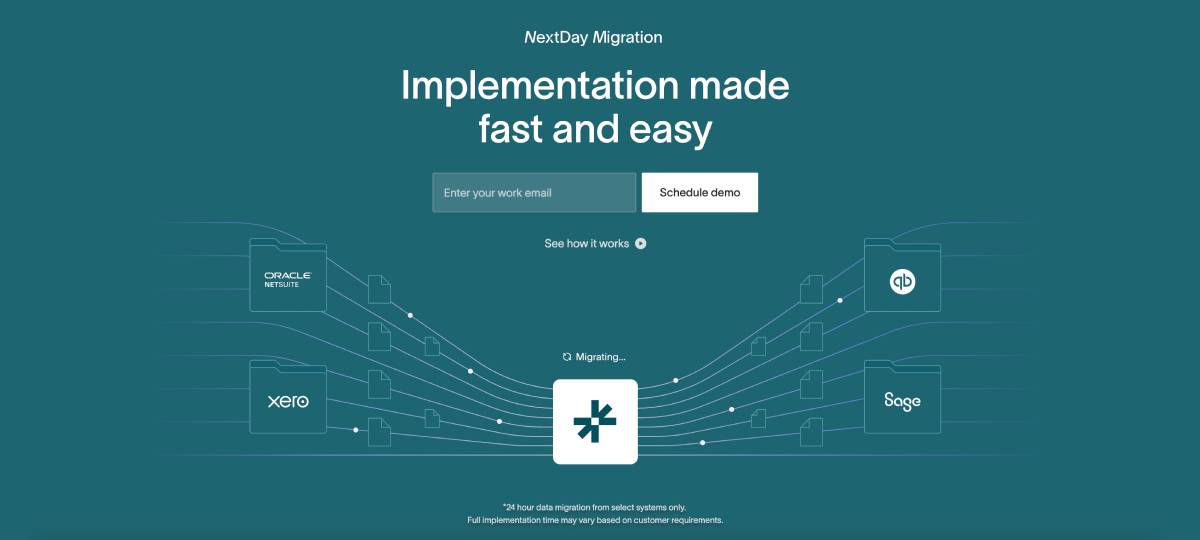
GL goes first. Account structure, segments, dimensions, historical balances. Nothing else works without it. Some platforms can pull GL data from supported systems in under a day. Others require weeks of manual mapping. Ask the vendor exactly how this works before you commit.
Step 3: Reconnect Integrations
List every system that talks to NetSuite. Bank feeds, payroll, CRM, expense tools, ecommerce, BI dashboards. Check which the new ERP supports natively and which need API work or middleware. Test each integration with real data before cutover, not sample data in a demo environment.
Step 4: Run Reports in Parallel
Run your close on both systems for two to four weeks. Trial balance, P&L, balance sheet, cash flow. Compare line by line. Finding a variance during parallel testing is a problem you solve over coffee. Finding it after you've shut down NetSuite is a problem you solve over a very long weekend.
Step 5: Go Live and Train
Once reports reconcile, flip the switch. Train people on their actual daily workflows. How to post a journal, run a reconciliation, execute the close checklist. Not a product tour. The specific clicks that replace what they did in NetSuite.
Total timeline: traditional ERP-to-ERP moves run four to twelve months. Modern platforms with automated migration can finish in two to six weeks. Start before your renewal comes up. That's when you have leverage.
NetSuite Alternatives FAQ
Conclusion
NetSuite still works for companies that use its full operational breadth. But the market around it has moved. Implementations that took six months now take weeks. Automation that required consulting projects now comes built in. Pricing that required quarterly negotiation calls now shows up on a webpage.
The best time to evaluate alternatives is before your next renewal. That's when you have leverage, and every month you wait is another month of consultant invoices and manual workarounds compounding quietly.
If the biggest thing keeping you on your current ERP is the financial cost of walking away from a multi-year contract, look at our ERP Rescue Fund. We set aside $6 million to help companies exit legacy ERP subscriptions by covering the remainder of the contract.
Start with the evaluation framework above, compare your options now, and do it before renewal locks you into another cycle.
See the full power of DualEntry in 30 minutes
Woosung Chun
CFO, DualEntry
Woosung Chun is the CFO of DualEntry with experience in corporate finance, accounting, strategy, and acquisitions. He previously grew from scratch and led the M&A and Finance teams at Benitago, where he completed more than 12 acquisitions in 2 years. He graduated with a BS from NYU Stern. At DualEntry, Woosung writes about AI in accounting, revenue recognition, foreign currency accounting, hedge accounting, and ERP modernization for finance teams navigating complex, multi-entity environments.
.webp)