Don't worry! The contents here will appear on the published page.
The 11 Best Sage Intacct Alternatives in 2026

Do San (Justin) Myung
Expert Accountant & Former Consulting CFO | DualEntry
Do San (Justin) Myung
Expert Accountant & Former Consulting CFO | DualEntry
Justin (Do San Myung) is Expert Accountant at DualEntry with 20+ years of hands-on experience managing general ledgers, financial close processes, and ERP implementations for mid-market and enterprise companies. As a former Consulting CFO and Controller, he has personally overseen month-end closes, SOX compliance programs, and multi-entity consolidations across technology, manufacturing, and services industries. Justin specializes in transforming manual accounting workflows into automated, AI-driven processes.
Learn about our editorial policies.
Last updated
August 27, 2026
Reviewed by
Woosung Chun

Woosung Chun
CFO, DualEntry
Woosung Chun is the CFO of DualEntry with experience in corporate finance, accounting, strategy, and acquisitions. He previously grew from scratch and led the M&A and Finance teams at Benitago, where he completed more than 12 acquisitions in 2 years. He graduated with a BS from NYU Stern. At DualEntry, Woosung writes about AI in accounting, revenue recognition, foreign currency accounting, hedge accounting, and ERP modernization for finance teams navigating complex, multi-entity environments.
Learn about our editorial policies.
Summarize this article
Sage Intacct’s per-user pricing made sense at five finance users. At twenty, the math starts to hurt. Add the annual renewal bumps (some customers report increases of 50% at contract renewal) and it becomes clear why “Sage Intacct alternatives” is one of the fastest-growing searches in the cloud accounting space.
But cost isn’t the only reason finance teams start looking at alternatives to Sage Intacct. Some hit a wall when they need operational cloud ERP modules Intacct doesn’t offer. Others get tired of duct-taping Salesforce integrations through third-party connectors. And a growing number of companies past $250M in revenue simply find Intacct can’t keep pace with their complexity.
This guide matches each alternative to a specific company profile, because the right replacement depends entirely on your size, industry, and what you actually need beyond general ledger and financial reporting.
Why Companies Leave Sage Intacct (The Real Reasons)
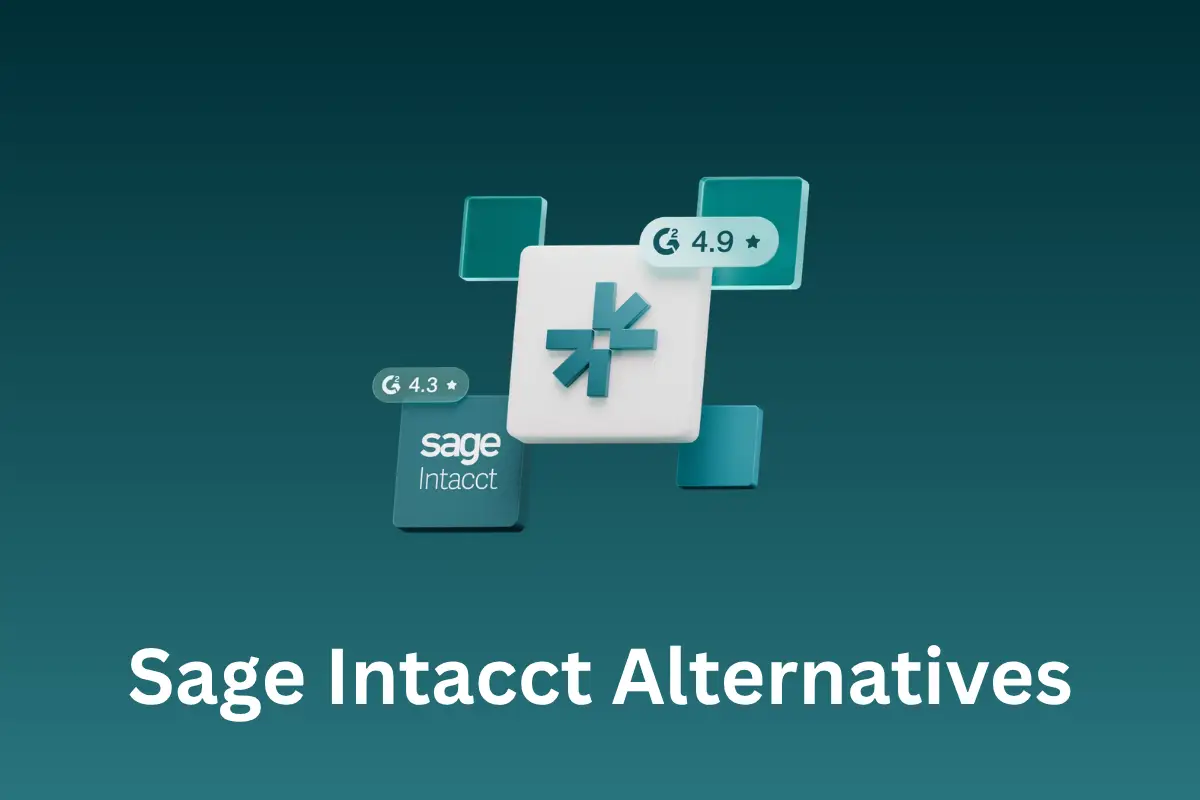
Look, Sage Intacct has a 4.3 rating on G2 from over 4,000 reviews. That’s not a bad product. But the reviews that mention switching tell a pretty consistent story, and it comes down to five things.
The Per-User Pricing Escalates Fast
Sage won’t put pricing on their website, which should tell you something. What we hear from partners and customers puts full named-user licenses at $400 to $800 per user per month, billed annually. Then there’s module creep: budgeting, consolidations, revenue recognition. Each one is a separate add-on running $3,000–$10,000+ a year. A typical mid-market deployment ends up at $25,000–$35,000 per year before implementation. That’s roughly 2× what you’d pay on Oracle NetSuite, and NetSuite throws in operational modules Intacct charges extra for.
Finance-Only Scope Becomes a Bottleneck
Intacct is a financial management system, not a full ERP, and Sage has never pretended otherwise. No manufacturing. No warehouse management. Barely any inventory tracking. If your company started on Intacct for accounting and has since grown into operations, the story writes itself: a second system for inventory, a third for orders, and a spreadsheet holding it all together.
Report Building and Transaction Corrections Are Painful
Dimensional reporting is supposed to be Intacct’s crown jewel, and for many teams it is. But the report writer? G2 and Capterra reviews tell a different story. Building custom financial statements takes more clicks than it should. And if you need to correct a posted transaction, the multi-step reversal process eats into your close timeline. Controllers on tight month-end schedules notice fast.
Salesforce Integration Requires Constant Maintenance
Intacct is not Salesforce-native. The two connect through a third-party middleware layer, and anyone who’s managed that connector knows the drill: field mappings break, syncs fail silently, and someone on the team becomes the unofficial “Intacct-Salesforce person.” If your whole revenue cycle runs through Salesforce, that ongoing friction matters. It’s exactly why shops heavy on Salesforce tend to gravitate toward Certinia or Accounting Seed, both of which live natively on the Salesforce platform.
Enterprise Complexity Outgrows the Platform
Past $250M in revenue, Intacct starts showing its seams. Complex intercompany structures, multi-GAAP requirements, global operations spanning dozens of entities. It can technically handle some of this, but "technically" isn’t what your finance team wants to hear during close. The configurability just isn’t there at that scale. Most companies at this point end up looking at NetSuite, Dynamics 365, or SAP. Those platforms were designed for that level of complexity from day one.
Quick-Match Guide: Which Alternative Fits You?
Not all Sage Intacct alternatives solve the same problem. This table cuts straight to it. Match your situation to the one we’d shortlist first.
Comparing AI-native ERPs? → See our Campfire alternatives guide.
The 11 Best Sage Intacct Alternatives, Reviewed
1. DualEntry
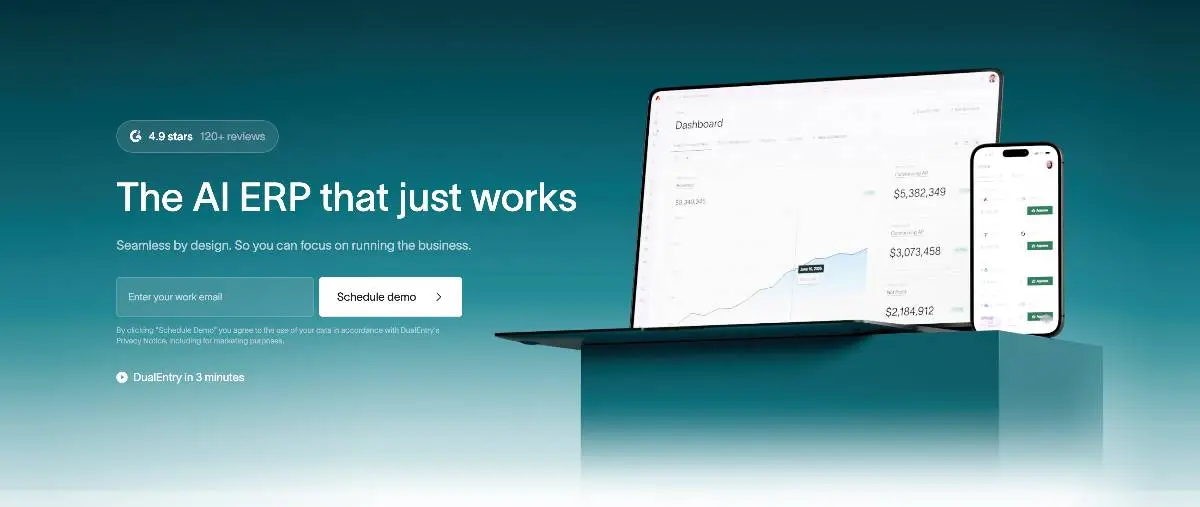
G2 rating: 4.9/5 (122)
Best for: Fast-growing mid-market and pre-IPO companies that need real-time consolidation and AI-powered automation.
Most ERP vendors slap “AI” on a feature page and call it a day. DualEntry actually built the platform around it. Intercompany eliminations run automatically. Consolidation happens in real time, not in overnight batch jobs. Finance teams handle 10× the transaction volume without adding headcount. The live dashboards drill across entities instantly, a different experience from refreshing static Intacct reports.
GL, AP, AR, cash management, revenue recognition, financial reporting, all in one system. Connected to 200+ integrations and 13,000+ bank connections across 60+ countries. Multi-currency covers 180 currencies with live FX rates, considerably broader than Intacct out of the box.
ERP migration is where DualEntry breaks from the playbook. Instead of a 6–12-month overhaul, you get a guided process with semi-automated transaction matching. People who’ve been through it say the reconciliation tools made it far less painful than expected.
Where Intacct still wins: The AICPA endorsement still means something to CPA firms. Intacct also has a longer track record, which matters in conservative buying environments.
Pricing: Three tiers (DualEntry, Plus, and Ultra) with custom pricing based on entity count and complexity. Request a demo for specifics.
Migration effort: Low to medium. Guided process with automated data matching.
2. Oracle NetSuite
G2 rating: 4.1/5 (4,611)
Best for: Companies that need finance and operations in a single platform.
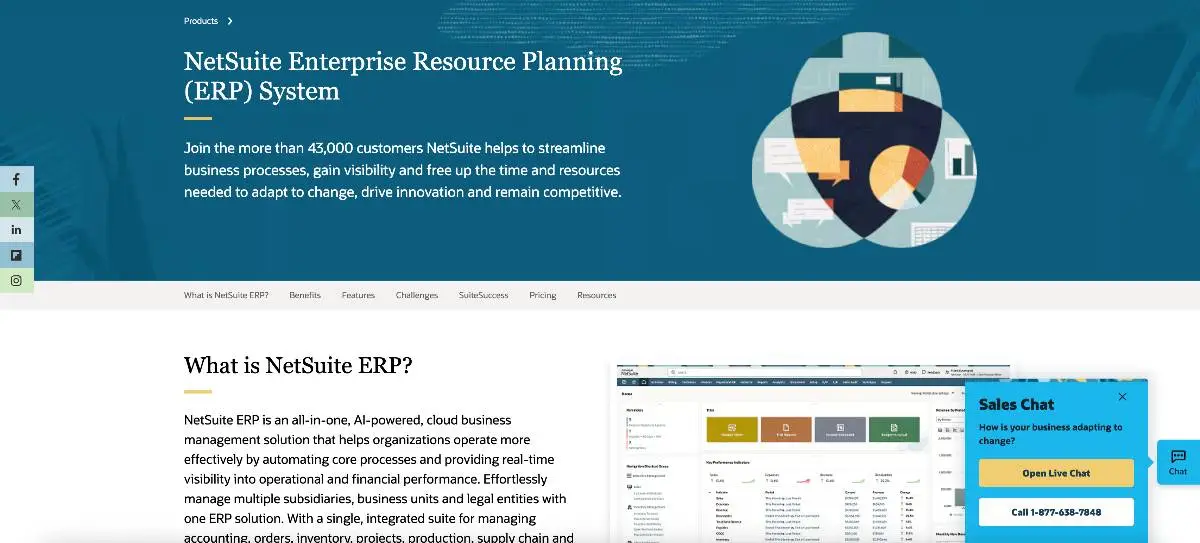
When people outgrow Intacct, NetSuite is usually the first name that comes up. Accounting, inventory, order management, procurement, CRM, all under one roof. That multi-system reconciliation headache Intacct users develop once they bolt on operational tools? NetSuite skips it. (See also: NetSuite alternatives.)
Is Sage Intacct similar to NetSuite? On the surface? Sure, they both do accounting. But that’s like saying a sedan and a pickup truck both have four wheels. NetSuite is a full-suite ERP. Intacct is a financial management specialist. If all you need is accounting and reporting, Intacct is honestly the more focused tool. If you need to see across inventory, orders, and revenue in one place, NetSuite wins.
Where Intacct still wins: Dimensional reporting and consolidation setup. Intacct’s mid-market finance tools are genuinely excellent when finance is all you need.
Pricing: ~$999/month base platform fee plus $99–$199 per user per month. Implementation costs swing wildly: $30,000 for a simple setup, $200,000+ for something complex. Push for multi-year discounts; 20–40% off list is standard.
Migration effort: High. Budget 4–9 months, and don’t believe anyone who says faster.
3. Acumatica
G2 rating: 4.4/5 (2,000)
Best for: Mid-market companies tired of per-user pricing who need a cloud ERP beyond just finance.
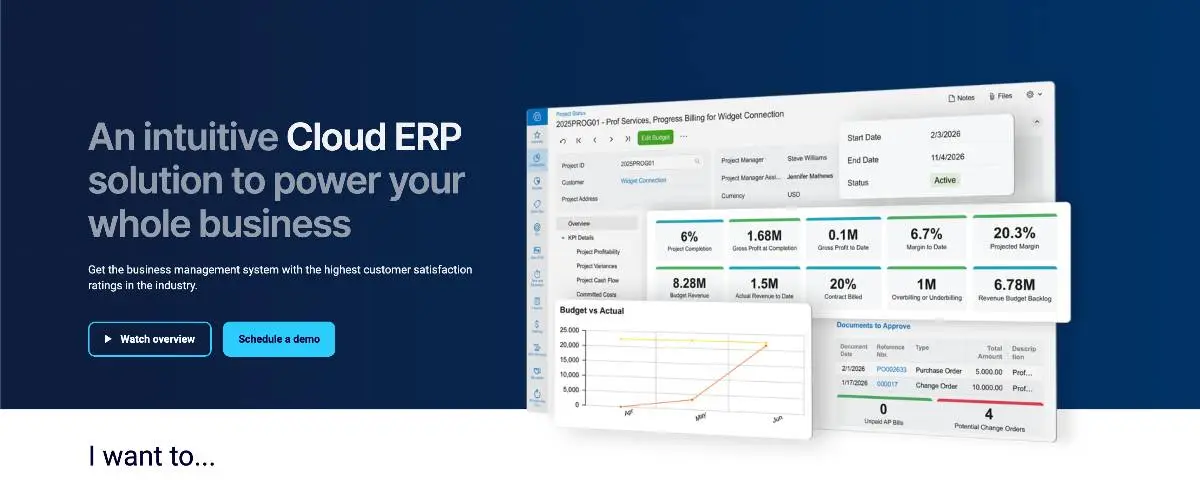
The pitch: no per-user fees. Acumatica charges on transaction volume and resource consumption, so every employee gets a login without the bill climbing per head. If you’ve got 20+ Intacct users, this model gets attractive fast. Covers more ground too: financials, distribution, manufacturing, CRM, project accounting.
Where Intacct still wins: Financial reporting depth. Intacct’s report builder is more mature, and if you only need accounting, it’s faster to implement.
Pricing: Consumption-based. Most mid-market deployments land at $1,800–$3,000/month, but you won’t find a price list online; everything goes through partners. Implementation adds $60,000–$100,000+.
Migration effort: Medium. Figure 3–6 months.
4. Microsoft Dynamics 365 Finance
G2 rating: 4.0/5 (897)
Best for: Enterprises already invested in the Microsoft ecosystem (Azure, Teams, Power BI, Office 365).
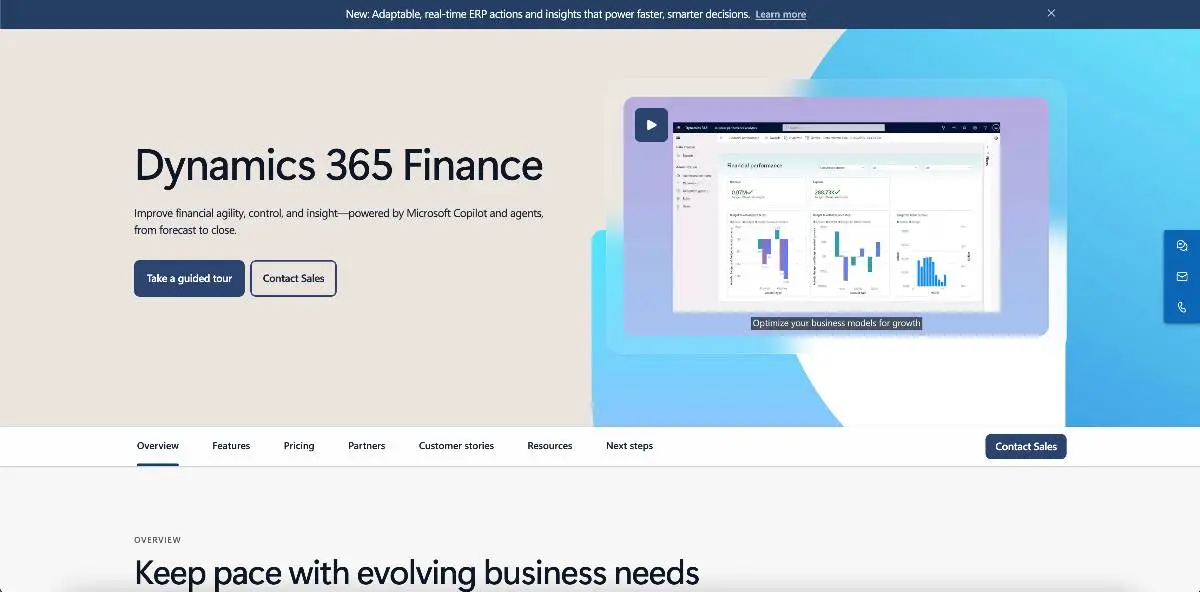
Already running Teams, Azure, Power BI, Office 365? Dynamics 365 Finance slots right in. The Power BI integration is the killer feature here: CFOs get financial dashboards without paying for a separate BI tool. Multi-currency, multi-GAAP, intercompany accounting across global entities. It’s built for a scale Intacct wasn’t designed to reach. One thing: Microsoft also sells Business Central ($80–$110/user/month). Totally different product, mid-market focused. People mix them up constantly.
Where Intacct still wins: Speed to go-live. Dynamics is an enterprise platform with enterprise-level implementation pain.
Pricing: $210/user/month for full users (bumped up from $180 in late 2024). Read-only team member licenses run $8/user/month. Where it really adds up is implementation: $300K to $1.5M for enterprise deployments. Nobody warns you about that part.
Migration effort: High. 6–12+ months is realistic.
5. Certinia (Formerly FinancialForce)
G2 rating: 4.3/5 (708)
Best for: Salesforce-centric professional services firms that want ERP inside their CRM.
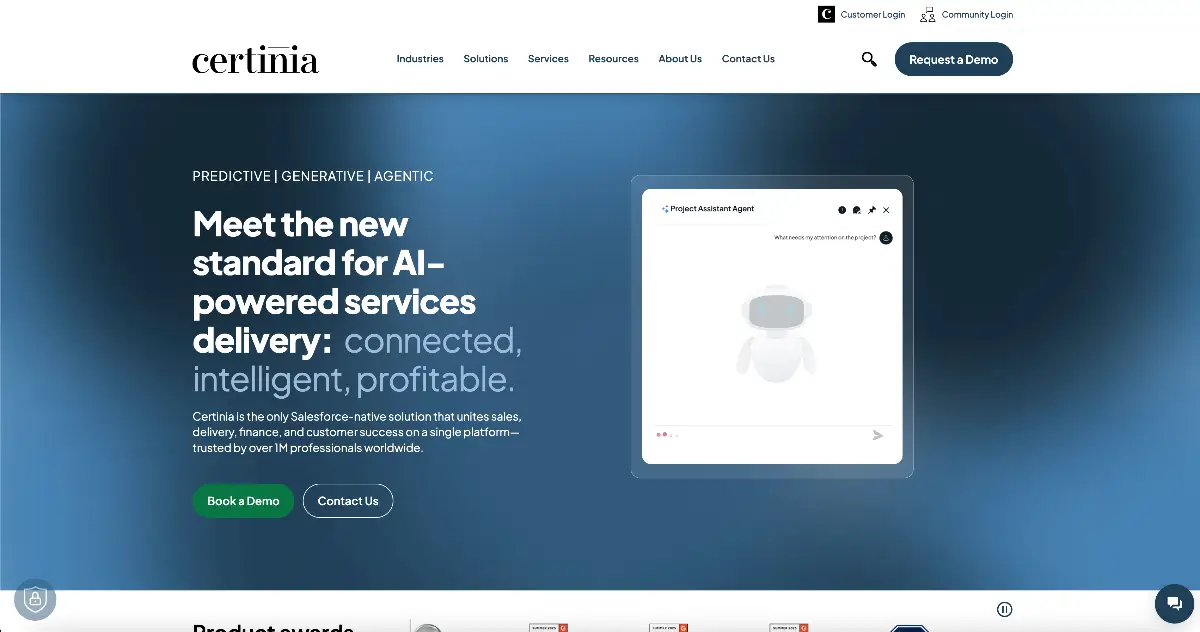
If you’ve spent any time babysitting the Intacct–Salesforce connector, you already know the pain. Certinia kills that integration entirely. Financial management, PSA, revenue recognition, all native on Salesforce. No middleware. No 2am sync failures. When sales closes a deal, finance sees it instantly. For professional services firms, this delivers.
Where Intacct still wins: Industry breadth. Certinia is laser-focused on professional services. If you’re in manufacturing, distribution, or retail, look elsewhere.
Pricing: $150–$350/user/month for Certinia itself, but you also need Salesforce licenses ($75–$300/user/month) underneath it. That combined cost surprises people. Budget accordingly.
Migration effort: Low to medium, especially if you’re already on Salesforce.
6. QuickBooks Online Advanced

G2 rating: 4/5 (3,709)
Best for: Small businesses and single-entity companies that don’t need multi-entity consolidation.
This is the “right-sizing” option. Plenty of companies are on Sage Intacct when QuickBooks Advanced would handle everything they actually use, at a fraction of the cost. The platform supports up to 25 users, includes custom reporting, batch invoicing, and workflow automations. It’s not a replacement for companies that genuinely need Intacct’s multi-entity or dimensional capabilities, but it’s the smart move for single-entity businesses paying for power they don’t use. (For a deeper comparison, see QuickBooks to ERP: when to make the switch.)
Where Intacct still wins: Multi-entity consolidation, dimensional reporting, audit trails. If you need any of these, QuickBooks isn’t the answer.
Pricing: $275/month flat, up to 25 users. New customers can usually negotiate 50% off for the first three months.
Migration effort: Low. Two to four weeks for straightforward setups. Not sure which QuickBooks direction makes sense? Our guide to QuickBooks alternatives covers the full range of options at that tier.
7. Xero
G2 rating: 4.4/5 (1,599)
Best for: Startups and smaller teams that want clean UX and unlimited users without paying per seat.
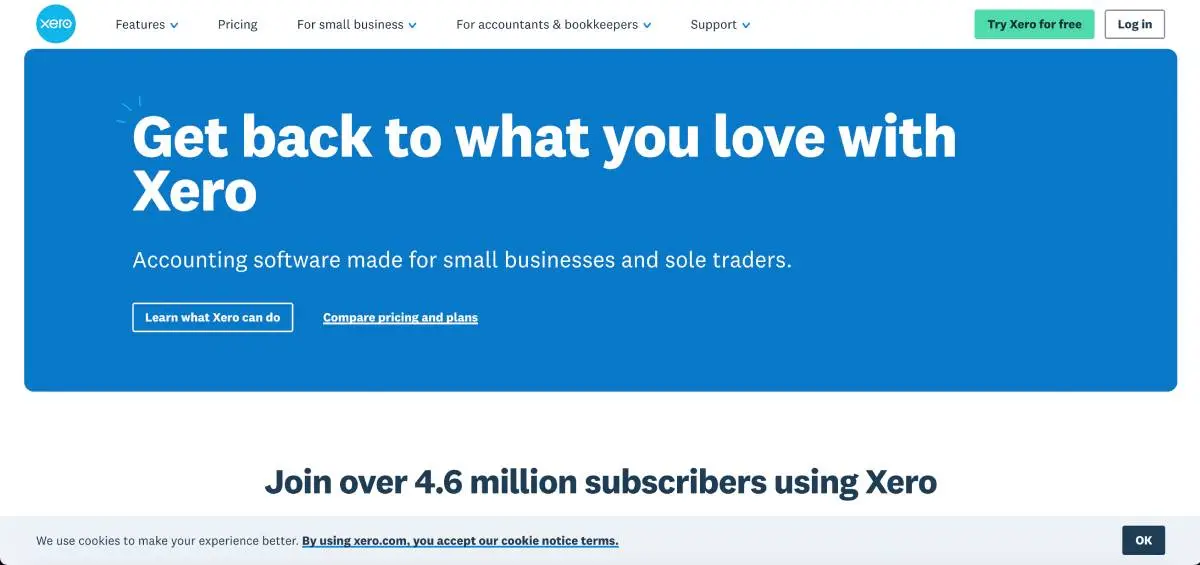
Is Sage Intacct better than Xero? For multi-entity mid-market accounting, obviously yes. But let’s be real: if you’re googling this, you’re probably not running 50 entities with dimensional reporting. You’re probably a small business that got upsold into Intacct when Xero would’ve been fine. Clean interface. Unlimited users on every plan. Over 1,000 integrations. Starts at $25/month. Do the math against your Sage invoice. A 10-person startup with one entity? Xero does it at roughly 1/20th the cost.
Where Intacct still wins: Anything past basic accounting. Consolidation, dimensional reporting, audit depth. Xero doesn’t compete there and isn’t trying to.
Pricing: $25/month (Early), $55/month (Growing), $90/month (Established). Unlimited users on every plan. New customer promos are common.
Migration effort: Low. You can set up bank feeds and map your chart of accounts in a few days.
8. SAP Business One
G2 rating: 4.4/5 (922)
Best for: Small and mid-size manufacturers and distributors that need integrated operations.
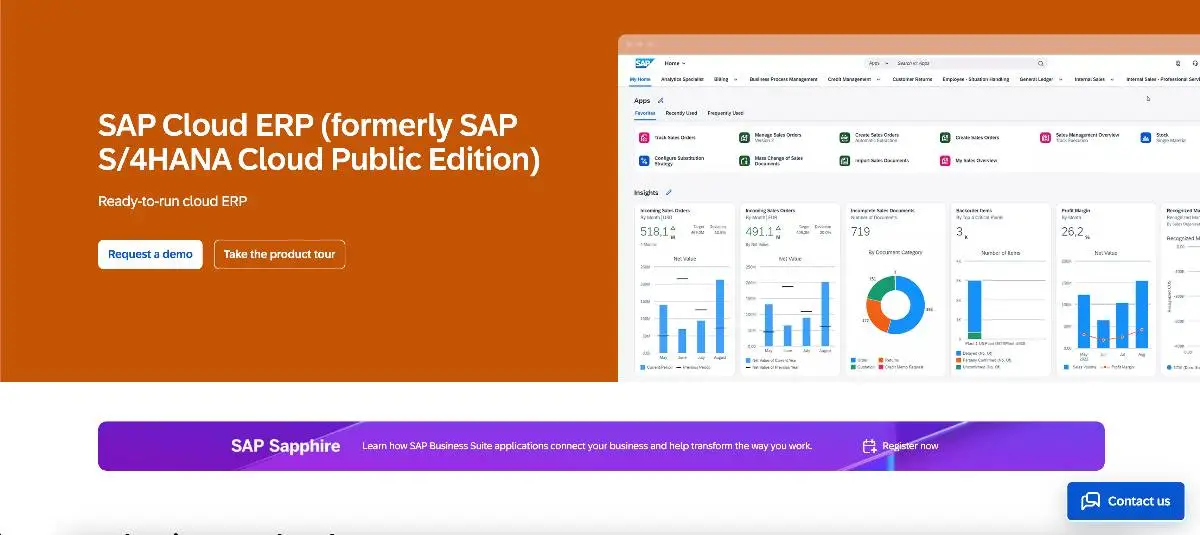
Different animal from Intacct. B1 was built for operations: MRP, production orders, warehouse management, purchasing. Finance is there (the GL and reporting work), but the real value is a single view from shop floor to balance sheet. If your pain points are operational, this is the right direction. If you just need better accounting, skip it.
Where Intacct still wins: Financial reporting and the cloud experience. B1’s cloud product still feels like it’s catching up to SaaS-ERP native platforms.
Pricing: Cloud is about €91/user/month (~$100) for professional licenses. On-premise perpetual licenses start at €2,700 per user with 18–20% annual maintenance on top. Implementation: $15,000 for small, $150,000+ for complex.
Migration effort: Medium to high. Moving operational data is a different beast from moving financial records.
9. Odoo
G2 rating: 4.4/5 (329)
Best for: Budget-conscious companies that want a modular, open-source ERP they can grow into.
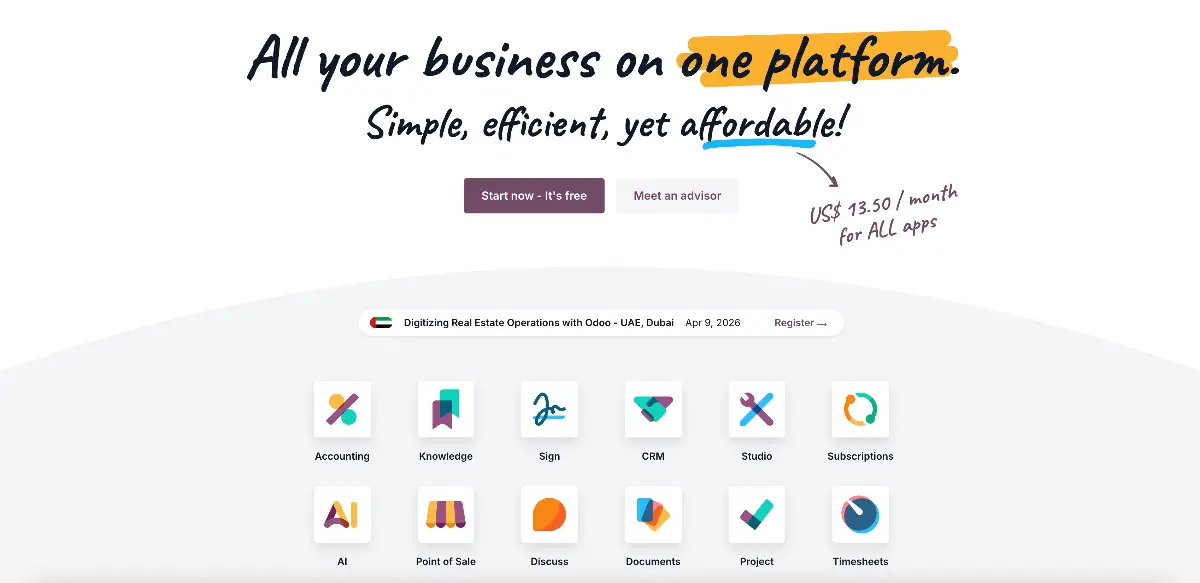
Odoo is the modular option. Start with accounting. Need inventory later? Add it. Manufacturing, CRM, e-commerce, same deal. The Community edition is genuinely free and open-source. Enterprise costs $24.90/user/month, hosted. For companies that don’t need Intacct-level audit rigor, the breadth you get for the price is hard to argue with.
Where Intacct still wins: Audit compliance and GAAP-specific workflows. Odoo’s accounting works, but it wasn’t built with U.S. compliance officers breathing down its neck. If you’re in a regulated industry, that gap matters.
Pricing: Free for Community (single app). Enterprise runs $24.90–$37.40/user/month. Implementation costs are all over the map depending on how much you customize.
Migration effort: Medium. The open-source flexibility means more power and more setup work.
10. Blackbaud Financial Edge NXT
G2 rating: 4/5 (121)
Best for: Nonprofits that need real fund accounting, not a workaround on a corporate GL.
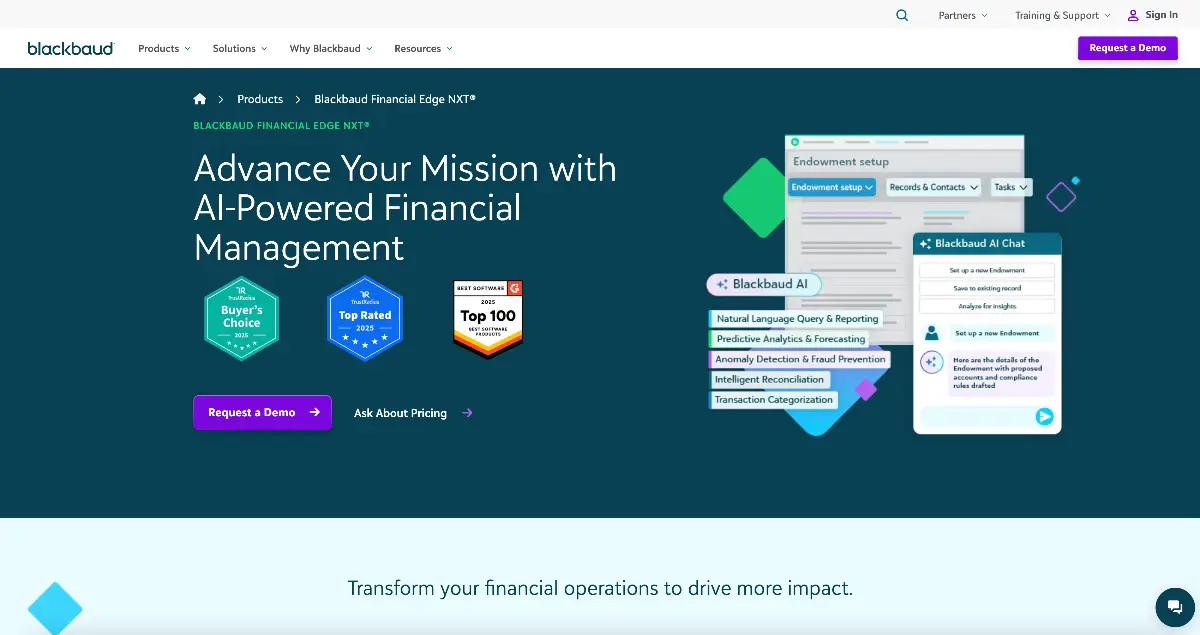
Blackbaud has been doing nonprofit finance longer than most vendors on this list have existed. Fund accounting, grant tracking, encumbrance accounting, donor-revenue integration. Not bolted on, it’s the whole product. If your COA runs on funds and grants rather than departments and cost centers, you’ll get it immediately. Intacct can do nonprofits. But it always feels like a general-purpose tool wearing a nonprofit hat.
Where Intacct still wins: Rolling up financials across complex multi-entity nonprofit structures, and broader integrations outside Blackbaud’s ecosystem.
Pricing: Custom quotes only. Based on user reports, expect $10,000–$50,000/year depending on scope. They’re currently running a promo: first 6 months free for new customers.
Migration effort: Medium. Mapping your fund structure is the part that takes the most time.
11. Accounting Seed
.webp)
G2 rating: 4.2/5 (166)
Best for: Companies that want native accounting functionality inside Salesforce without leaving the platform.
Picture Certinia with the complexity stripped out. GL, AP, AR, billing, reporting, all native inside Salesforce. Finance works in the same org as sales. Zero integration layer to manage or troubleshoot. Not as deep as Certinia, but for teams that need solid accounting without the price tag, that’s a feature.
Where Intacct still wins: Multi-entity consolidation and compliance reporting that keeps auditors quiet.
Pricing: Custom quotes only. Expect around $750/month as a starting point, scaling to $5,000–$37,000 annually depending on users and modules. Active Salesforce licenses required on top.
Migration effort: Low. Particularly if you’re already on Salesforce.
Feature Comparison: Sage Intacct vs. Top Alternatives
When Should You Stay With Sage Intacct?
Before you spend weeks evaluating Sage Intacct alternatives, make sure you actually need to move. Here’s when we’d tell you to stay put.
Your core need is multi-entity financial consolidation. Intacct’s dimensional reporting and consolidation engine remain well-regarded for mid-market companies. If rolling up financials across dozens of entities is your primary pain and you’re otherwise satisfied, Intacct handles this competently.
You’re a finance-first organization with no operational ERP needs. If you don’t need manufacturing, inventory, or supply chain management, Intacct’s focused approach is a feature, not a limitation. You’re not paying for modules you’ll never use.
Compliance and audit trails are non-negotiable. Nonprofits, government contractors, and regulated industries value Intacct’s AICPA endorsement (it’s the only preferred financial management solution endorsed by the AICPA) and its audit trail depth.
Your team is trained and productive. Switching costs aren’t just financial. If your team knows Intacct and the platform meets your needs, the productivity loss during migration may outweigh savings from a cheaper alternative.
What Does It Take to Switch From Sage Intacct?
Every comparison article tells you what to buy. Few talk about what the transition actually looks like.
Data migration scope. You’re moving your chart of accounts, vendor and customer master files, open AP and AR, and 2–3 years of transaction history so auditors don’t panic. Multi-entity? Add intercompany elimination rules and consolidation mappings.
Realistic timelines. QuickBooks or Xero: 2–4 weeks, pretty painless. Acumatica, DualEntry, or Certinia: 3–6 months. A full NetSuite or Dynamics 365 rollout: 6–12+ months, and honestly, plan for the long end.
Hidden costs most vendors won’t mention. Implementation partners run $50K to $300K depending on the platform. Then there’s training, 2–4 months where your team is slower than usual, and parallel-run costs while both systems overlap.
Four questions to ask any vendor before signing:
- What is included in the quoted implementation cost, and what triggers additional fees?
- Can you provide references from companies that migrated specifically from Sage Intacct?
- What is your contractual commitment to price stability at renewal? (Ask for a cap on annual increases.)
- How do you handle historical data migration, and what are the limitations? (Sneaky one: some platforms only pull summary balances, not transaction-level detail. Your auditor will care.) To ballpark costs before calling vendors, try an ERP implementation cost calculator first.
These four questions come from a broader discipline, our ERP selection guide covers the whole process, from criteria-setting to reference checks.
Sage Alternatives FAQ
The Bottom Line
There’s no universally “best” Sage Intacct alternative. The cloud ERP market is too fragmented for that. A nonprofit managing grant funds faces a different decision than a SaaS company on Salesforce. It depends on your size, industry, and what’s actually broken.
Our advice: get specific about your pain points. Cost? Missing features? Integration headaches? Shortlist two or three options from this guide and request pricing and a live demo in the same conversation. Vendors who separate those two meetings are hoping you fall in love before seeing the bill.
One last thing: ask for references from companies that migrated from Intacct specifically. General references are useless here. You want someone who lived through the exact transition you’re considering. Their experience will be worth more than anything you read online.
See the full power of DualEntry in 30 minutes
Justin (Do San Myung) is Expert Accountant at DualEntry with 20+ years of hands-on experience managing general ledgers, financial close processes, and ERP implementations for mid-market and enterprise companies. As a former Consulting CFO and Controller, he has personally overseen month-end closes, SOX compliance programs, and multi-entity consolidations across technology, manufacturing, and services industries. Justin specializes in transforming manual accounting workflows into automated, AI-driven processes.