Don't worry! The contents here will appear on the published page.
Accrual vs Cash Basis Accounting: Differences & Examples

Do San (Justin) Myung
Expert Accountant & Former Consulting CFO
Do San (Justin) Myung
Expert Accountant & Former Consulting CFO
Justin (Do San Myung) is Expert Accountant at DualEntry with 20+ years of hands-on experience managing general ledgers, financial close processes, and ERP implementations for mid-market and enterprise companies. As a former Consulting CFO and Controller, he has personally overseen month-end closes, SOX compliance programs, and multi-entity consolidations across technology, manufacturing, and services industries. Justin specializes in transforming manual accounting workflows into automated, AI-driven processes.
Learn about our editorial policies.
Last updated
October 7, 2026
Reviewed by
Woosung Chun

Woosung Chun
CFO
Woosung Chun is the CFO of DualEntry with experience in corporate finance, accounting, strategy, and acquisitions. He previously grew from scratch and led the M&A and Finance teams at Benitago, where he completed more than 12 acquisitions in 2 years. He graduated with a BS from NYU Stern. At DualEntry, Woosung writes about AI in accounting, revenue recognition, foreign currency accounting, hedge accounting, and ERP modernization for finance teams navigating complex, multi-entity environments.
Learn about our editorial policies.

Summarize this article
Cash basis and accrual basis are the two main ways a business keeps its books. Cash basis records income and expenses only when money actually moves. Accrual records income when it's earned and expenses when they're incurred, whether or not the cash has changed hands. [1]
When you're running a business, the method you use shapes how profitable each month looks, whether your financial statements are GAAP-compliant, and, depending on your entity type, size and inventory, which method the IRS lets you use. Choosing the right one early saves an awkward switch down the line.
Cash basis vs. accrual basis accounting at a glance
Here's how the two methods compare across the things that matter most when you're running a business.
What is cash basis accounting?
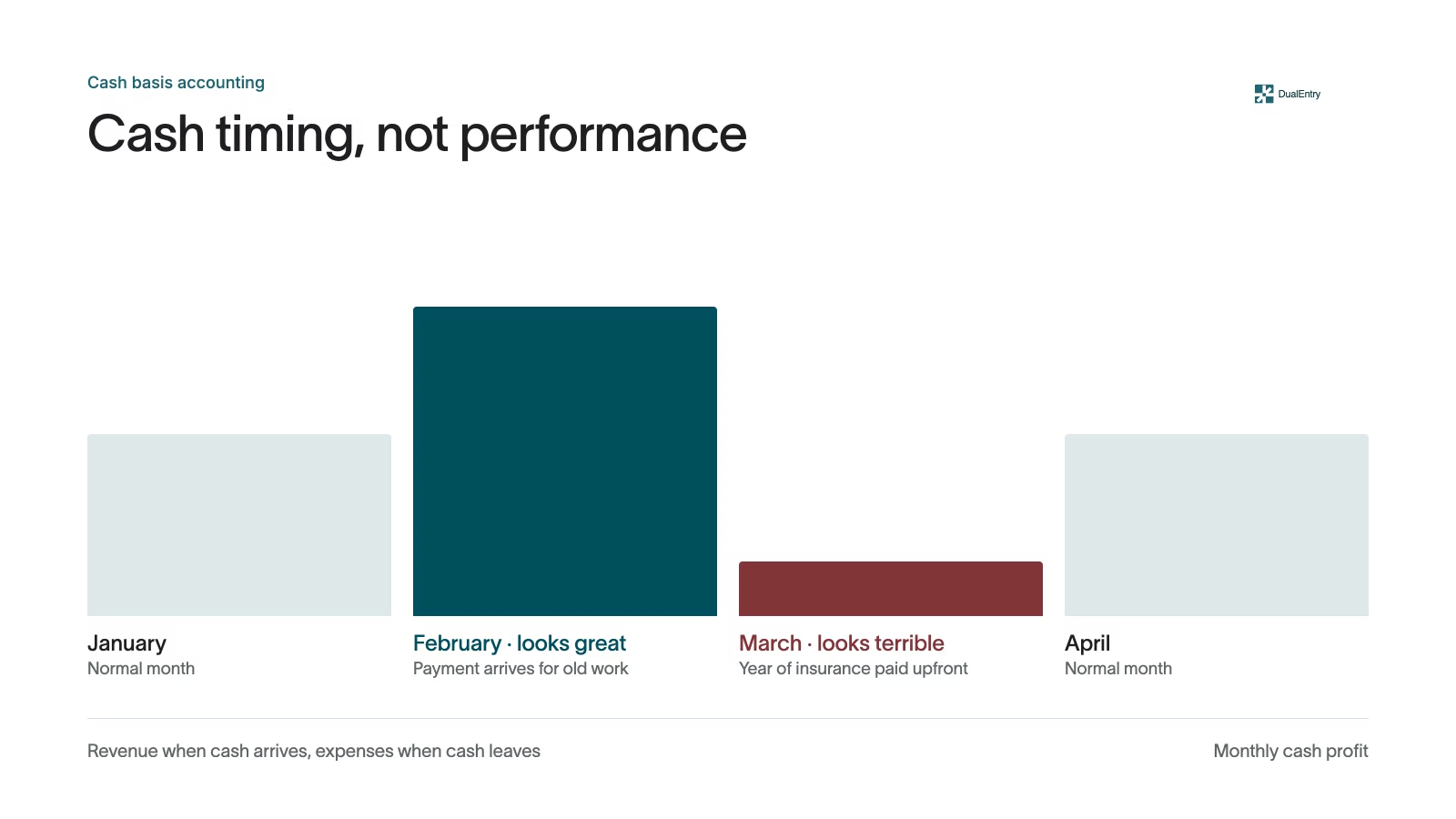
Cash basis accounting records revenue when the money lands in your account and expenses when you actually pay them. [2] If you invoice a client in March but they pay in April, cash basis counts that as April income. Nothing happens on the books until cash changes hands.
The appeal is simplicity. It's easy to run, and it tells you exactly how much cash you have, which is what a small owner-run business cares about most.
The catch is that it can flatter or scare you for the wrong reasons. A month can look great because a big payment finally arrived for old work, or look terrible because you paid a year's insurance upfront, even though neither says much about how the business actually performed.
What is accrual accounting?
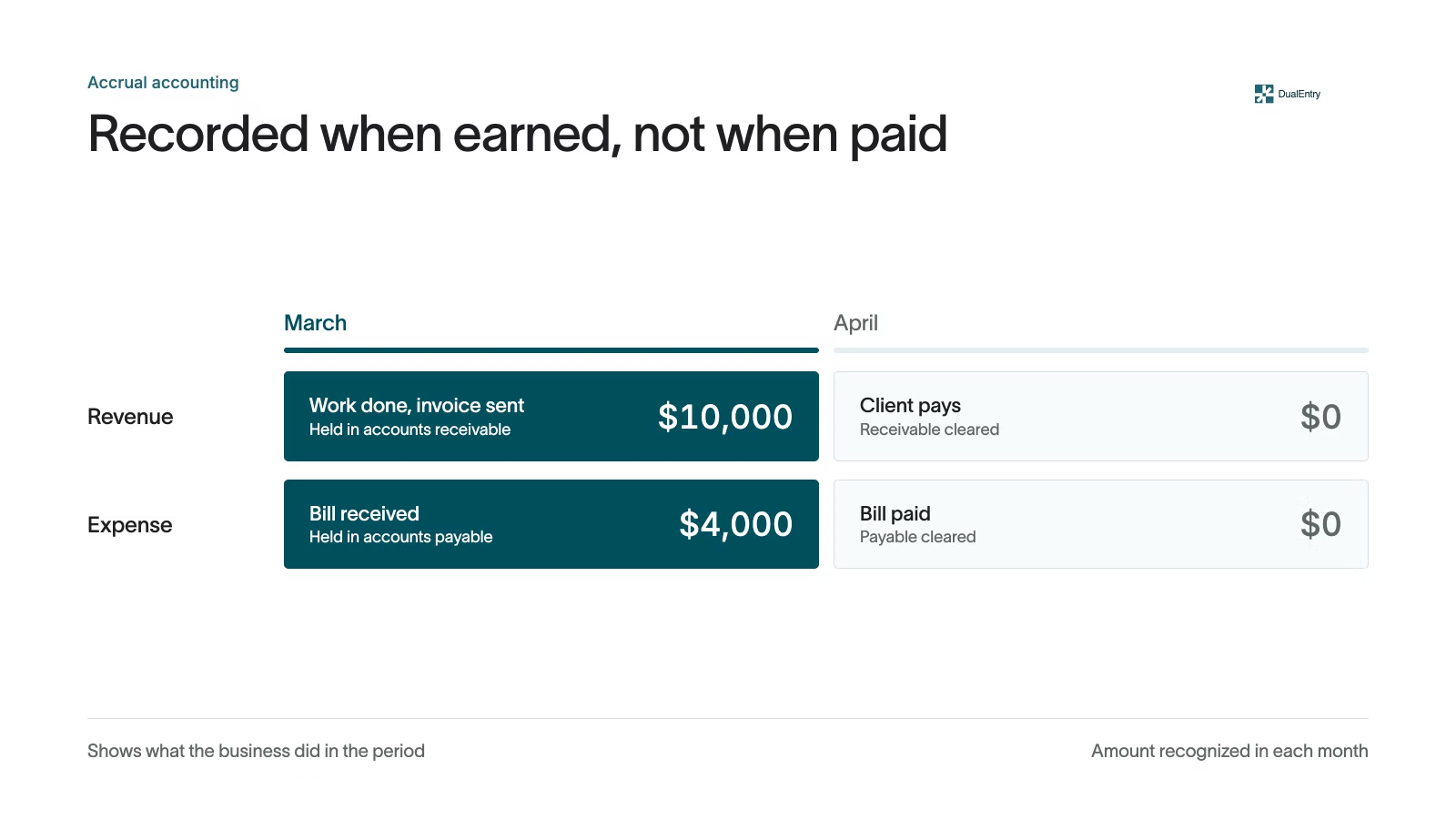
Accrual accounting records revenue when you earn it and expenses when you incur them, no matter when the cash moves. [2]
Invoice a client in March for work you did in March, and it's March revenue, even if they don't pay until April. That unpaid invoice sits in accounts receivable. Receive a bill for work done in March and it becomes an expense for March, even if you pay it later, with the amount owed recorded in accounts payable.
This is the method behind the revenue recognition principle and the matching principle, which align revenue with the costs of earning it in the same period. [3]
It also accounts for timing differences such as accrued expenses and unearned revenue, where the cash movement and the accounting recognition happen in different periods. [4]
That's what gives accrual its main advantage: it shows what the business actually did in a period, not just what its bank account did. [5] The trade-off is more work, because you're tracking money you're owed and money you owe on top of the cash itself.
Accrual vs. cash accounting: a worked example
The fastest way to see the difference is to run one month through both methods.
Here's a small business with five transactions in a single month. Each one lands in the ledger differently depending on the method, and the figures below are illustrative.
Same month, same transactions, two very different answers. On cash basis, the business shows a $2,000 loss, because the only money it collected was $6,000 while it paid out $8,000. On accrual basis, it shows a $1,000 profit, because it earned $10,000 and ran up $9,000 in costs, regardless of what actually cleared the bank.
Neither number is wrong, because they answer different questions. Cash basis tells you what happened to your bank balance. Accrual tells you how the business performed. That $10,000 invoice represents work the company has already done and is owed payment for, so accrual counts it now while cash basis waits until the check clears.
What is modified cash basis accounting?
Modified cash basis sits between the two. It runs mostly on cash basis for day-to-day income and expenses, then borrows a few accrual treatments for the things cash basis handles badly, like recording fixed assets and depreciating them, or carrying longer-term loans on the books. [6]
It's a practical middle ground for small businesses that want cash basis simplicity but a slightly truer picture of their bigger commitments. The downside is that it isn't GAAP. Modified cash statements fall under a special purpose framework, so a CPA can still review or audit them, but a business whose investors or lenders require GAAP statements has to move to full accrual. [6], [7]
Who can use cash basis accounting?
Not every business faces the same rules. The IRS restricts the cash method for certain types of taxpayers, while many smaller businesses can use it if they meet the relevant gross receipts test. [1]
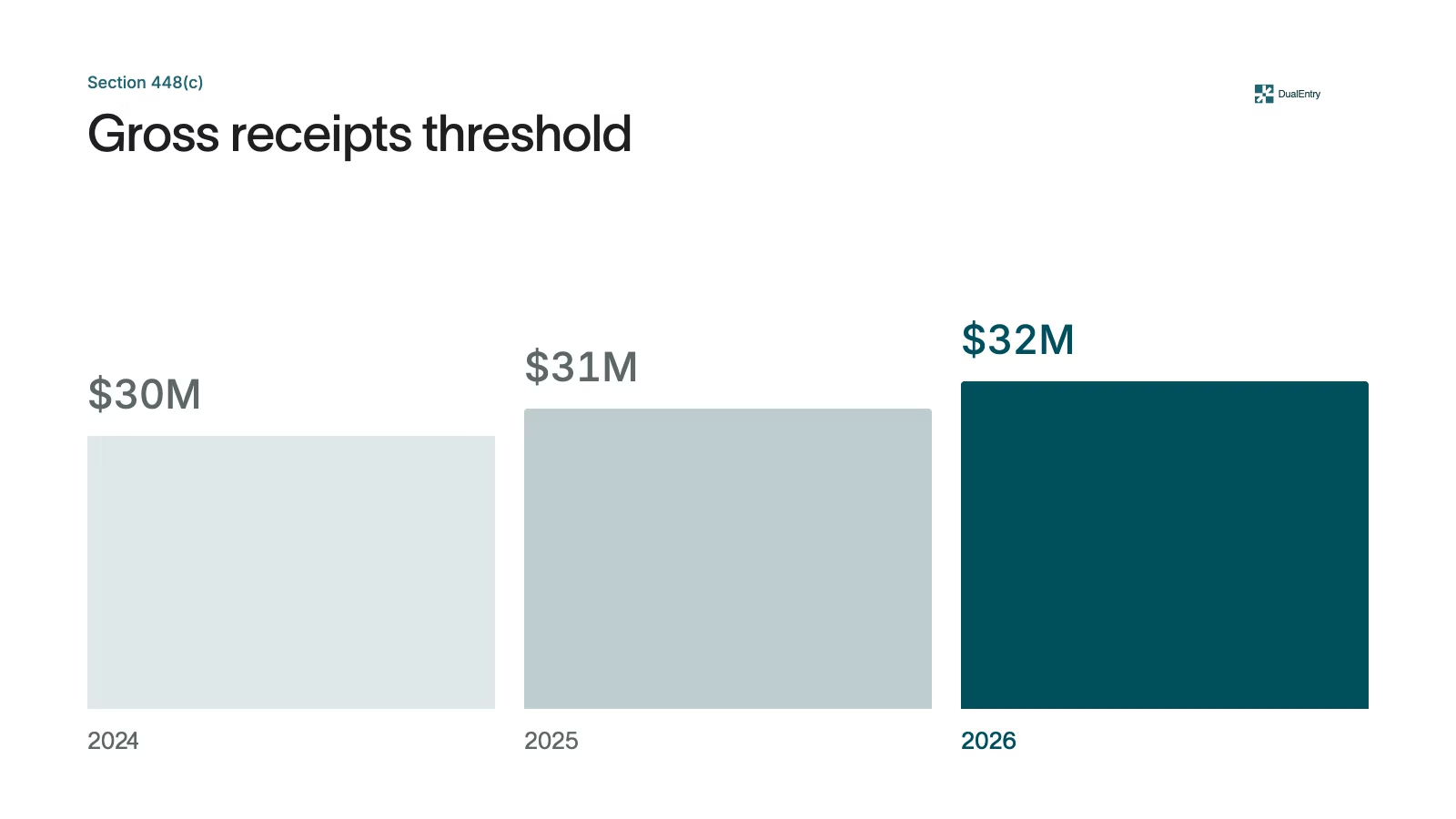
The main test is the Section 448(c) gross receipts test. For tax years beginning in 2026, the threshold is $32 million in average annual gross receipts over the three prior tax years. [8] That figure is adjusted for inflation each year; it was $31 million for 2025 and $30 million for 2024. [9]
C corporations and partnerships with a C corporation partner are generally subject to the accrual requirement, but they can qualify for the cash method if they meet the gross receipts test. Qualified personal service corporations, such as accounting, law, engineering or consulting firms, can also use the cash method regardless of size, provided substantially all of their stock is owned by the employees who perform those services. [1] Tax shelters, however, generally can't use the cash method. Sole proprietors, S corporations and partnerships without a C corporation partner aren't covered by this rule, so for them the gross receipts test matters mainly if they carry inventory. [1]
Inventory used to push more businesses toward accrual accounting, but the rules have been relaxed for qualifying small businesses. Those businesses may be able to use the cash method while treating inventory under one of the alternative methods allowed by the IRS: as non-incidental materials and supplies, or following the treatment in their financial statements or books and records. [1]
Because the rules depend on factors such as your entity type, gross receipts, and inventory treatment, confirm your position against IRS Publication 538 or with an accountant.
How to switch between cash and accrual
If you're changing your accounting method for federal income-tax purposes, switching isn't just a matter of changing how you record things going forward. It's generally a formal change with the IRS, and it comes with a one-time adjustment to true up the difference. [1]
You make the change by filing Form 3115, the Application for Change in Accounting Method. [10] Many common cash-to-accrual and eligible accrual-to-cash changes qualify for the IRS's automatic consent procedures, which means you still file the form but don't need advance approval. [10], [11]
The adjustment is the part to plan for. Whichever direction you switch, a one-time adjustment accounts for income and expenses that would otherwise be counted twice or missed during the changeover. For tax purposes, this is a Section 481(a) adjustment. [12]
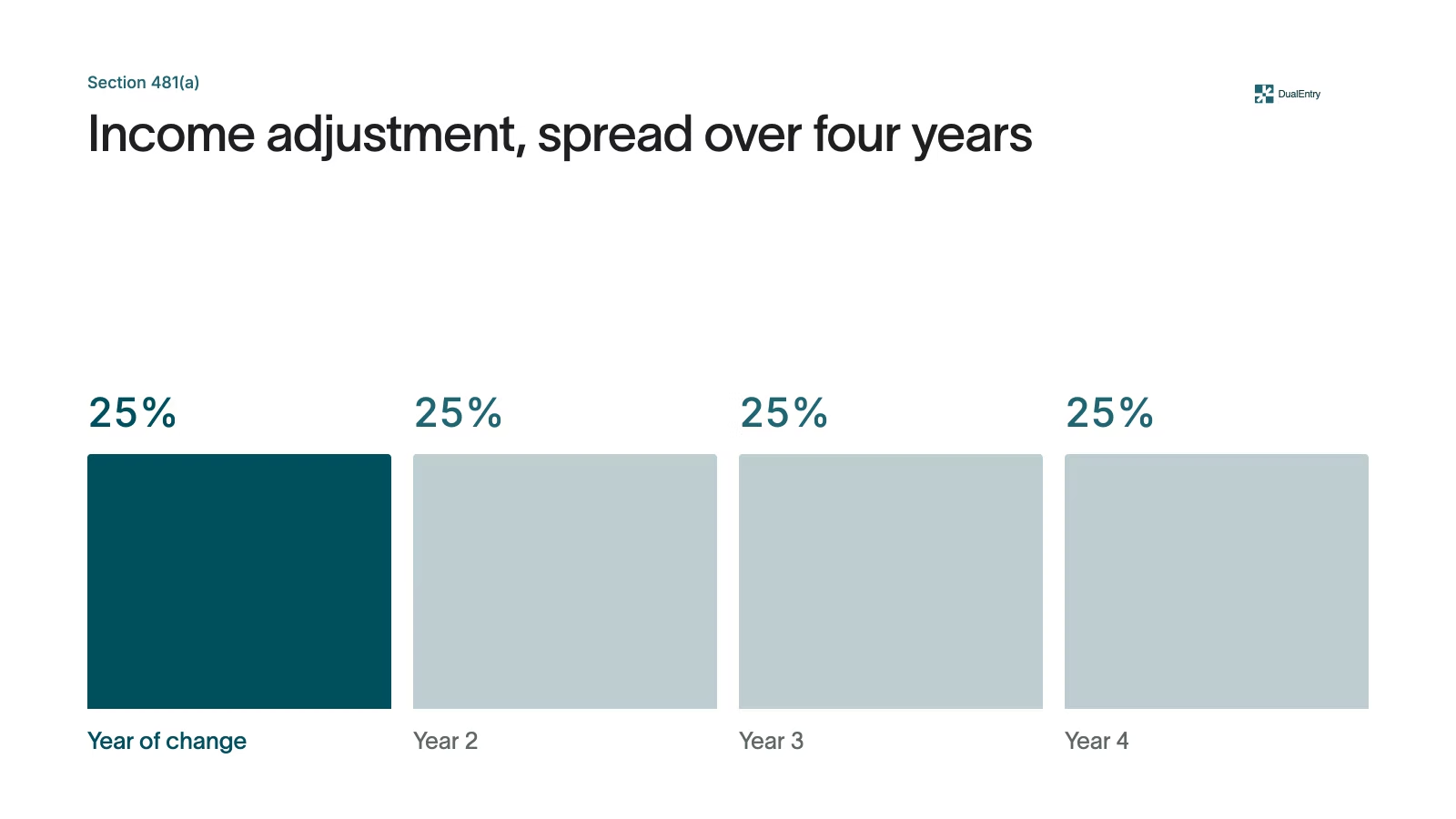
If the adjustment increases your taxable income, you generally spread it over four tax years (the year of change and the next three), or take it all at once if it's under $50,000 and you elect to; if it decreases your taxable income, you usually take the whole benefit in the year of the change. [10] It's worth running the numbers, and looping in an accountant, before you file.
Should you use cash or accrual?
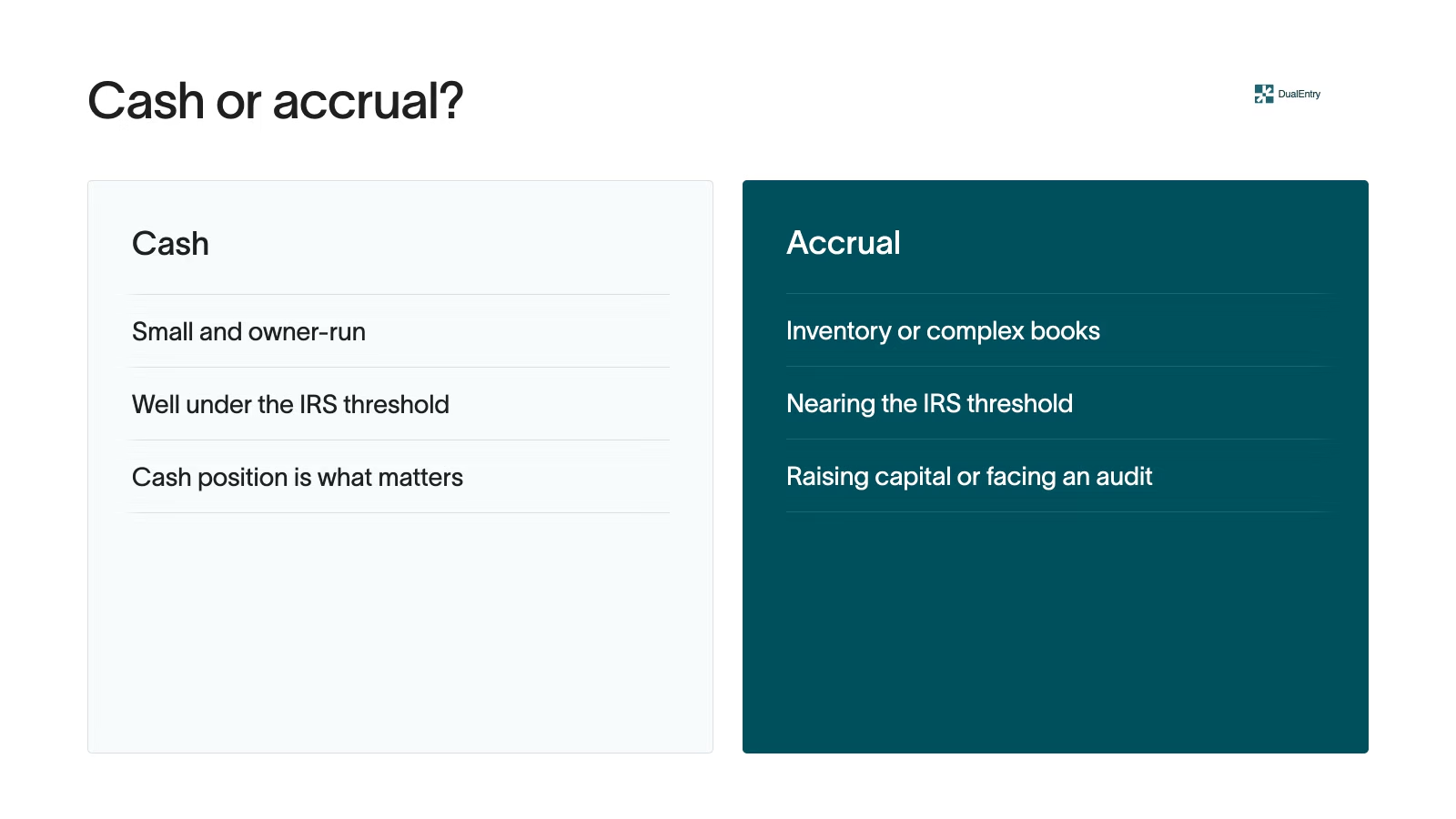
For a small, simple, owner-run business that's comfortably under the IRS threshold, cash basis is usually the right call. It's easier to keep, and when your main question is "how much cash do I have," it answers it directly.
Accrual makes sense the moment you need a true picture of profitability rather than just a cash position. That includes businesses with significant inventory or more complex accounting needs, C corporations approaching the gross receipts threshold, and, most of all, any company raising outside money.
Institutional investors and many lenders expect GAAP financial statements, which means accrual [3], and concepts like deferred revenue only exist on accrual books. If you're heading toward a raise or an audit, it's usually easier to be on accrual before you get there than to switch under pressure.
How DualEntry handles accrual accounting
Once a business is on accrual, the work is only as clean as the system running it. Revenue has to be recognized as it's earned, expenses matched to the right period, and the books kept ready for reporting and audit, none of which a spreadsheet does well at scale.
DualEntry is built for accrual accounting from the ground up. Accruals post as ordinary journal entries with a reversal date, and DualEntry creates the reversing entry for you. [13] Prepaid amortization schedules post their monthly entries as each date arrives [14], and revenue recognition schedules post journal entries at the cadence you set [15]. All of it runs on the same ledger as the rest of your accounting, so accrual statements come straight off the books instead of being reconstructed each period.
For a company that's outgrown cash basis, or one that expects to raise money and needs GAAP statements ready, that's the difference between accrual being a monthly rebuild and it being part of how the books already run.
Accrual vs Cash Basis Accounting FAQs
See the full power of DualEntry in 30 minutes
Justin (Do San Myung) is Expert Accountant at DualEntry with 20+ years of hands-on experience managing general ledgers, financial close processes, and ERP implementations for mid-market and enterprise companies. As a former Consulting CFO and Controller, he has personally overseen month-end closes, SOX compliance programs, and multi-entity consolidations across technology, manufacturing, and services industries. Justin specializes in transforming manual accounting workflows into automated, AI-driven processes.