Don't worry! The contents here will appear on the published page.
Agentic AI for Accounts Payable: How It Works Across the AP Cycle

Do San (Justin) Myung
Expert Accountant & Former Consulting CFO
Do San (Justin) Myung
Expert Accountant & Former Consulting CFO
Justin (Do San Myung) is Expert Accountant at DualEntry with 20+ years of hands-on experience managing general ledgers, financial close processes, and ERP implementations for mid-market and enterprise companies. As a former Consulting CFO and Controller, he has personally overseen month-end closes, SOX compliance programs, and multi-entity consolidations across technology, manufacturing, and services industries. Justin specializes in transforming manual accounting workflows into automated, AI-driven processes.
Learn about our editorial policies.
Last updated
October 22, 2026
Reviewed by
Woosung Chun

Woosung Chun
CFO
Woosung Chun is the CFO of DualEntry with experience in corporate finance, accounting, strategy, and acquisitions. He previously grew from scratch and led the M&A and Finance teams at Benitago, where he completed more than 12 acquisitions in 2 years. He graduated with a BS from NYU Stern. At DualEntry, Woosung writes about AI in accounting, revenue recognition, foreign currency accounting, hedge accounting, and ERP modernization for finance teams navigating complex, multi-entity environments.
Learn about our editorial policies.
Summarize this article

TL;DR
Agentic AI goes beyond traditional AP automation: Agents can investigate discrepancies, make decisions, and take permitted actions without constant human input.
AI agents can work across the AP cycle: From invoice capture and coding to matching, approvals, payments, and month-end close.
Autonomy depends on risk: Routine transactions can move automatically, while sensitive changes and unusual cases require human review.
Controls remain essential: Approval limits, permissions, segregation of duties, and audit trails keep finance teams in control.
Start small and measure results: Pilot predictable workflows, track exceptions and correction rates, and expand autonomy as performance improves.
Most accounts payable teams already automate parts of invoice processing. Invoices can be captured automatically, routed for approval, matched against purchase orders, and scheduled for payment without somebody manually moving every document from one step to the next.
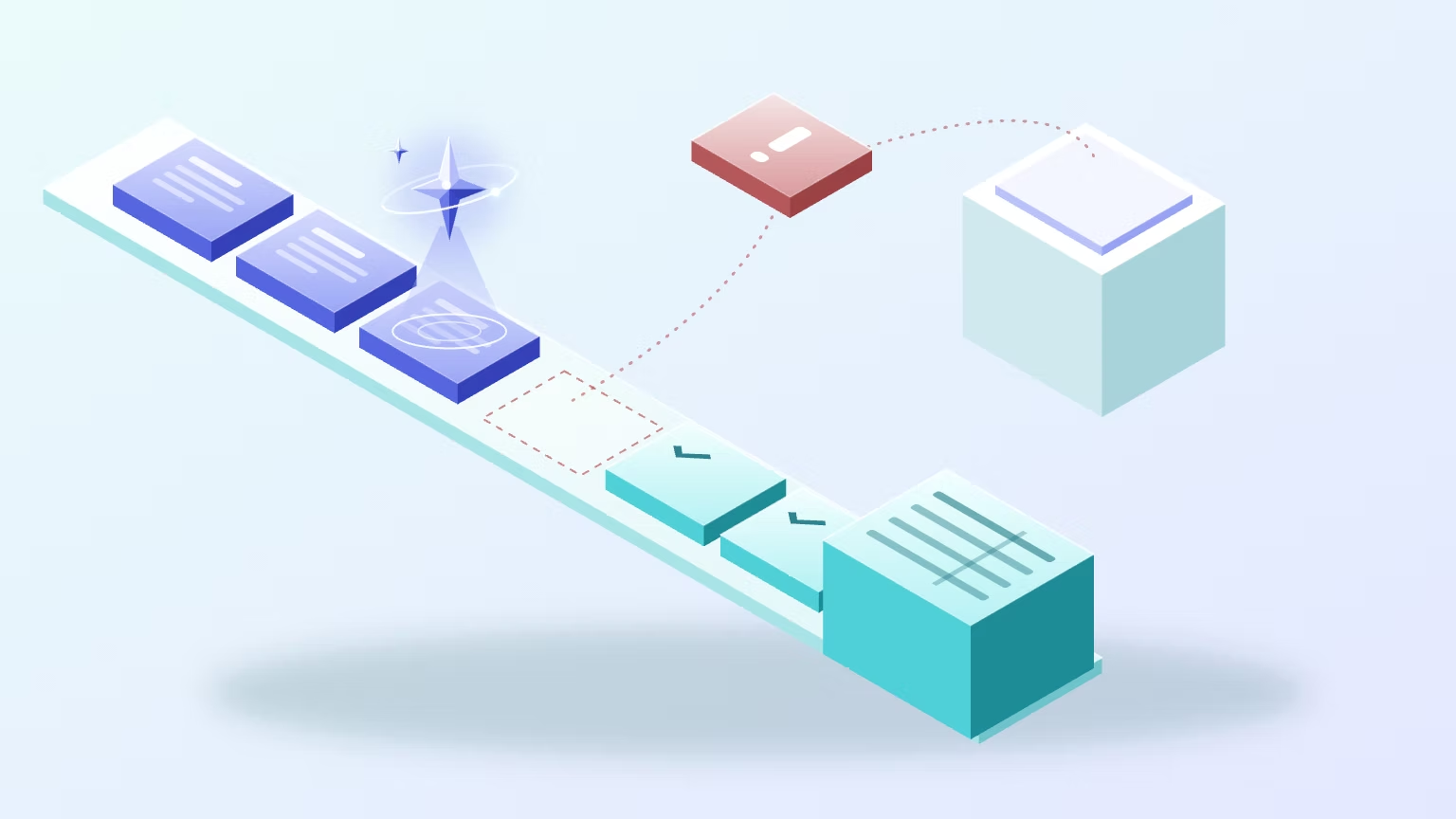
Agentic AI changes what happens when that process stops being predictable. Instead of simply flagging a mismatch or sending an invoice to another queue, an AI agent can investigate what happened, gather more information, decide what permitted action comes next, and keep the work moving.
That creates a different question for AP teams. It's no longer just about what can be automated, but how far the agent should be allowed to go before somebody has to step in.
This guide follows an invoice through nine stages of the AP cycle, from capture through payment and close, and looks at where agents can work on their own, where human review still matters, and the controls that should sit around them.
[tldr]
What is agentic AI in accounts payable?
Agentic AI in accounts payable is software that can work toward an AP goal across several steps, make decisions based on the information it finds, and take permitted actions without waiting for a new instruction at every stage.
That is different from both traditional AP automation and an AI copilot.
Say an invoice is $200 higher than its purchase order. A normal workflow may flag the difference and send it to AP. A copilot might summarize the mismatch for somebody to investigate.
An agent can go further. It could check the PO, receipt, invoice history, vendor record, and supporting documents to work out whether the difference comes from freight, tax, a price change, or something else. If the answer falls within the rules it has been given, the process can continue. If not, the agent sends the exception to a person with the relevant information already assembled.
That does not mean every step should become autonomous. The closer the agent gets to changing vendor information, approving an invoice, or moving money, the more important its boundaries become.
9 ways AI agents work across accounts payable
The easiest way to understand agentic AP is to follow an invoice from the moment it arrives through payment and period-end accounting.
1. Invoice capture and extraction
Many AP teams already automate invoice capture. OCR and document-processing software can read an invoice and extract the vendor, invoice number, date, amount, payment terms, line items, PO number, and other fields.
The problem starts when the document is not clean. Maybe the invoice uses an unusual layout, a PO number is missing, the currency looks inconsistent with the vendor's history, or one field can be interpreted in more than one way.
An agent can use more context than the document alone. It can compare the invoice with previous bills from the vendor, the vendor master, purchase orders, contracts, and other records to resolve unclear or conflicting information.
2. Vendor identification
Matching an invoice to a vendor is straightforward when the name, address, tax information, bank details, and payment history all line up.
An agent can make that matching more flexible. It can recognize slightly different vendor names, identify likely duplicate records, compare new information against previous invoices, and flag details that do not fit the vendor's normal pattern.
3. GL and cost-center coding
Invoice coding often follows recognizable patterns. The same SaaS vendor may usually go to the same GL account code, department, entity, and cost center each month.
Accounts payable automation can already handle a lot of that repetitive work. An agent can go further by looking at historical treatment, the invoice description, purchase order, vendor, entity, department, and surrounding transactions together before deciding how the bill should be coded.
That becomes useful when the answer depends on context. The same vendor might provide software to one department, consulting to another, and implementation services that require different treatment again.
4. PO matching
Matching is simple when the invoice, purchase order, and receipt agree. The work begins when they do not.
An agent can investigate those differences instead of simply marking the invoice as "mismatched." It can compare the relevant records, identify what changed, and determine whether the discrepancy fits within the company's purchasing rules.
Companies may choose to let small, well-understood differences continue within their own approved tolerances. Anything outside those tolerances, or anything the agent cannot explain from the available records, should remain an exception.
5. Non-PO invoices
Non-PO invoices are harder because there is no purchase order confirming what was ordered, who approved it, and what the company expected to pay.
An agent can still do much of the preparation. It can identify the vendor, look at previous coding, determine the likely department or entity, find similar invoices, and work out who normally approves that type of spend.
It can also gather the information the approver will need before sending the invoice to them. But there is less structured evidence supporting the invoice than there is in a clean PO-backed transaction. That generally makes the approval itself more important, even if the work leading up to it can be heavily automated.
6. Exception resolution
Traditional automation is good at processing the transactions that follow the expected path, so AP teams end up spending their time on everything that falls out of it.
Instead of dropping each case into an exception queue for AP to investigate from scratch, an agent can do more of that investigation first. It can pull the relevant records, compare them, check what normally happens with the vendor, and determine whether the difference has an obvious explanation.
7. Approval routing and approval
Invoice approval often stalls for a boring reason: the person being asked to approve it does not have everything they need to make the decision. They may need the PO, contract, previous invoice, budget owner, explanation for a mismatch, or confirmation that the goods were actually received.
An agent can assemble that context before the approval request arrives. It can also determine who needs to approve the invoice based on the department, entity, amount, spend category, or other company rules, then follow up when the request sits unanswered.
8. Payment release
Payment is where the consequences become much more immediate. By this point, the invoice may already have been captured, coded, matched, and approved. An agent can help prepare the payment and release approved payments within tightly defined limits.
But this is also where controls around individual events matter most. A first payment to a new vendor, a newly changed bank account, a suspected duplicate, an unusual destination, or activity that does not fit the vendor's history should trigger stronger review even if the amount itself is small. The closer the agent gets to moving money, the stronger those controls should become.
9. AP accruals and close
AP work does not end when an invoice has been approved or scheduled for payment. At month-end, accounting still needs to understand what has been received but not invoiced, which bills belong in the current period, what remains open, and whether accruals or other entries are needed.
An agent can gather open POs, receipts, invoices, prior-period activity, and other supporting information to prepare AP accruals and close schedules. It can also identify items that may need attention before the books are closed. That can remove a lot of the searching and schedule preparation around the month-end close.
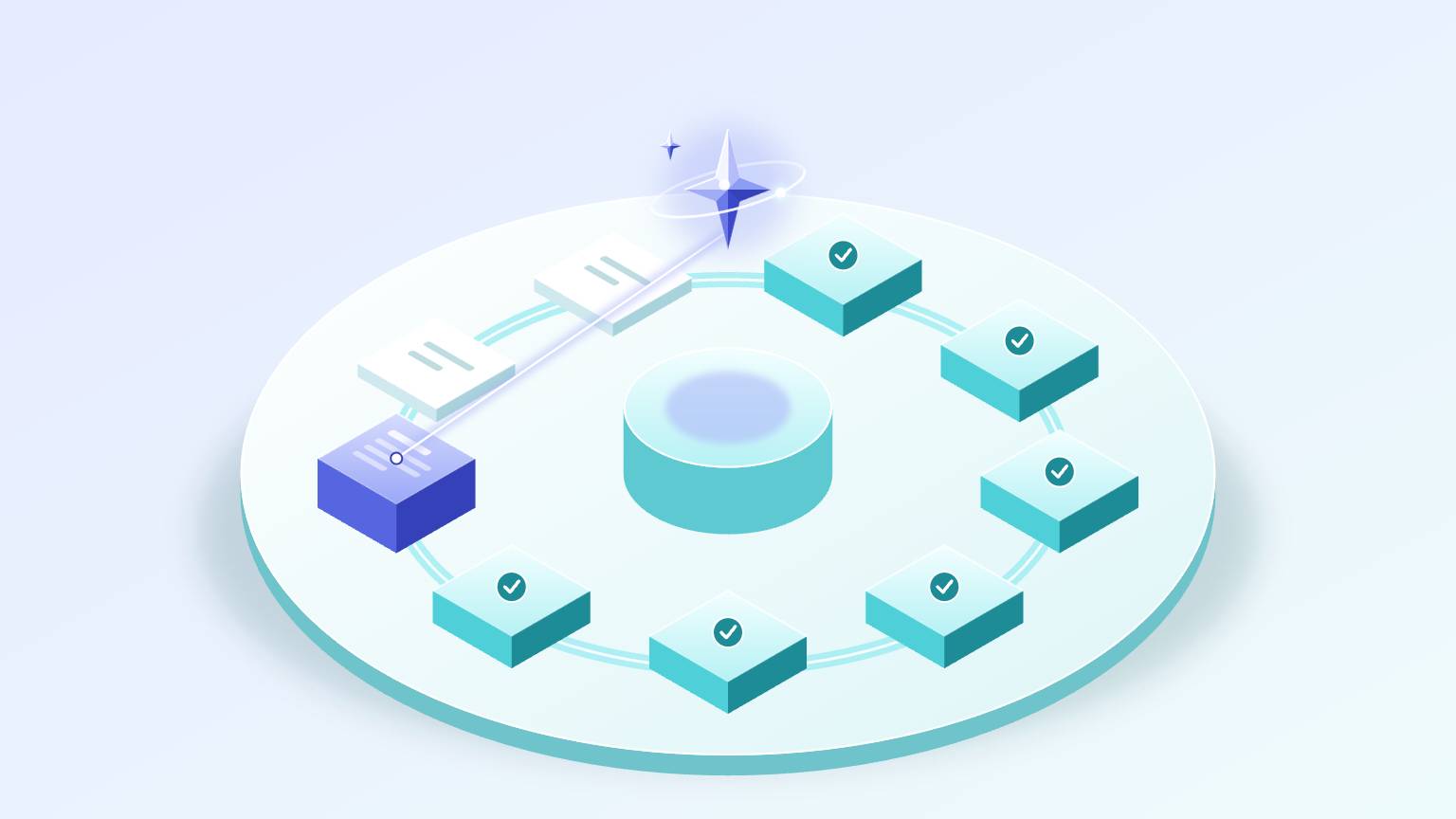
Here is the cycle in one view:
How much authority should an AP agent have?
A useful AP policy usually needs several kinds of boundaries because the risk changes depending on what the agent is doing.
Value thresholds
The most obvious boundary is value. A company might allow certain low-value invoices to move further through the process automatically while requiring additional approval as the amount increases.
The actual limits should come from the company's existing approval policy, risk appetite, materiality, and payment controls. They should not be copied from another company's AP workflow simply because that company's agent uses them.
Risk-event holds
Some events should matter regardless of value. A new vendor, bank-detail change, first payment to an account, suspected duplicate, missing support, or unusual payment destination can justify review even when the invoice is below the normal approval threshold.
These holds are useful because they acknowledge that the amount of the invoice is only one source of risk. Supplier-payment fraud is another: the FBI's Internet Crime Complaint Center logged 24,768 business email compromise complaints in 2025, with $3.05 billion in reported losses, and it defines the scam as one that targets businesses "working with suppliers and/or businesses regularly performing wire transfer payments."1
Confidence thresholds
Other decisions depend on how certain the system is about what it found. That may include invoice extraction, vendor matching, GL coding, or matching an invoice against a PO and receipt.
A high-confidence decision with strong supporting evidence may be allowed to continue. A low-confidence result should be held or sent to review rather than treated as an ordinary transaction.
How segregation of duties changes with AI agents
Accounts payable has always relied on separation of duties: having different people involved in the payment process, so that an erroneous or fraudulent invoice cannot be approved and paid without a second check2.
The person who creates or changes a vendor should not necessarily be able to approve the vendor's invoices. The person who approves an invoice should not have unrestricted authority to release its payment. And the person responsible for paying vendors should not also be the only person reconciling the account afterward.
Adding an AI agent does not make those conflicts disappear. If the agent can act inside the AP workflow, its permissions need to be treated in much the same way as any other actor in the process.
That means, for example:
- One agent should not have unrestricted authority to code, approve, and release the same payment.
- A bank-detail change should not be approved by the same automated process that proposed or accepted the change.
- Actions taken by agents should be traceable so finance can see what happened, when it happened, and what was reviewed afterward3.
- Changes to approval limits and agent permissions should themselves require appropriate authorization.
Human review also needs to mean more than technically putting somebody in the workflow. If a reviewer is approving hundreds of AI-processed transactions without looking at the evidence or sampling the work, the control quickly becomes a rubber stamp.
The point of segregation of duties is still the same. No single actor, human or software, should be able to push a sensitive AP transaction from beginning to end without an appropriate check.
How to pilot agentic AI in accounts payable
You do not need to hand the agent the entire AP process on day one. Gartner advises CFOs to begin AI agent pilots with "a low risk, contained workflow where errors are visible and reversible."3 A 90-day rollout can be a useful way to test it, although the timing should fit the size and complexity of the AP operation.
Days 1–30: let the agent prepare the work
Start with one relatively clean cohort, such as PO-backed invoices from established vendors. Let the agent extract, code, match, investigate, and prepare its proposed actions, but keep the existing human approvals in place.
This gives the team a baseline for where the agent performs well and where it struggles without immediately changing the control environment.
Days 31–60: automate the low-risk steps
Once the team understands the errors and exceptions, allow the strongest parts of the workflow to run within agreed boundaries.
That might mean letting established-vendor coding or clean PO matching proceed automatically while approval and payment release remain manual. Continue reviewing a defined sample of the agent's autonomous work rather than checking only the cases it chooses to escalate.
Days 61–90: expand where the evidence supports it
If correction rates are low and the exceptions are behaving as expected, the team can widen the cohort or let another stage of the workflow move automatically.
The important part is that the agent earns more authority based on what it has actually done, not because a rollout calendar says day 61 has arrived.
Some useful measures include:
What is the ROI of agentic AP?
The cleanest way to measure the value of an AP agent is through the AP workflow itself.
If the agent works, more invoices should move without manual intervention, fewer exceptions should need investigation, and the AP team should be able to handle more volume without the same increase in manual work.
Cost per invoice gives teams one useful baseline. APQC currently reports a cross-industry median of $6 per AP invoice, based on benchmarking data from 5,846 organizations4. That figure includes personnel, systems, overhead, other internal costs, and outsourced costs.
Duplicate and erroneous payments are another place to watch. APQC's benchmark for the share of the total annual number of disbursements processed that are duplicate or erroneous payments has a 1.5% median across 1,686 organizations5. Those benchmarks are useful, but the business case should come from the company's own AP operation.
Measure the cost of processing an invoice today, the amount of work sitting in exception queues, approval cycle time, duplicate-payment exposure, early-payment discounts captured or missed, and how much AP volume each team member handles. Then see which of those actually changes.
How DualEntry uses AI across accounts payable
Agentic AP becomes easier to manage when the AI is working inside the same system as the accounting records, approvals, and transaction controls.
DualEntry's AP automation software covers the procure-to-pay cycle, from vendors and bills through approvals, payments, reconciliation, and reporting, on the same general ledger. Where OCR document capture is enabled, AI reads an uploaded invoice into a draft bill, and nothing posts until someone reviews it. An hourly anomaly scan flags possible duplicate transactions for review. DualEntry records vendor payments and keeps the books in sync with the money a team moves, but it is not a payment rail, so the payment itself is sent outside DualEntry, through the bank or a payments provider.
The controls sit around that work as well. Bills, purchase orders, and vendor records can go through approval workflows with sequential stages routed by amount, entity, or classification, plus an optional setting that stops anyone approving their own record. Role permissions control who can do what, A/P transactions can be locked for a period ahead of the general ledger, and approvals and edits are captured in audit trails. When Accounting Intelligence prepares a record, it returns a draft, and nothing is saved until a person reviews and saves it.
Tasks gives the team one board for work that still needs attention: bank matches, bank connection issues, anomaly alerts, the close checklist, and agent runs. Custom tasks can carry a preparer and a reviewer. Scheduled agents read and report on a recurring cadence, such as a weekly AP summary, but they do not write to the ledger or send messages.
The point is not to make every invoice autonomous. It is to let routine AP work keep moving while exceptions, sensitive changes, and judgment-heavy decisions go to the finance team.
Frequently asked questions
What are AI agents in accounts payable?
AI agents in accounts payable are software systems that can work through multiple AP steps, make decisions from the information they find, and take actions within defined permissions. They can support work including invoice capture, coding, matching, exception handling, approval routing, payments, and close preparation.
How is agentic AI being used in accounts payable?
Agentic AI can investigate invoice mismatches, identify vendors, code invoices, gather approval context, resolve permitted exceptions, monitor payments, and prepare AP close work. The amount it handles autonomously should depend on the risk and judgment involved in each step.
What is the difference between AP automation and agentic AI?
Traditional AP automation follows predefined rules. Agentic AI can determine what step to take next based on what it finds, which makes it more useful when a transaction does not follow the expected path.
Can AI agents approve invoices?
They can technically be given approval authority, but whether they should approve an invoice depends on the transaction, supporting evidence, company policy, and authority limits. Sensitive events such as new vendors or bank-detail changes can still require human approval regardless of amount.
Can AI agents release payments?
Some agentic AP systems can take actions that extend through payment, but payment release should have stronger controls than lower-risk tasks such as extraction or coding. First payments, changed bank details, suspected duplicates, and unusual payment activity are examples of events that may warrant a hold.
What is touchless invoice processing?
Touchless invoice processing describes invoices that move through the measured AP process without somebody manually intervening. It is best measured as a rate because the level of human involvement can vary significantly between clean PO invoices, non-PO invoices, and exceptions.
What are the risks of agentic AI in accounts payable?
The main risks include incorrect coding or matching, missed exceptions, unauthorized vendor changes, duplicate or incorrect payments, excessive permissions, and weak review. Those risks increase as the agent receives more authority over approvals and payments.
Will AI replace accounts payable teams?
AI agents can take over more of the repetitive processing, investigation, follow-up, and preparation around AP. People still set policies and authority limits, handle unusual cases, review sensitive changes, manage suppliers, and remain accountable for the financial process.
How should a company start using an AP agent?
Start with a contained workflow and a predictable invoice cohort, then run the agent with limited authority while measuring its corrections and exceptions. Expand what it can do only after the team understands how it performs on real invoices, including the cases that do not follow the normal path.
References
-
 Federal Bureau of Investigation, Internet Crime Complaint Center. (2026, April). “2025 Internet Crime Report” (business email compromise: 24,768 complaints, $3,046,598,558 in reported losses, pp. 7–8 and 26; definition in Appendix B, p. 59; accessed October 22, 2026). FBI.
-
UC Davis Finance & Business. (2026, July 6). “Internal Control Practices: Accounts Payable” (Separation of duties section). University of California, Davis.
-
Gartner. (2026, August 20). “Gartner Says CFOs Must Pilot Governance First Before Scaling AI Agents” (Q&A with Alex Levine, Director Analyst). Gartner Newsroom.
-
APQC. (2026, October). “What Is the Average Cost to Process an Invoice?” (median $6.00 per invoice; cross-industry sample of 5,846 organizations; accessed October 22, 2026). APQC.
-
APQC. (n.d.). “Percentage of Total Annual Number of Disbursements Processed Which Are Duplicate or Erroneous Payments” (Open Standards Benchmarking measure 105905; median 1.5%; n = 1,686; accessed October 22, 2026). APQC.
See the full power of DualEntry in 30 minutes
Justin (Do San Myung) is Expert Accountant at DualEntry with 20+ years of hands-on experience managing general ledgers, financial close processes, and ERP implementations for mid-market and enterprise companies. As a former Consulting CFO and Controller, he has personally overseen month-end closes, SOX compliance programs, and multi-entity consolidations across technology, manufacturing, and services industries. Justin specializes in transforming manual accounting workflows into automated, AI-driven processes.