Don't worry! The contents here will appear on the published page.
ASC 718 Stock-Based Compensation Accounting: How to Book, Present & Audit SBC

Woosung Chun
CFO, DualEntry
Woosung Chun
CFO, DualEntry
Woosung Chun is the CFO of DualEntry with experience in corporate finance, accounting, strategy, and acquisitions. He previously grew from scratch and led the M&A and Finance teams at Benitago, where he completed more than 12 acquisitions in 2 years. He graduated with a BS from NYU Stern. At DualEntry, Woosung writes about AI in accounting, revenue recognition, foreign currency accounting, hedge accounting, and ERP modernization for finance teams navigating complex, multi-entity environments.
Learn about our editorial policies.
Last updated
September 25, 2026
Reviewed by
Do San (Justin) Myung

Do San (Justin) Myung
Expert Accountant & Former Consulting CFO | DualEntry
Justin (Do San Myung) is Expert Accountant at DualEntry with 20+ years of hands-on experience managing general ledgers, financial close processes, and ERP implementations for mid-market and enterprise companies. As a former Consulting CFO and Controller, he has personally overseen month-end closes, SOX compliance programs, and multi-entity consolidations across technology, manufacturing, and services industries. Justin specializes in transforming manual accounting workflows into automated, AI-driven processes.
Learn about our editorial policies.
Summarize this article
The hardest parts of ASC 718? Booking the expense every month, splitting it across the right functions, and making your cap table tie to the general ledger when the close deadline is looming.
If you've ever pulled a grant report from Carta, contemplated the number, and wondered which accounts it actually hits – or watched your gross margin sag and realized stock comp was the culprit – this guide is for you. We'll walk through the different stages: grant, journal entry, financial-statement presentation, month-end reconciliation – all with exact entries and a close checklist worth bookmarking.
What Is ASC 718?
ASC 718 is the US GAAP standard governing stock-based compensation. It requires companies to measure equity awards at grant-date fair value, recognize that value as expense over the vesting period, and allocate it across the functions where the employees work – not book it as a single line.[1]
ASC 718 is FASB's Topic 718 – the part of US GAAP that covers stock-based and share-based payment. Any time you grant equity to compensate someone, this standard tells you how to account for it.[1]
Its core mechanic is to measure the award at its grant-date fair value, then recognize that amount as a non-cash operating expense over the requisite service period (usually the vesting schedule).
Comparison table: ASC 718 vs. ASC 740 vs. ASC 820
Who does ASC 718 apply to?
The standard covers both employees and non-employees, public filers and private companies alike.[2] If you pay people in equity, ASC 718 applies.
What counts as stock-based compensation?
Stock-based compensation covers RSUs and restricted stock, nonqualified and incentive stock options, employee stock purchase plans, and stock appreciation rights. Most are classified as equity and measured once at grant-date fair value. Cash-settled awards, like cash SARs, are liabilities and are remeasured every reporting period until they settle.[3]
There are different types of stock-based compensation. Here’s a breakdown of the most common ones:
- Restricted stock and restricted stock units (RSUs): These are the simplest. They're equity awards, and their fair value is the share price on the grant date times the number of units.
- Nonqualified stock options (NQSOs) and incentive stock options (ISOs): These are also equity awards – but options have no fixed value at grant, so you need an option-pricing model (Black-Scholes or a lattice model) to estimate it. The accounting measurement is the same for both, but the difference between the two is tax related. We’ll go into this in detail in a separate ASC 740 section.
- Employee stock purchase plans (ESPPs): These are also usually equity-classified. Because they carry an option-like discount and look-back feature, they're typically valued with an option-pricing model too.
- Cash-settled stock appreciation rights (SARs): These are outliers. Because they settle in cash, not shares, they're a liability. Liabilities are remeasured at fair value every single period until they pay out… which is something often overlooked.
Award types by classification and measurement
How do you measure SBC expense?

To calculate stock-based compensation expense:
- Take the grant-date fair value of the award
- Multiply it by the number of awards you expect to vest
- Recognize the total over the requisite service period.
An equity award is measured once at the grant date.
A liability award is remeasured at each reporting date until settlement.[3] The expense moves as the value does.
To keep every number in this guide reconcilable, going forward we'll use one example throughout: a grant of 10,000 RSUs at a $10 grant-date share price, and 10,000 NQSOs with a $4 Black-Scholes fair value, both vesting over four years.
Measuring RSUs
RSUs are the easy case. Fair value is the grant-date share price x the number of units.
Our 10,000 RSUs at $10 give a total fair value of $100,000. When spread over a four-year service period, it comes to $25,000 of expense a year.
Measuring options with Black-Scholes inputs
Options are a bit trickier. They need a model because their value isn't observable. Black-Scholes takes six inputs to get a per-option fair value.[4]
Our 10,000 options at a $4 modeled value total $40,000 of fair value – or $10,000 of expense a year over the four-year vest.
Equity vs liability remeasurement
Both awards above use equity classification, so the grant-date number is locked in. If either were cash-settled, they’d fall under liability classification – you'd therefore revalue every period and run the change through expense. Getting classification right from the start is important.
A stock-based compensation journal entry (with examples)
For an equity award, stock compensation expense is credited to additional paid-in capital (APIC) – and debited to the expense line – over the vesting period. For cash-settled awards, credit a liability instead. When options are exercised, reclassify the cash received and the accumulated APIC into common stock and APIC at par.
Here's the recurring RSU entry on our example. Each year for four years, you book $25,000 of expense against APIC.
Journal entry: 10,000 RSUs, $10 grant-date FV, 4-year vest
The NQSO entry (outlined in the table below) follows the same pattern at $10,000 a year. Here, also consider what happens at exercise – when the employee actually pays the strike price and you issue shares. At that point the cash comes in, the accumulated APIC from the expense entries clears, and the total falls under common stock at par and APIC for the excess.
Journal entry: 10,000 NQSOs, $4 Black-Scholes FV, 4-year vest
Straight-line vs. graded vesting attribution
Straight-line attribution spreads SBC expense evenly. Graded (accelerated) attribution treats each vesting tranche as its own award, which front-loads the expense into the early years. For awards with only a service condition, the choice between the two is a policy election.[5]
Looking again at our example $100,000 RSU grant, straight-line attribution books $25,000 in year one. Graded attribution books closer to $52,000 in year one for the same grant – because the earlier-vesting tranches are recognized over shorter periods. Same total cost, very different early-year hit.
Comparing straight-line and graded vesting
For awards with only a service condition, this is a policy election you make and apply consistently. Note that some performance-based awards require graded treatment, so the choice isn't always yours.[5]
How is SBC presented on financial statements?
Stock-based compensation appears across all three financial statements. On the income statement it's embedded inside functional expense lines, not shown as one figure. On the cash flow statement it's added back as a non-cash item. On the balance sheet it builds APIC within equity. Total SBC is covered in the footnotes.
SBC across the three statements
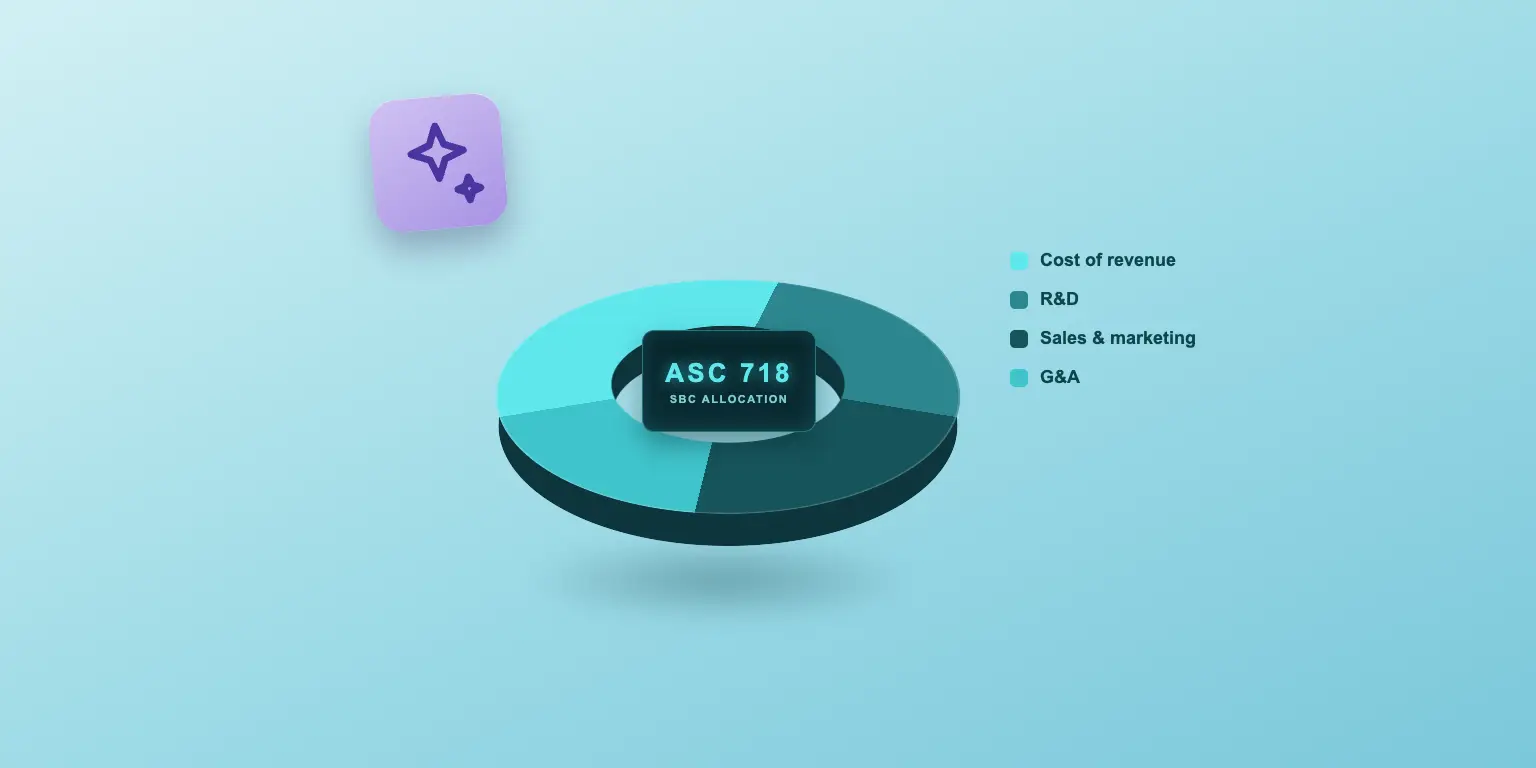
A common misconception is that there's one tidy "SBC" line on the income statement. In fact, the expense is allocated across cost of revenue, R&D, sales and marketing, and G&A, following the functions the employees work in.[6] The only place you see the total as one number is in the footnotes.[7]
On the cash flow statement, SBC appears as a cash flow add-back in operating activities, because no cash left the building. A SaaS company's cash from operations routinely runs higher than its net income – a large non-cash expense reduces the bottom line without touching the bank account.
Yes, SBC is an operating expense. And yes, it belongs on the income statement – because it's a real cost of compensating employees. The settlement just happens in equity instead of cash.
How is SBC allocated across functions – and why does it distort gross margin?
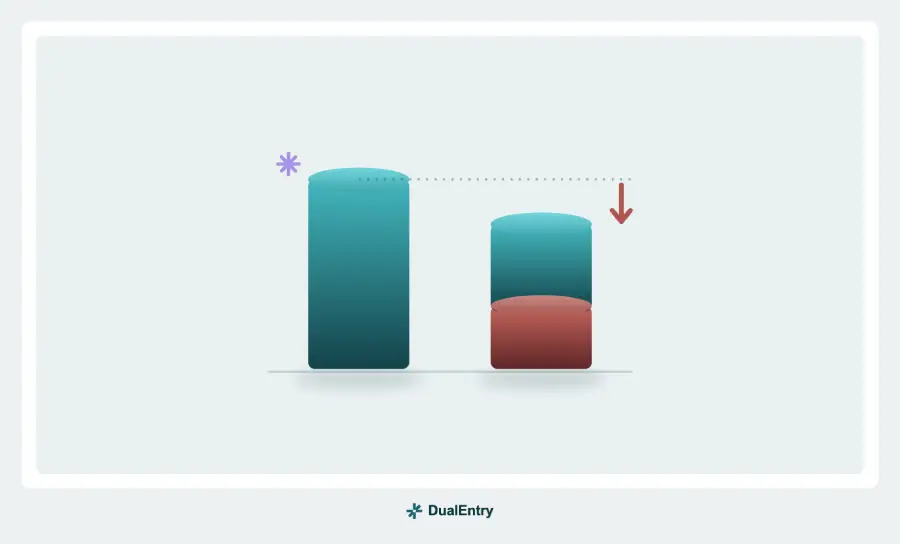
Stock comp lowers reported gross margin because SBC follows the employee's function. When you grant equity to people in cost-of-revenue roles, like support or implementation engineers, their SBC lands in cost of revenue. Cost-of-revenue SBC reduces reported gross margin, making it look worse than the underlying cash margin.
How to map grants to functional cost centers
SBC expense is allocated by employee function (COGS, R&D, S&M, G&A). An engineer building the product is an R&D cost, so their RSU expense goes to R&D. A support engineer who keeps customers live is usually a cost-of-revenue role, so their identical grant hits COGS instead.
Why SaaS gross margin looks worse than cash margin
This is a common board-reporting trap. A SaaS company might run an 80% cash gross margin but report something lower under GAAP, purely because cost-of-revenue headcount holds equity. The cash economics are healthier than the GAAP line suggests. The gap is just SBC.
The smartest CFOs can show they’re aware and in control of this by reconciling these two margin figures before their next board meeting. They arrive ready to present GAAP gross margin, show the SBC-excluded figure, and explain the differences.
Should you estimate forfeitures or account for them as they happen?

Under ASU 2016-09, you can choose to either estimate a forfeiture rate upfront or account for forfeitures as they happen.[8] A service-condition forfeiture reverses previously recognized expense. Forfeitures linked to a market condition, however, don’t reverse – the expense stays booked.
There’s one key reversal nuance to keep in mind. When an award forfeits because someone leaves before vesting (a service or performance condition that wasn't met), you reverse the expense you'd already booked. But if an award fails only because of a market condition, like a stock price that never hit its target, the expense stays. You don't get it back.[9]
Forfeiture election decision guide
If your headcount’s small and volatile, accounting for forfeitures as they occur avoids the pain of estimating a rate you can't yet support. But once you have enough history to defend a rate (especially if you’re heading into an audit or IPO), estimating ensures a smoother process. Make sure to document the basis, too – auditors will ask to see it.
How to account for modifications, cancellations & repricing?
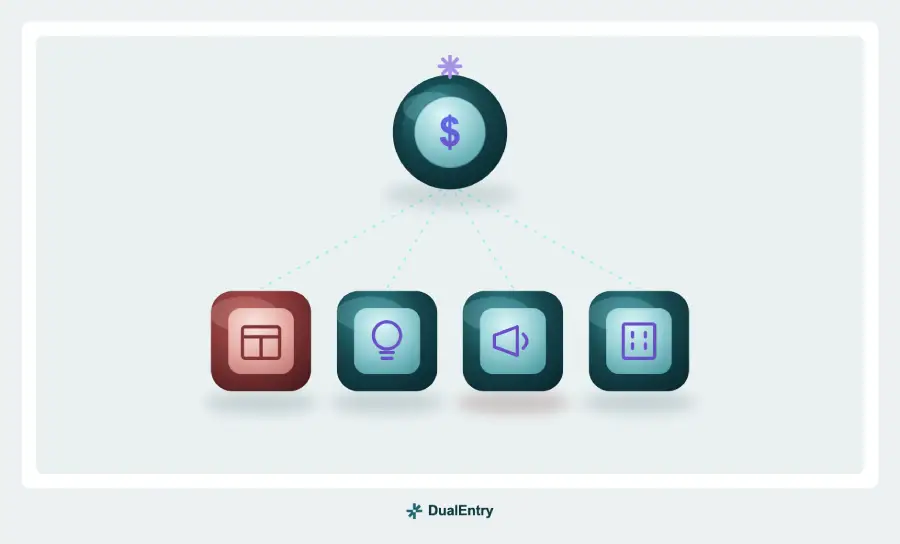
To account for a stock option repricing, treat it as a modification under ASC 718. Measure the incremental fair value (the award's value just before the change vs just after) and add that to any remaining unrecognized expense.[10] Repricing underwater options is essentially an exchange of old awards for new ones.
A modification is any change to an existing award's terms. Under ASC 718, modifications come in four types – but two come up in practice:[11]
- Type I (probable-to-probable): Vesting was expected before the change and remains expected after. This is the standard case. You measure fair value immediately before and after, and layer the incremental difference onto whatever expense is left to run.[10]
- Type II (probable-to-improbable): The modification makes vesting less likely. You still recognize the original grant-date expense through the original vesting period, but you don't add the incremental piece on top.
Repricing underwater options is a classic Type I scenario. Going back again to our example: the 10,000 options were granted at a $10 strike and the stock falls to $6. You reprice to $6, measure fair value just before and just after, and spread the difference over the remaining vesting period – in addition to what was already being recognized.
How do you book SBC from the cap table to the GL at close?

To record stock compensation at month-end close, pull the grant-level expense from your cap-table tool, map each grant to the right GL accounts and functions, true it up for any mid-period changes, and reconcile the APIC roll-forward so the cap table ties to the ledger.
The reconciliation that breaks: cap-table report vs GL APIC
The recurring failure point is the cap-table report against the GL APIC roll-forward. The cap-table tool says one APIC number. Your ledger says another. The gap is usually because of a grant that was cancelled, modified, or forfeited after the last sync – a change the report captured but the GL never received. Find it, book the true-up, and prove the two tie out. Miss it, and the difference compounds quietly until year-end, when it's far harder to unwind. Catching it every period — not once a year — is exactly what automated account reconciliation is built for.
Month-end SBC close checklist
- Pull the current-period grant expense report from the cap-table tool
- Reconcile the grant population to last period. Flag new grants, cancellations, modifications, and forfeitures
- Recalculate expense for any mid-period changes and book the true-ups
- Map each grant's expense to the correct functional account (COGS, R&D, S&M, G&A)
- Post the period's expense and APIC entries
- Roll forward APIC and reconcile it to the cap-table report
- Tie the SBC footnote total back to the GL
- For a clean audit trail, document any variances and the basis for your forfeiture treatment.
And if you're heading into a raise, running this every month — not at year-end — is exactly the discipline a Series A close checklist is judged on. To help automate the process, look to an AI-native ERP like DualEntry.
How is SBC taxed?
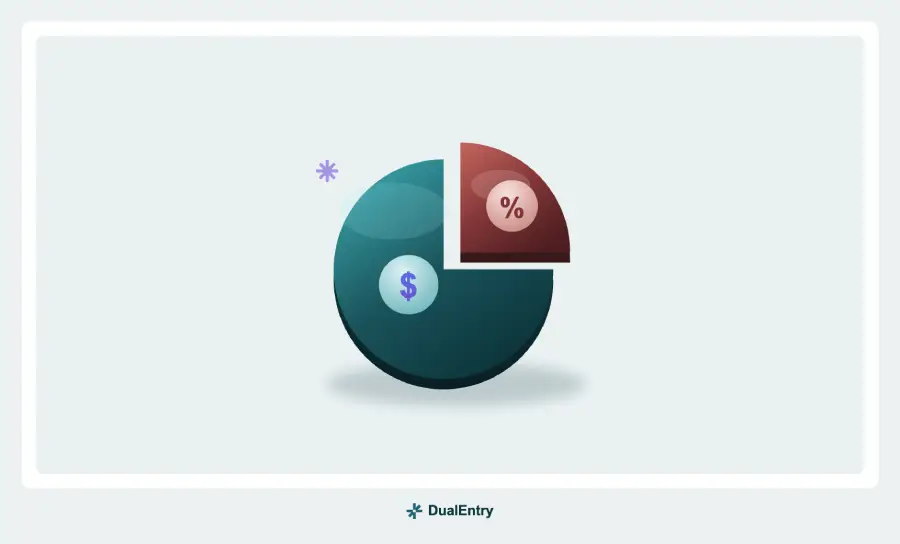
Stock-based compensation is sometimes tax deductible. Nonqualified stock options (NQSOs) are generally deductible at exercise, which creates a deferred tax asset for the timing difference between book expense and the tax deduction. Incentive stock options (ISOs) usually produce no corporate tax deduction at all.[12] The accounting for this falls under ASC 740.
ASC 718 books the expense. ASC 740 handles its tax side. Their timing is usually mismatched.
When you recognize NQSO expense for book purposes, you don't get the tax deduction yet – that comes at exercise. An NQSO generates a deferred tax asset (DTA) as the book expense accrues. ISOs are different: they generally yield no corporate deduction, so no DTA builds.
At exercise, the actual deduction rarely equals the cumulative book expense. If the deduction’s larger, you have an excess tax benefit – and if it’s smaller, a deficiency. Under ASU 2016-09, both run through the income tax provision, so stock comp can swing your effective tax rate period to period. It can swing it particularly sharply if your stock price moved between grant and exercise.[13]
Common ASC 718 mistakes

The most common ASC 718 mistakes are operational ones that come up during the close or in an audit. Here are the missteps that come up frequently:
- Forgetting to true up forfeiture estimates. The estimate becomes disconnected from what actually happened, and the expense ends up wrong.
- Booking all SBC to G&A for convenience. Skipping allocation by function misstates gross margin and every functional line.
- Missing the incremental expense on modifications and repricings. The added fair value never makes it to the books.
- Reconciling the cap table to the GL only at year-end. Treating it as an annual task instead of a monthly one means that small differences can compound, eventually leading to a painful cleanup.
- Treating cash-settled SARs as equity. They're liabilities, remeasured each period – not equity.
Final thoughts
Stock comp is one of the trickier corners of SaaS accounting — but like the rest of it, ASC 718 is less about mastering the standard than about running the monthly mechanics cleanly. First, measure the award, then allocate it by function, elect a forfeiture method (one you can easily defend), and reconcile the cap table to the GL at every close.
If you'd rather not run that reconciliation by hand, DualEntry automated cap-table-to-GL reconciliation, syncing grant data to the ledger and auto-allocating SBC by function. Schedule a demo to see how it could work for your company.
ASC 718 Stock-Based Compensation Accounting FAQs
See the full power of DualEntry in 30 minutes
Woosung Chun
CFO, DualEntry
Woosung Chun is the CFO of DualEntry with experience in corporate finance, accounting, strategy, and acquisitions. He previously grew from scratch and led the M&A and Finance teams at Benitago, where he completed more than 12 acquisitions in 2 years. He graduated with a BS from NYU Stern. At DualEntry, Woosung writes about AI in accounting, revenue recognition, foreign currency accounting, hedge accounting, and ERP modernization for finance teams navigating complex, multi-entity environments.