Building from the Right

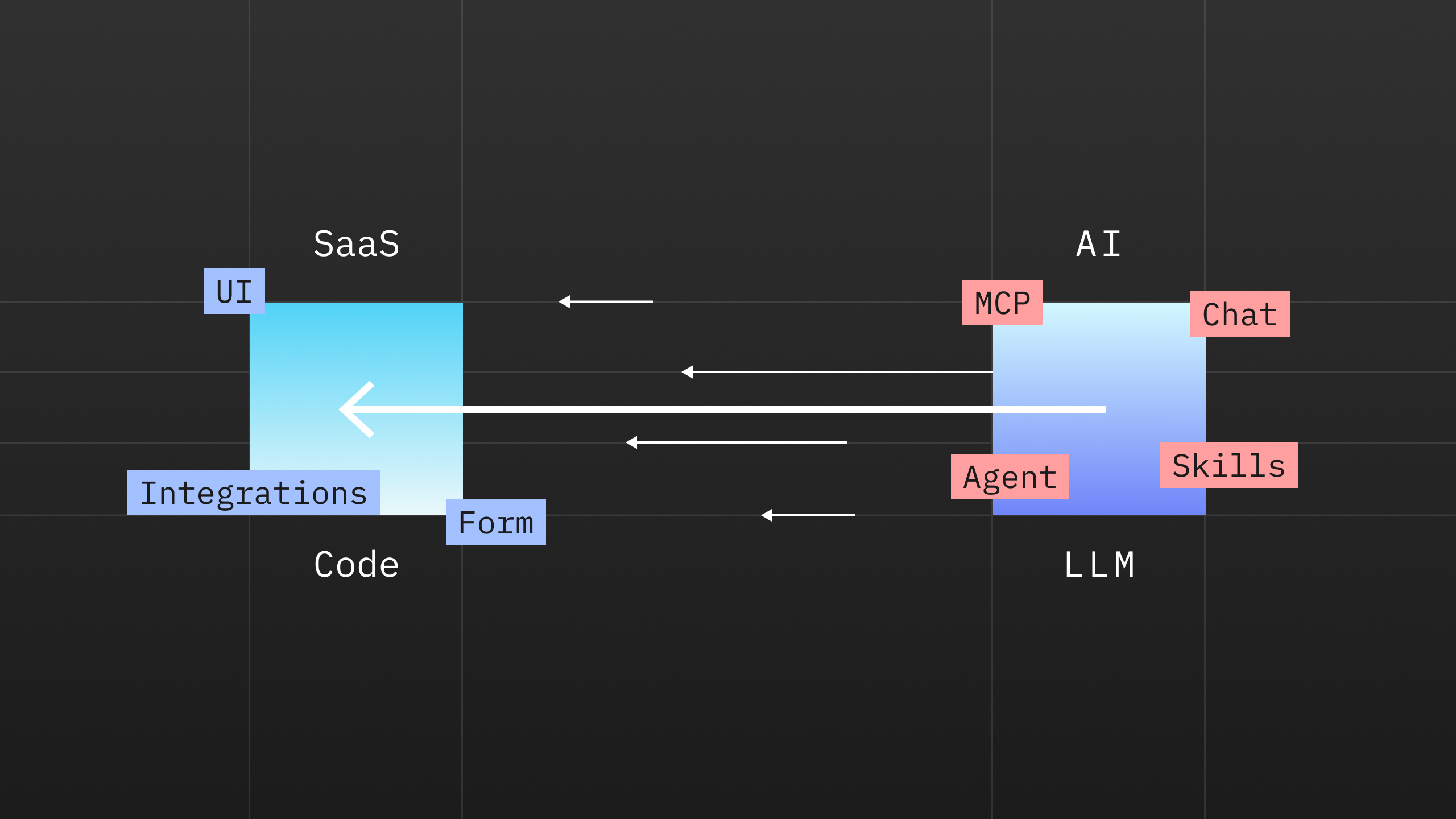
AI is changing the way we approach building software.
Conventionally, software is built from the left: we identify a customer need, we mock a UI, we determine the minimum viable path, we code, we deliver to customers and we iterate. This is how most of SaaS has worked the last 10 years.
As an example, back in the day, expense management systems came up with the inbox email address (receipts@ap-system.com) where you could forward your receipts. They figured they would run OCR on attachments and then match them to the correct transactions. This was a novel and highly loved AP feature at the time.
Then they found another use case. People were sending bills, so they built a different email address to process those (bills@ap-system.com). As time went on, they realized customers didn’t want to keep forwarding these emails, so they built yet another feature: a Gmail integration that pulled them straight from the inbox.
This was perhaps the best solution to the problem, and one that could have been built from the beginning had they known. But they built sequentially from the left. At any given point, some customers still couldn’t automate their AP workflow until the particular feature they needed shipped.
What changes when you build from the right
AI has allowed for a new way to build: building from the right. AI has made everyone, customers included, a developer. If we build the generic AI building blocks (AI chat, MCPs, human-in-the-loop, interfaces, scheduling, etc.), customers can benefit from the malleability and, as an early startup, we benefit from the universality.
The example for AP work can be as simple as an AI Accounting Intelligence with an MCP. Gmail already has an MCP connector. With a simple prompt, which can be scheduled, the agent can go through your inbox, create any bills as drafts, and attach any receipts to transactions. Those three separate features are now handled by these simple AI building blocks and a basic prompt.
Most importantly, those same AI building blocks also enable a big universe of solutions: setting up dunning sequences (the agent looks at overdue invoices and drafts up an email via MCP), surfacing alerts, running deeper dimensional analysis, or even seeing how many meetings you scheduled with your corporate lawyers (by looking at your calendar via MCP) and booking an accounting accrual.
We can continue to build more AI building blocks from the right to expand the universe of what’s possible. An AI integration builder (think Zapier) can be a frontline solution for integrations that are not yet available. An AI workflow builder (think DSL) can create determinism even in the most bespoke workflows. An AI spreadsheet agent (think agentic Excel) can solve inventory, assets, accrual and allocation schedules.
With the right data sources, it can even do FP&A data modeling you would otherwise need specialized software for. With the right guardrails, and with models that get better by the week, there is little that cannot be automated away with these AI building blocks.
Why we still need both
Now, the left is still the superior way to handle a happy path, at least for now. It follows best practices so customers don’t have to think when setting it up, it’s fast, it doesn’t consume tokens, and most importantly, it’s deterministic.
AI is also making it easier and faster for us to build software, making it cheaper to achieve quality levels of SaaS determinism. Yet it doesn't cover every edge case and, until our software matures, it doesn't automate away every edge-case customer workflow, even if you’re within ICP.
Additionally, building from the right creates a crowdsourcing opportunity. When we see a similar workflow being built by a customer more than once, we can build an official skill or an agent to distribute to other customers.
If the agent then gets adopted and gains popularity, we have the right data to decide what SaaS features to build (from the left), minimizing guesswork and iteration. SaaS features then deliver better customer experiences that attract more customers, who are then exposed to the same building blocks, creating new use cases and a positive feedback loop.
We should embrace both ways as they reinforce each other. We should continue to build from the left but embrace this new path that AI has created for us. And what a more existing place to be building from the right than at the GL-level, the finance and operations source of truth of a company.
Want to build the future of ERP?
Join the team building a modern ERP for companies that have outgrown the old way of doing finance.