Don't worry! The contents here will appear on the published page.
The Best Software for Multi-Currency Accounting

Woosung Chun
CFO, DualEntry
Woosung Chun
CFO, DualEntry
Woosung Chun is the CFO of DualEntry with experience in corporate finance, accounting, strategy, and acquisitions. He previously grew from scratch and led the M&A and Finance teams at Benitago, where he completed more than 12 acquisitions in 2 years. He graduated with a BS from NYU Stern. At DualEntry, Woosung writes about AI in accounting, revenue recognition, foreign currency accounting, hedge accounting, and ERP modernization for finance teams navigating complex, multi-entity environments.
Learn about our editorial policies.
Last updated
August 27, 2026
Reviewed by
Do San (Justin) Myung

Do San (Justin) Myung
Expert Accountant & Former Consulting CFO | DualEntry
Justin (Do San Myung) is Expert Accountant at DualEntry with 20+ years of hands-on experience managing general ledgers, financial close processes, and ERP implementations for mid-market and enterprise companies. As a former Consulting CFO and Controller, he has personally overseen month-end closes, SOX compliance programs, and multi-entity consolidations across technology, manufacturing, and services industries. Justin specializes in transforming manual accounting workflows into automated, AI-driven processes.
Learn about our editorial policies.

Summarize this article
Your close was supposed to take five days. It’s day nine, and your controller is still rebuilding the consolidated P&L in Excel because the UK entity reports in GBP, the German one in EUR, and the group reports in USD. The software recorded every foreign transaction correctly. It just can’t translate three entities into one set of statements.
That gap, between recording foreign currency and actually consolidating it, is what almost no guide to the best software for multi-currency accounting tests for. Most rank tools on feature checklists anyone can copy off a pricing page. None ask the question a CFO answers for: does this tool run period-end revaluation, post the CTA automatically, and produce audited consolidated statements in your reporting currency?
So we scored seven tools on that. DualEntry is one of them, and we make it. Same rubric as everyone else, limitations included.
Best multi-currency accounting software at a glance
For a multi-entity group, the verdict is simple: DualEntry, NetSuite, Sage Intacct, and Workday consolidate natively and post the CTA automatically. QuickBooks and Xero record foreign transactions but leave consolidation to you. Tipalti is a payables engine, not a general ledger. Here’s the full scorecard.
The four “Yes” rows clear the audit bar for a group. The bottom three don’t, and that’s not a knock. They’re built for a different stage.
What multi-currency accounting software actually does
Multi-currency accounting software records, revalues, and reports transactions in more than one currency, then translates each entity into a single reporting currency for consolidated statements under ASC 830 and IAS 21. The hard part isn’t the recording. It’s the translation and consolidation that follow.
Three jobs sit underneath that. First, record foreign transactions: invoice, pay, and book in the currency the deal happened in. Second, revalue open balances at period end so unsettled foreign amounts reflect current rates. Third, translate each entity into the reporting currency and consolidate the group into one set of books.
Most tools do the first job well. Far fewer do the third. “Handles multiple currencies” is not the same claim as “consolidates multiple entities,” and the difference is the whole scorecard below.
How we evaluated: the compliance-grade scorecard
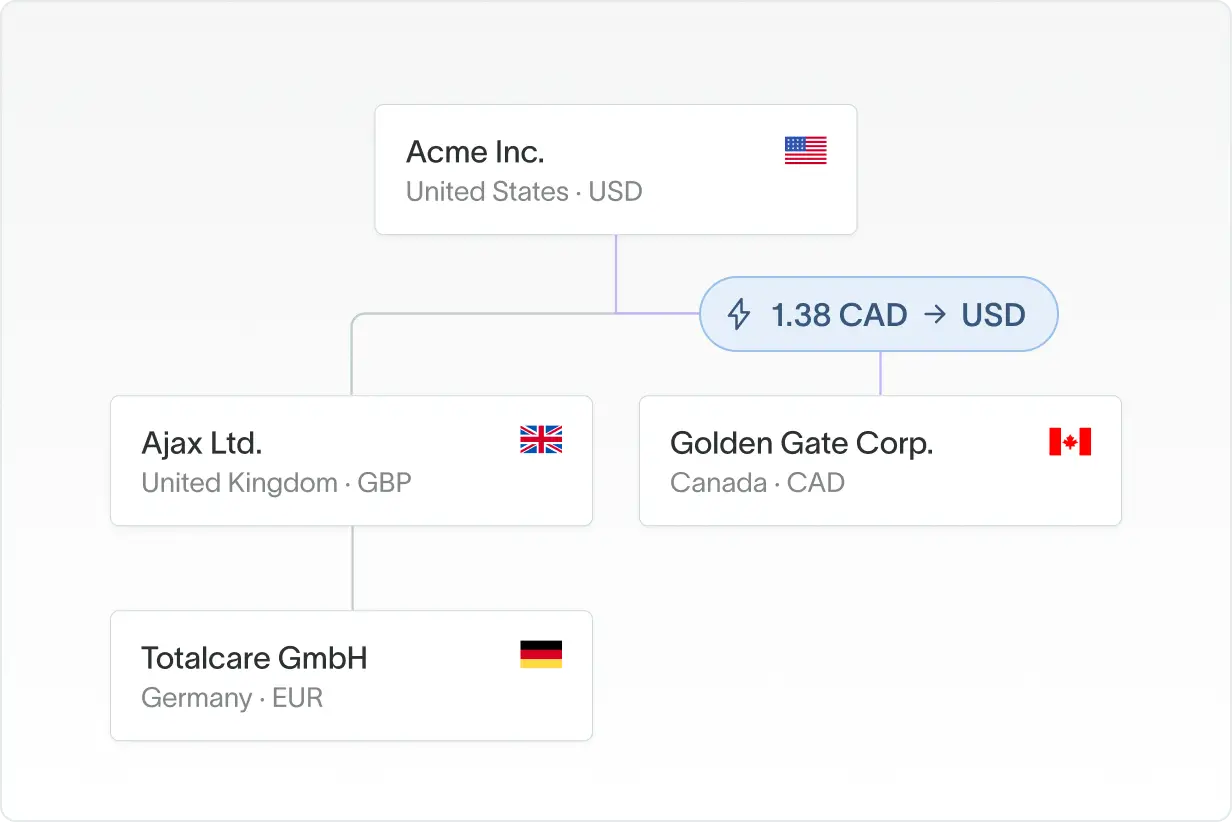
We scored each tool on six capabilities, not feature-list length. The test is whether a tool does the accounting a CFO is accountable for at period end, under ASC 830 and IAS 21, without a manual workaround. Anything a controller has to rebuild in Excel doesn’t count as supported.
The six criteria:
- Multi-currency transactions — record, pay, and invoice in foreign currencies.
- Realized and unrealized gain/loss — calculate both, automatically, as rates move and balances settle.
- Automated period-end revaluation — revalue open monetary balances at close without manual rate entry.
- Multi-entity consolidation — combine entities into the reporting currency natively.
- Automatic CTA posting — post the cumulative translation adjustment to equity per ASC 830 / IAS 21.
- Audit trail — log every rate, revaluation, and translation decision in a form auditors accept.
No competitor on this SERP publishes a transparent, standards-based rubric. That’s the gap this guide fills: a way to evaluate the category, not just a ranking.
The 7 best multi-currency accounting tools, scored
Each tool is scored on the same six criteria, in the same shape, so you can compare line for line. No vendor gets more rope than its score earns.
DualEntry — best for SaaS &multi-entity scale-ups

DualEntry is an AI-native ERP built for the company that has outgrown QuickBooks but isn’t ready to absorb a six-month NetSuite implementation just to get native consolidation. It automates remeasurement, translation, and CTA posting across unlimited entities, with an audit trail that’s always on rather than reconstructed at close. The pitch is narrow on purpose: the depth a multi-entity group needs to pass an audit, without the cost and rollout time of a legacy suite.
Key features:
- Native multi-entity consolidation in the reporting currency, with automated period-end revaluation and CTA posting to equity under ASC 830 / IAS 21.
- Realized and unrealized gain/loss calculated automatically as rates move and balances settle.
- Real-time close with an immutable audit trail that logs every rate and translation decision.
- Direct connections to 13,000+ banks for automated reconciliation.
- AI-assisted close workflows that flag anomalies before they reach the consolidated statements.
Pros:
- Clears all six scorecard criteria, so a multi-entity group can close without rebuilding statements in Excel.
- Implementation measured in days, not the months a legacy ERP rollout takes.
- Audit documentation generated as you go, not after the fact.
Cons:
- Newer entrant than the legacy incumbents, with less of a track record at 500+ employee scale.
- Feature depth exceeds what a very early-stage single entity actually needs.
Pricing:
Quote-based, positioned below NetSuite on both total cost and time-to-live.
NetSuite — best for enterprise multi-entity
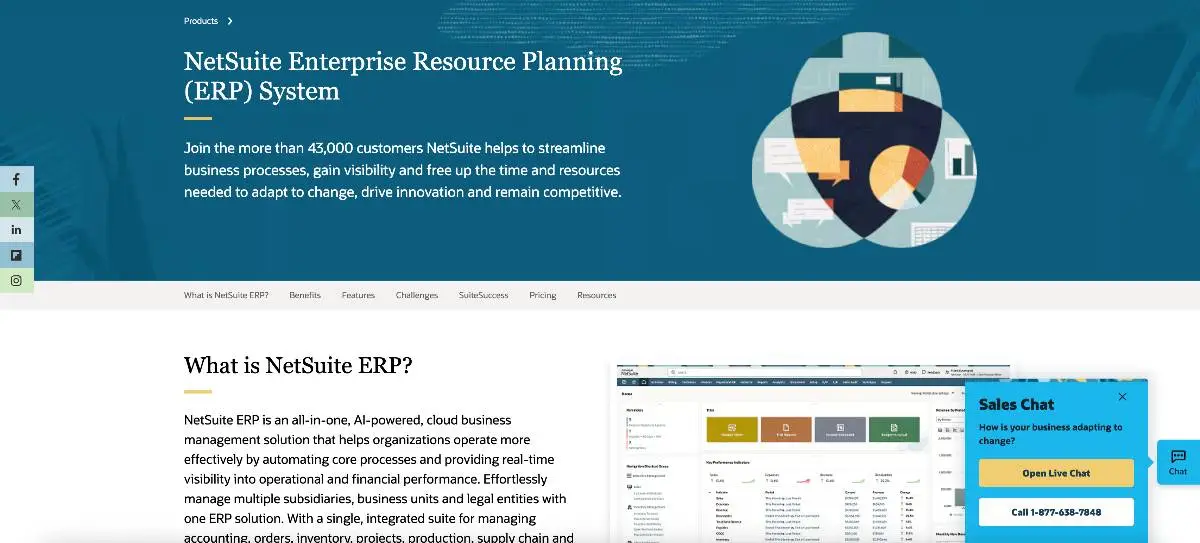
NetSuite is the deepest legacy multi-book, multi-currency consolidation on this list, with native IAS 21 period-end revaluation across complex org structures. For a genuinely large, operationally complex business running many subsidiaries, currencies, and tax regimes at once, it delivers. The problem isn’t the product. It’s that a lot of companies buying it aren’t at that stage yet, and they pay for capability and overhead they won’t use for years.[1][2]
Key features:
- Multi-book accounting with native foreign currency revaluation across subsidiaries.[1]
- Automated consolidation and CTA posting in the reporting currency.
- Deep tax, compliance, and reporting coverage across many jurisdictions.
- Configurable to almost any org structure, with extensive third-party module support.
Pros:
- Handles as many entities, currencies, and tax regimes as the largest enterprises throw at it.
- Mature, widely audited, and well understood by accounting firms.
Cons:
- Implementation is expensive and slow, often a multi-month project with outside consultants.
- Admin-heavy to run and customize once live.
- More platform than a mid-market team needs or wants to maintain.
Pricing:
Oracle doesn’t publish list prices. Annual licensing for mid-market companies typically runs $25,000 to $250,000, with base platform fees around $999 to $5,000/month plus $99 to $199 per full user. Implementation usually adds $40,000 to $150,000+, with mid-market deployments often landing near $145,000 in year one. (Estimates as of June 2026; NetSuite is quote-based and figures vary by configuration.)
Sage Intacct — best for mid-market consolidation
.webp)
Sage Intacct is a popular GAAP pick for mid-market finance teams that want real native consolidation without NetSuite’s footprint. Its dimensional general ledger lets you slice reporting by entity, location, and department without bolting on a reporting layer, and its consolidation module is mature and well understood by auditors. It’s a strong fit for a company that has clearly outgrown small-business tools but doesn’t want an enterprise-scale rollout.[3]
Key features:
- Native global consolidation with CTA under ASC 830 / FAS-52.[3]
- Automated period-end revaluation and intercompany handling.
- Dimensional general ledger for multi-axis reporting.
- Strong reporting and close-management tooling.
Pros:
- Real native consolidation at a mid-market footprint.
- Flexible dimensional reporting that scales with complexity.
- Well established among GAAP-reporting finance teams.
Cons:
- Pricing and capability are module-driven, so costs stack as you add functionality.
- Quoting and configuration can get complex before you’re live.
Pricing:
Quote-based, roughly $400 to $800 per full user per month. Most mid-market organizations spend $15,000 to $35,000 a year, with larger or more complex deployments exceeding $75,000, plus implementation that typically runs one to one and a half times the annual subscription. (Estimates as of June 2026; Sage Intacct is quote-based.)
Workday — best for large, HCM-led enterprises
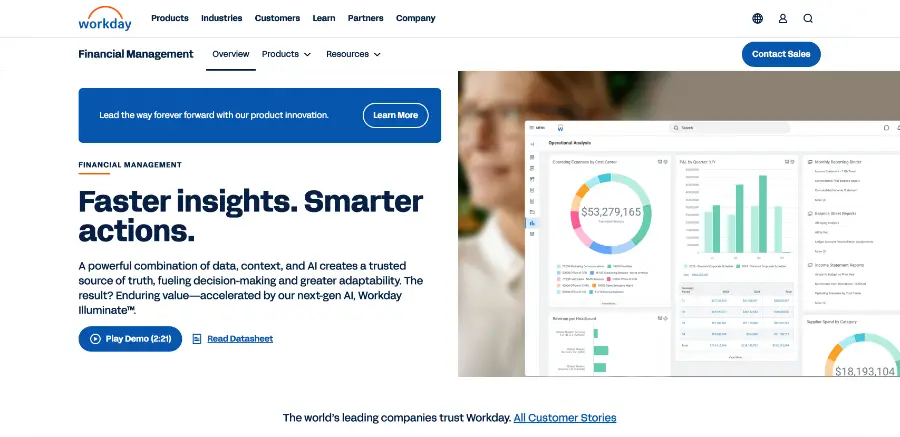
Workday delivers enterprise-grade multi-currency consolidation inside a combined finance and HR suite, on a single data model. It’s most compelling when finance and workforce data live in one system of record, which removes a major integration headache for large organizations. For a pure-finance mid-market team, though, it’s usually more platform, and more cost, than the job requires.[4]
Key features:
- Native multi-currency consolidation and translation across entities.[4]
- Unified finance and HCM data model in one system of record.
- Enterprise reporting, planning, and analytics built in.
Pros:
- One platform for finance and people data.
- Built for scale and complex global org structures.
Cons:
- Overkill and cost for a pure-finance mid-market team.
- Finance is often adopted as a follow-on to HCM rather than chosen on its own merits.
Pricing:
Enterprise quote-based, with no public pricing. Priced for large-organization deployments. (As of June 2026.)
QuickBooks Online — best for small single-entity

QuickBooks Online does exactly what it was designed to do. For a single entity with occasional foreign invoices, it records, pays, and tracks transactions in multiple currencies and reports realized and unrealized gain/loss, all with a short learning curve and near-universal accountant familiarity. What it doesn’t do is automated IAS 21 period-end revaluation or multi-entity consolidation, so the moment you’re a group, the close moves into Excel.[5][6]
Key features:
- Records, invoices, and pays in foreign currencies once Multicurrency is enabled (Essentials plan and up).[5]
- Tracks realized and unrealized gain/loss.
- Manual home-currency adjustment tool for revaluing foreign balances.[6]
Pros:
- Low cost and a short learning curve.
- Near-universal familiarity among bookkeepers and accountants.
- Plenty for a single entity with occasional foreign invoices.
Cons:
- No native multi-entity consolidation, so groups rebuild statements in Excel.
- Revaluation is manual, not standards-driven or automated.
- Multicurrency can’t be turned off once enabled.
Pricing:
Five plans, from Solopreneur at $20/month to Advanced at $275/month. Multicurrency requires Essentials ($75/month) or higher. Prices rose 15 to 25% across all tiers in May 2026.[12]
Xero — best for small AU/UK multi-currency sellers

Xero offers clean multi-currency invoicing with automatic realized and unrealized gain/loss tracking, wrapped in an interface and bank-feed automation that small businesses genuinely like. It’s a strong fit for a single trading entity selling across currencies, particularly in its core AU and UK markets. But it produces no consolidated statements and has no IAS 21 compliance, so it breaks down the moment you add a second entity.[7]
Key features:
- Multi-currency invoicing, billing, and payments across 160+ currencies.[7]
- Automatic realized and unrealized gain/loss tracking.
- Strong bank-feed automation and a clean interface.
Pros:
- Easy to set up and use for a single trading entity.
- Good FX rate handling on day-to-day transactions.
- Popular and well supported in AU and UK markets.
Cons:
- No consolidated reporting in a single reporting currency.
- No standards-driven period-end revaluation or CTA posting.
- Breaks down past one entity.
Pricing:
Three US plans: Early $25/month, Growing $55/month, and Established $90/month. Multi-currency is only available on the Established plan.[13]
Tipalti — best for global AP and mass payouts
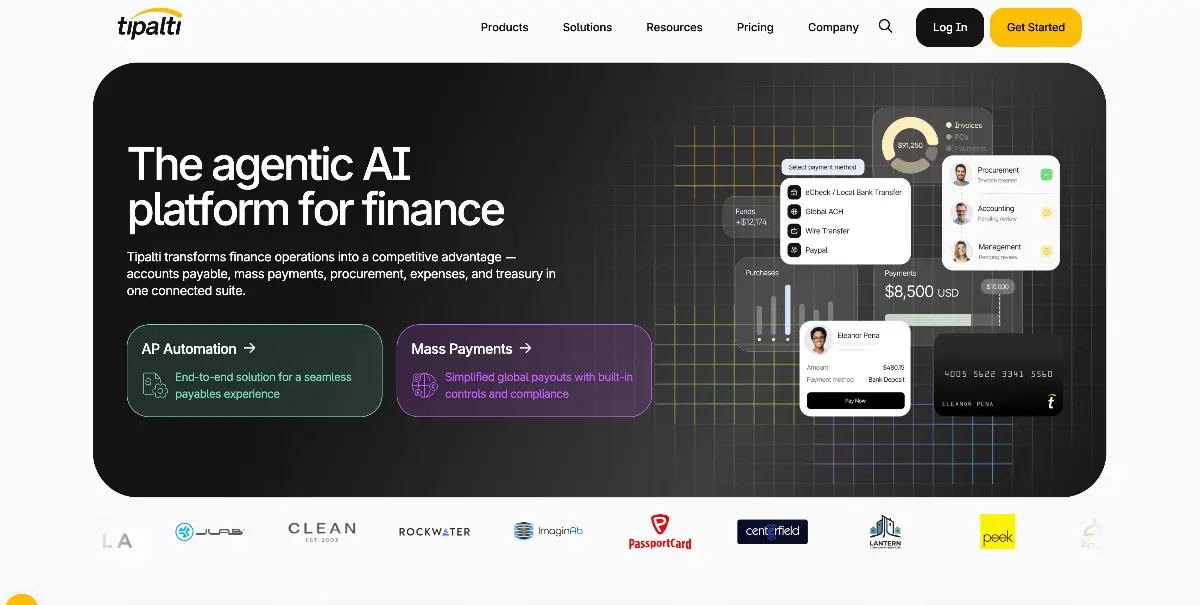
Tipalti is excellent at what it actually is: a cross-border payables and mass-payout platform that automates AP from invoice capture through payment, with tax and compliance workflows built in. What it isn’t is a multi-currency general ledger or a consolidation engine, so it can’t close your books. Treat it as a complement to your ERP for high-volume international payments, not a replacement for one.[8]
Key features:
- Mass cross-border payments to global suppliers and partners.[8]
- Multi-currency FX payouts with tax and compliance workflows.
- AP automation from invoice capture through payment reconciliation.
Pros:
- Best-in-class for high-volume international payouts.
- Reduces manual AP work and cross-border payment friction.
Cons:
- Not a general ledger, so it can’t consolidate or close the books.
- Partial on gain/loss, none on consolidation.
Pricing:
Platform fee starts around $149/month, with per-transaction costs on top. Total annual cost typically lands between $20,000 and $45,000 depending on volume and payment rails. (Estimates as of June 2026; Tipalti is quote-based.)
Multi-currency vs. true multi-entity consolidation: the gap that breaks audits
Here’s the trap. A tool that records foreign transactions but can’t translate and consolidate entities leaves a manual gap, and that gap is exactly where audits get uncomfortable. The software looks compliant transaction by transaction, then quietly hands the hardest, most judgment-heavy work back to a person and a spreadsheet at close.
The confusion starts with two operations that sound similar and aren’t. Remeasurement converts a balance from a local currency into the entity’s functional currency, and the resulting gain or loss hits net income. Translation converts an entity’s functional-currency statements into the group’s reporting currency, and that difference is posted to the cumulative translation adjustment in equity, not the P&L.[9][10] Different mechanics, different financial-statement homes, different standards behind them.
This is why “realized and unrealized gain/loss” checkboxes mislead buyers. A tool can track both and still have no idea how to translate three entities into one consolidated set of books. Recording FX is not consolidating entities.
The audit consequence is real. When rates are applied inconsistently across entities and periods, or translation adjustments aren’t documented, you invite auditor pushback and SEC-style comment letters.[9][11] The fix isn’t a more careful spreadsheet. It’s software that enforces the standard the same way every entity, every close.
Which tool fits your stage? A decision tree
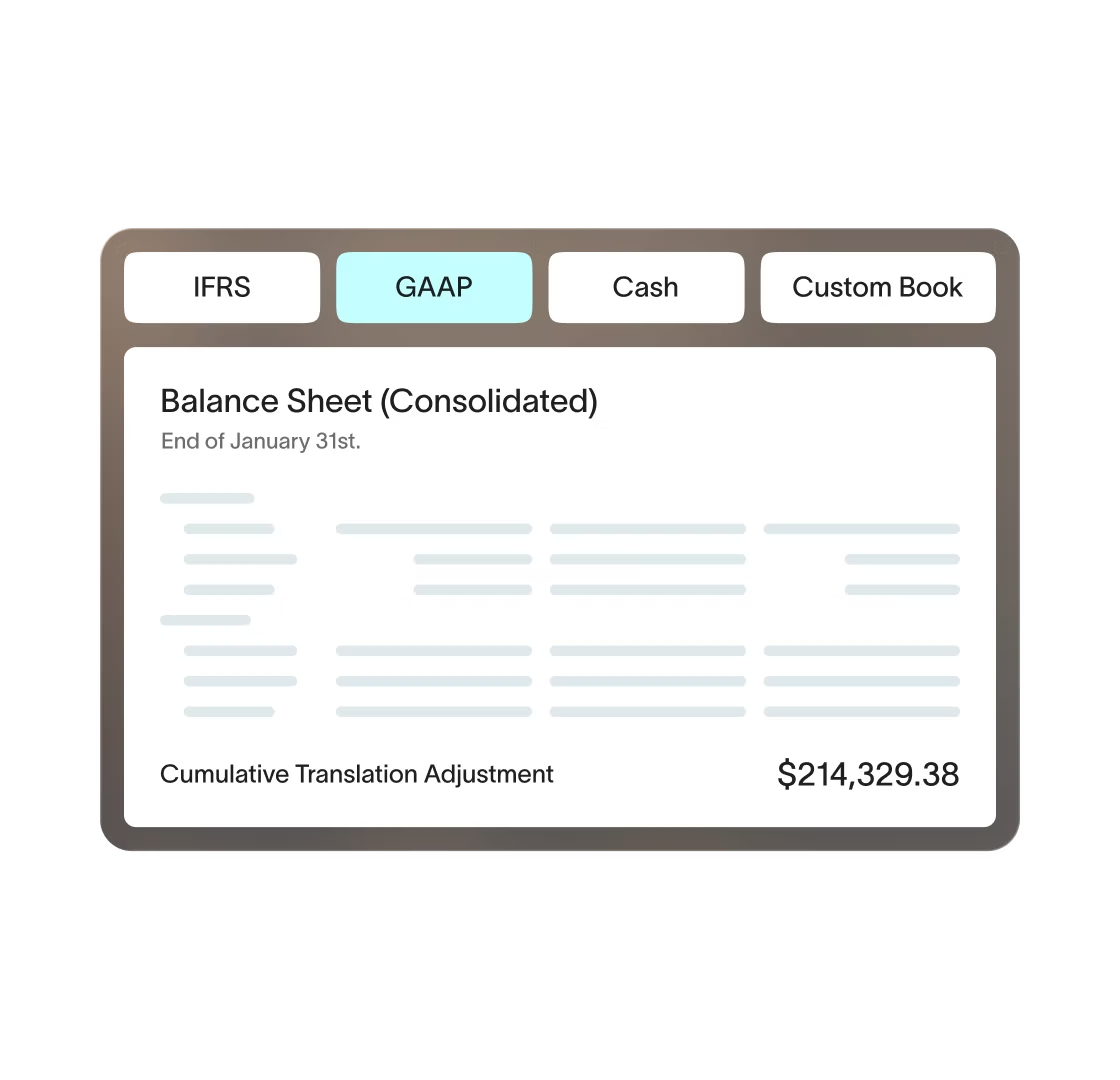
There isn’t one best multi-currency accounting tool. The right choice is a function of three variables: how many legal entities you run, whether any entity’s functional currency differs from your reporting currency, and whether you’re under a GAAP or IFRS audit. Answer those three and the field narrows fast.
Work down this list and stop at the first match:
- One entity, occasional foreign invoices, no audit pressure. Xero or QuickBooks Online. You need FX transactions and gain/loss tracking, not consolidation. Don’t pay for an ERP you won’t use.
- Heavy cross-border payables, paying global suppliers at scale. Add Tipalti alongside your existing GL. It solves payouts, not the close, so keep it paired with your accounting system.
- Two or more legal entities, functional currency differs from reporting currency, GAAP or IFRS audit. You need native consolidation and automatic CTA posting: DualEntry, NetSuite, or Sage Intacct. This is the line where spreadsheets stop being viable.
- Mid-market scale-up that wants an AI-driven close and a fast implementation. DualEntry. Built for the window between QuickBooks and a six-month ERP rollout.
- Large enterprise needing a combined finance and HR suite, or deep multi-subsidiary complexity. Workday or NetSuite.
The honest answer is that most companies know which line they’re on. The mistake is buying for the stage above or below the one they’re actually at.
Key features to demand (buyer checklist)
If you run a multi-entity group, these are the non-negotiables. A tool that misses any one of them will push that work back onto your team at close, which is the spreadsheet tax in disguise. Use this as a demo script: ask each vendor to show you the capability live, not describe it on a slide.
- Automatic exchange-rate feeds (spot, average, and historical) with a manual override when you need it.
- Period-end revaluation of open monetary balances, run automatically at close rather than keyed in by hand.
- Realized and unrealized gain/loss automation, calculated as rates move and balances settle.
- Native multi-entity consolidation in the reporting currency, not an export to Excel.
- Automatic CTA posting to equity, plus intercompany elimination on consolidation.
- Functional-currency designation at the entity level, with documented rationale for each entity.
- An immutable audit trail capturing every FX decision and every rate used.
The first three are table stakes. The last four are where most tools quietly fall short, and they’re exactly the capabilities that decide whether your close is clean or rebuilt by hand.
The verdict
For a single entity sending the occasional foreign invoice, Xero or QuickBooks Online is enough, and paying for more is just overhead. For any multi-entity group with audit obligations, the only safe choice is a tool that consolidates natively and posts the CTA automatically: DualEntry, NetSuite, or Sage Intacct. Everything else moves the work to a spreadsheet.
The deciding question was never how many currencies a tool supports. It’s whether the software does the accounting you’re accountable for at close, or hands it back to you. Score any tool you’re considering on the six criteria above, and the answer gets obvious fast.
DualEntry automates remeasurement, translation, and CTA posting across every entity, with the audit trail built in. You can see it in action in 30 minutes.
See how DualEntry handles your close →
Best Software for Multi-Currency Accounting FAQs
See the full power of DualEntry in 30 minutes
Woosung Chun
CFO, DualEntry
Woosung Chun is the CFO of DualEntry with experience in corporate finance, accounting, strategy, and acquisitions. He previously grew from scratch and led the M&A and Finance teams at Benitago, where he completed more than 12 acquisitions in 2 years. He graduated with a BS from NYU Stern. At DualEntry, Woosung writes about AI in accounting, revenue recognition, foreign currency accounting, hedge accounting, and ERP modernization for finance teams navigating complex, multi-entity environments.