
%20-%20Blog%20thumbnail.webp)
Don't worry! The contents here will appear on the published page.
Ask a founder to name the best investors for an AI startup, and you’ll get the same list everyone else gets: forty firms ranked by assets under management, portfolio logos arranged in a grid. Every entry is accurate. Every entry is useless when you’re deciding who belongs on your cap table.
Fund size tells you who’s big. It says nothing about who was right. And in AI, one kind of right is the only kind that counts: being early about which lab would build a leading model.
So we didn’t rank the biggest investors. We ranked by a harder test. Who saw the frontier coming before it was obvious? Three names clear that bar.
The three best investors for an AI startup are Lightspeed Venture Partners, Khosla Ventures, and Google, because each secured a defining position in one of the three labs building the leading frontier models. Lightspeed led Anthropic’s $3.5 billion Series E,1, 2 the round behind Claude. Khosla wrote OpenAI’s first institutional check,3 years before GPT. Google builds Gemini7 and holds a large stake in Anthropic.5 The rest of this piece is the proof.
01
Lightspeed to Anthropic
Anthropic
Claude
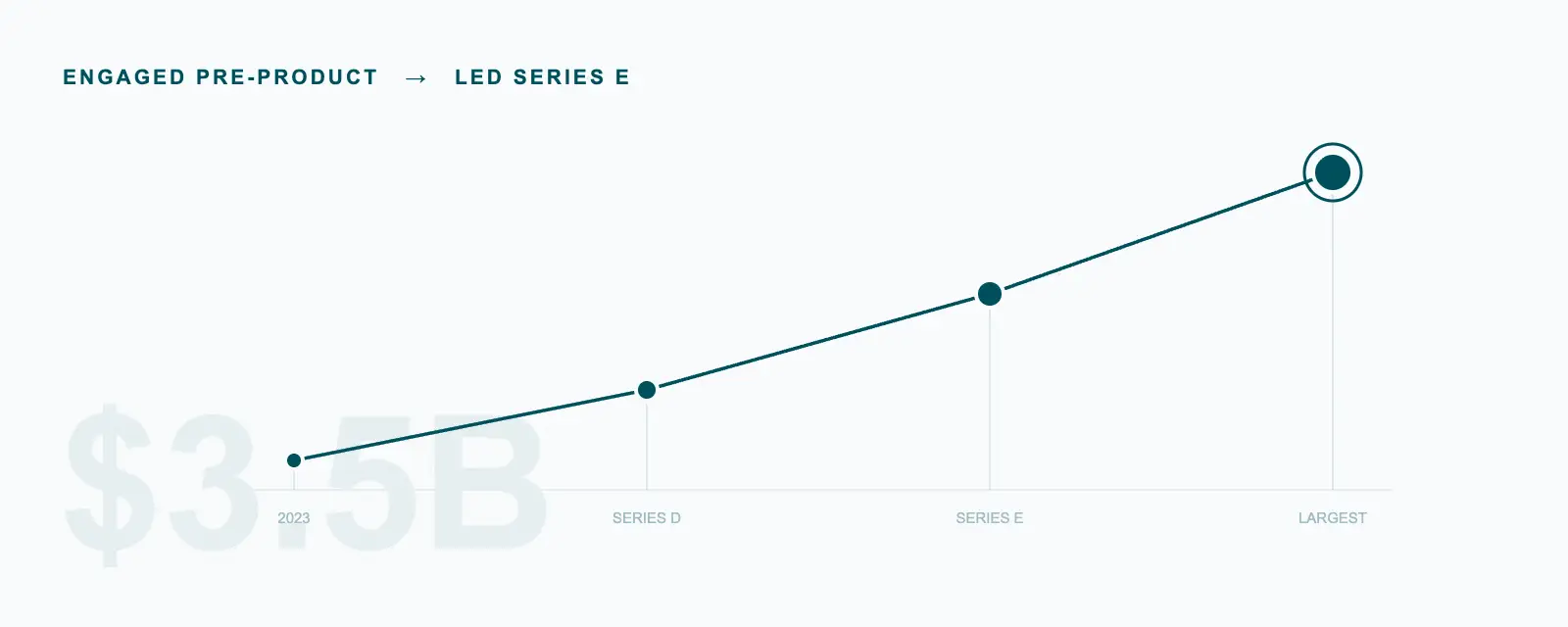
Lightspeed Venture Partners led Anthropic’s $3.5 billion Series E in March 2025, at a $61.5 billion post-money valuation, and was the largest investor in the round.1, 2 That’s the headline. It’s the wrong place to stop.
Conviction at the point of maximum illegibility, when there was almost nothing to diligence.
The judgment call happened two years earlier. Lightspeed first engaged Anthropic in January 2023, when the company had fewer than 100 employees, no public product, and no revenue.2 It backed the Series D in early 2024,2 then led the Series E a year later. This is the trait to screen for: conviction at the point of maximum illegibility, paired with the discipline to keep buying as the thesis proved out.
One precision is worth getting right, because most coverage gets it wrong. Lightspeed is not Anthropic’s biggest investor overall. Amazon has committed roughly $8 billion and more,6 and Google holds around 14 percent of the equity.5 Both dwarf Lightspeed’s position. The defensible claim is narrower: Lightspeed led the Series E and was the largest investor in that specific round. “Led the round” is a statement about conviction and terms; “biggest investor” is a statement about total dollars. They aren’t the same, and conflating them is how rankings mislead.
What Lightspeed was right about is Claude, now one of the three leading frontier models. The firm didn’t back a logo. It made an early read on which lab would ship a model the rest of the industry would have to reckon with. It was right.
02
Khosla Ventures to OpenAI
OpenAI
GPT
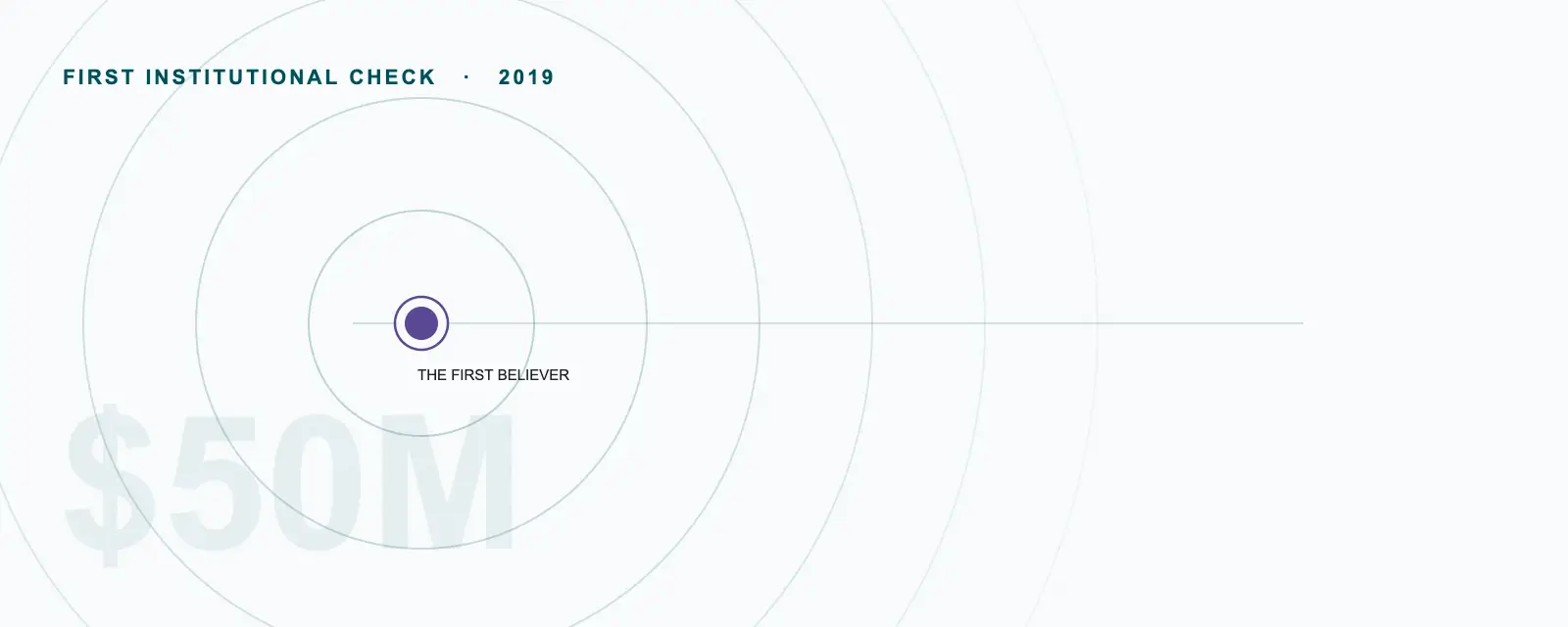
Khosla Ventures was OpenAI’s first institutional investor, writing a $50 million check in 2019,3, 4 at a moment Vinod Khosla has described as “almost impossible to diligence.”3 There was no product to evaluate, no revenue to model, no comparable to price against. Khosla has called it the largest initial bet he had made in 40 years of investing.3
Entry point beats check size. The first believer captured a position no later megafund could buy at any price.
It turns out entry point beats check size. The first believer captured a position no later megafund could buy at any price, because the position stopped existing the moment the company became legible. Everyone who came after paid for a company that had already proven the thesis. Khosla paid for one that hadn’t.
The contrast with OpenAI’s cap table today makes the point. The company is now surrounded by late, consensus capital: megafunds and strategics writing enormous checks into a bet that no longer requires imagination.8 Those checks are larger. They are also, in the way that matters to a founder, easier. Being years early versus arriving once the answer is obvious is exactly the asymmetry list-based rankings never capture, because a dollar in 2019 and a dollar in 2025 look identical on a portfolio page.
What Khosla was right about is GPT, the model that defined the category and put generative AI in front of hundreds of millions of people. The first-check thesis didn’t only pay off in returns. It paid off in category leadership, which is the outcome a founder is actually chasing.
03
Google to Gemini
Gemini
Anthropic stake
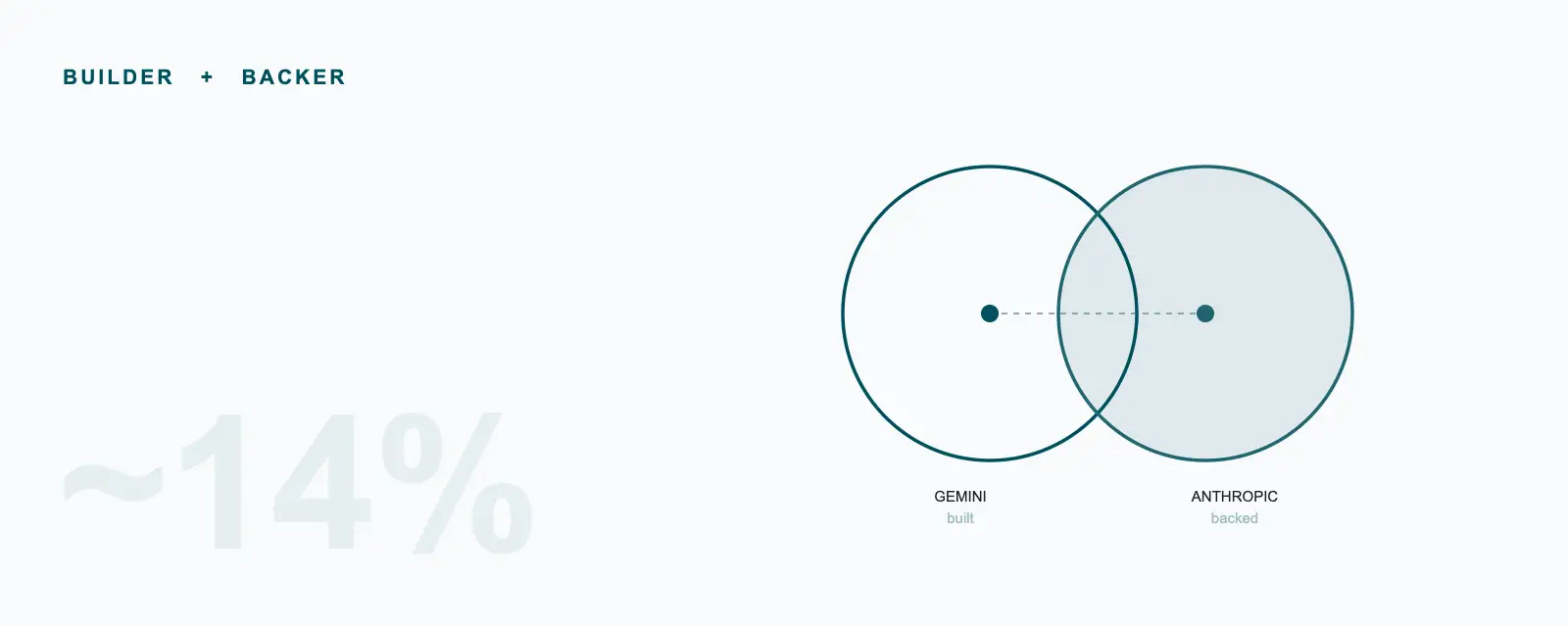
Google is the only one of the three that both builds a leading model and backs another lab that builds one. It develops Gemini through Google DeepMind,7 and it holds roughly 14 percent of Anthropic, a stake contractually capped near 15 percent, with billions in commitments layered on top.5 Builder and backer at once.
That dual role makes Google a fundamentally different partner than a pure-financial VC, and founders rarely hear the tradeoff spelled out. On one side, a corporate strategic that ships its own frontier model brings what no financial investor can match: distribution through an existing customer base, and compute at a scale most startups can’t otherwise secure. On the other side, that same overlap is the risk. A backer running its own competing model sits close to your roadmap, and equity in a rival lab raises governance questions you have to think through before you sign. Google’s Anthropic stake carries no voting rights and no board seats,5 which is the kind of structural detail that exists precisely because the tension is real.
A concentration of correct judgment no one else on your board can claim.
So the value here isn’t capital. Google doesn’t make this list because it can write a large check; plenty of firms can. It makes the list because it holds a defining position across two of the three frontier labs, one it built and one it backed. That’s a concentration of correct judgment no one else on your board can claim. The caution travels with it: a strategic whose interests overlap yours is decisive when the partnership fits and complicated when it doesn’t.
Gemini completes the set. Claude, GPT, and Gemini are the three models this whole thesis rests on, and Google has a foot in two of them.
The pattern
What these three have in common
Strip away fund size and one pattern remains: each was early to, or is, a lab building a leading frontier model. That’s the whole thread. Not assets under management, not portfolio count, but proximity to the frontier and the conviction to act before the bet was legible.
Look at how differently each cleared the bar. Khosla wrote a first check into something that couldn’t be diligenced. Lightspeed engaged pre-product, then compounded its position round after round. Google built one model and took a large stake in another. Three entry points, one shared trait: each was right about where intelligence was heading before the market agreed.
That’s the signal a founder can screen for. When you evaluate an investor, the question isn’t how big their last fund was. It’s whether they have ever been early and right about something hard, because that judgment is what you’re actually buying.
The three investors compared
Playbook
How to apply this if you’re raising
You can turn this into a screen. The point isn’t to chase these three firms onto your cap table. It’s to recognize the trait they share and match the right version of it to what your company needs now.
The Khosla pattern
Earliest, illegible stage: barely a product to show
Prioritize a financial VC with a track record of first checks into hard-to-diligence bets. It’s the conviction that’s hardest to find and worth the most when you find it.
The Lightspeed pattern
Product in market: raising growth capital
Look for a frontier-focused firm that leads rounds and compounds its ownership over time. A lead like that signals the entire market, which is worth more than the dollars alone.
The Google pattern
Need distribution, compute, or a cloud & model partnership
A corporate strategic can be decisive, with the caveat attached. Weigh the competitive overlap and the governance strings before you take the money.
Across all three, screen for the same two things. Timing: were they early, or did they show up once the answer was obvious? And proximity to the frontier, not assets under management.
Red flag
A large fund with no frontier position isn’t buying conviction; it’s buying consensus. That’s fine for a later round. Early, it’s a weak signal, and you should read it as one.
Bottom line
The best investors aren’t the biggest
They’re the ones who were right about the frontier first. Lightspeed, Khosla, and Google each hold a defining position in one of the three leading model labs, and that, not assets under management, is the signal to screen for when you decide who belongs on your cap table.
FAQ
Frequently asked
Who was OpenAI’s first investor?▾
Khosla Ventures was OpenAI’s first institutional investor. It wrote a $50 million check in 2019,3, 4 at a point Vinod Khosla has called “almost impossible to diligence”3 because there was no product yet to evaluate.
Who led Anthropic’s Series E?▾
Lightspeed Venture Partners led it. The $3.5 billion round closed in March 2025 at a $61.5 billion post-money valuation, and Lightspeed was the largest investor in that round.1, 2
Who is Anthropic’s biggest investor?▾
That’s Amazon, which has committed roughly $8 billion and more.6 Google is also large, holding around 14 percent of the equity.5 Lightspeed led the Series E but isn’t the biggest investor overall, a distinction a lot of coverage gets wrong.
Does Google own part of Anthropic?▾
Yes. Google holds roughly 14 percent of Anthropic, contractually capped near 15 percent, with no voting rights and no board seats.5 It’s also building its own leading model, Gemini, through Google DeepMind.7
What are the three leading AI models?▾
Claude from Anthropic, GPT from OpenAI, and Gemini from Google. These are widely regarded as the three leading frontier models, and they’re the reason this list looks the way it does.
References
- 1Anthropic. (2025). “Anthropic raises Series E at $61.5B post-money valuation.” anthropic.com
- 2Mhatre, R., Chahal, G., & Duesterhoeft, S. (2025). “Lightspeed Announces Lead Investment in Anthropic’s $3.5B Series E Financing.” lsvp.com
- 3Cheng, M. (2023). “Vinod Khosla details how much his venture firm had on the line before Sam Altman’s reinstatement at OpenAI.” Fortune. fortune.com
- 4Khosla Ventures. (n.d.). “OpenAI” (portfolio page). khoslaventures.com
- 5Metz, C., & McCabe, D. (2025). “Google Holds 14% Stake in Anthropic” (reporting on U.S. v. Google court filings). The New York Times. nytimes.com
- 6Novet, J. (2024). “Amazon to invest another $4 billion in Anthropic, OpenAI’s biggest rival.” CNBC. cnbc.com
- 7Google DeepMind. (n.d.). “Gemini” (models). deepmind.google
- 8OpenAI. (2025). “New funding to build towards AGI.” openai.com