Family Office Accounting software
Financials that move as fast as your portfolio


Built for the complexity you actually deal with
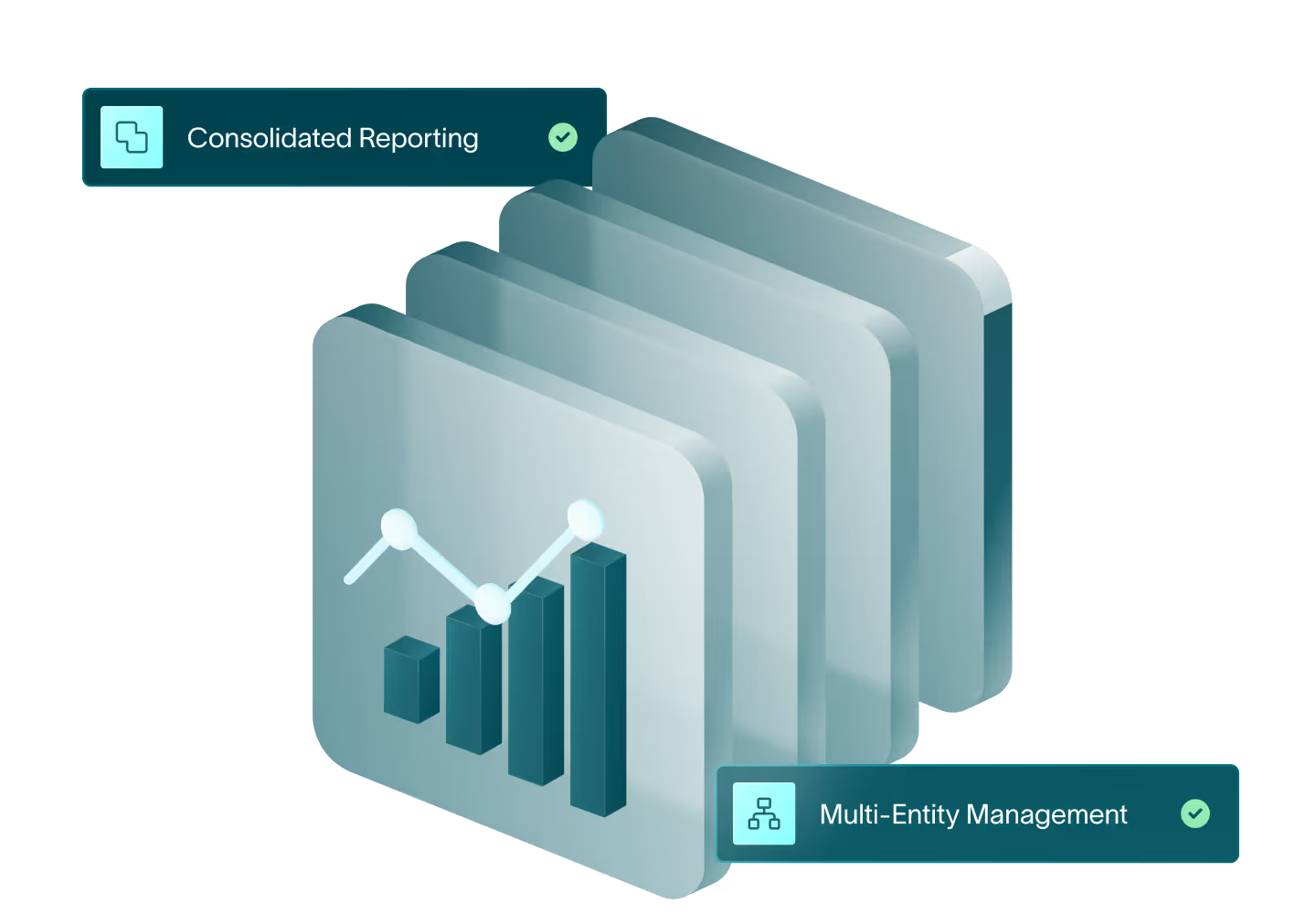
Multi-Entity Management
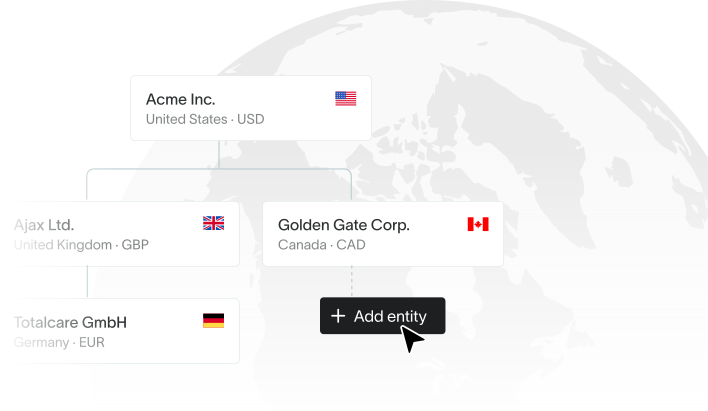
Every fund, management company, and holding entity in one platform. No siloed books or manual reconciliation.
Consolidated Reporting
One view across your entire structure. Drill into any entity.
Intercompany Taxes
Every cross-entity transaction gets the correct tax treatment, on both sides of the ledger. Audit-ready without extra work.
One Bill, Multiple Entities
A single invoice split and coded across your fund structure automatically.
Billbacks
Charge expenses back to the right fund or entity easily and accurately.










“Thanks to DualEntry, we’re able to deal with all the nuances of our $140-million revenue business with a finance team of just one person.”

Book a demo and move fast today

Family Office Accounting Software FAQ
Family office accounting software is software built to handle the financial side of running a family office.
That usually means managing multiple entities, keeping records clean across trusts and holding companies, and making it easier to report on the full financial picture in one place. Unlike standard accounting tools built for one business, family office accounting software needs to support more complex structures and more complex reporting.
For teams managing investments, operating entities, and intercompany activity, the goal is simple: fewer spreadsheets, less manual consolidation, and better visibility across the whole structure.
Family offices rarely stay on basic accounting tools for long. Those systems are usually designed for a single company, not for a structure that includes multiple entities.
In practice, a family office might be managing trusts, holding companies, partnerships, real estate entities, and investment vehicles at the same time. When each entity has its own activity and reporting, things get complicated quickly.
That’s why many family offices end up using accounting software built for multi-entity environments. These systems make it possible to keep records for each entity while still producing consolidated financial reporting across the entire structure.
Most family offices operate through multiple entities rather than a single company. A typical structure might include trusts, holding companies, real estate entities, and various investment vehicles.
Each of those entities has its own transactions, bank accounts, and reporting requirements. Managing them in separate systems, or worse, across spreadsheets, quickly becomes difficult to maintain.
Multi-entity accounting software lets finance teams manage each entity individually while still producing consolidated reporting across the entire structure. It reduces manual work and makes ongoing financial reporting far easier to manage.
Usually by pulling financial data from each entity into one reporting structure and then combining it into a consolidated view.
The hard part is not the idea. It’s doing it consistently when there are multiple trusts, holding companies, partnerships, and investment entities involved. When that process lives in spreadsheets, reporting gets slower and more fragile.
Family office accounting software simplifies that by keeping entity-level data in one system and making consolidated financial reporting easier to produce on a repeatable basis.
At a minimum, it should help a family office manage complexity without adding more manual work.
The core features to look for are:
- multi-entity accounting
- consolidated financial reporting
- investment or portfolio-level reporting
- real-time financial visibility
- workflow automation for tasks like journal entries, reconciliations, and close processes
The point is not just to record transactions. It’s to give the team a cleaner operating system for managing financial data across the entire structure.