DualEntry vs Lensing (formerly Everest ERP)
Modern Finance Teams choose
DualEntry|Agentic ERP over Lensing






«We run $600M of ARR with a finance team of 2 on DualEntry»

Victor Cardenas, CEO at Slash








DualEntry vs Lensing
Lensing (formerly Everest ERP) and DualEntry are both AI-native ERPs. With DualEntry you see your full transaction history in a sandbox as soon as the next day, test it before you sign, and go live in under 30 days with implementation included.
DualEntry and Lensing compared


Skip the quarter-long rollout.
Six reasons finance leaders choose
DualEntry over Lensing
Lensing is an AI-native ERP and an app-generation platform for medium-to-large enterprises. DualEntry is the agentic ERP for finance teams that want to be live in under 30 days, with agents that prepare the close and leave the approval to you.
Depth from YC to IPO
Multi-entity, rev rec, inventory and fixed assets, all built in. Used by companies from $5M ARR to NYSE and NASDAQ listed.
AI you can audit
Deterministic first. Agents prepare entries and reconciliations, cite every source, and leave the approval to your team.
Close in days, not weeks
Live eliminations keep consolidated financials current every day, so month-end is a quick review.
Live in under 30 days
Your full transaction history, migrated as soon as the next day, with implementation included. Test on your own data before you sign.
Unlimited reporting
Pivot any report across unlimited dimensions and build your own board packs. Ask for a report in plain English and DualEntry builds it.
13,000+ integrations to your stack
Connect your banks and your finance and tech stack natively, built and maintained by our team, with API usage, MCP access and a CLI included.
See DualEntry on your own data.


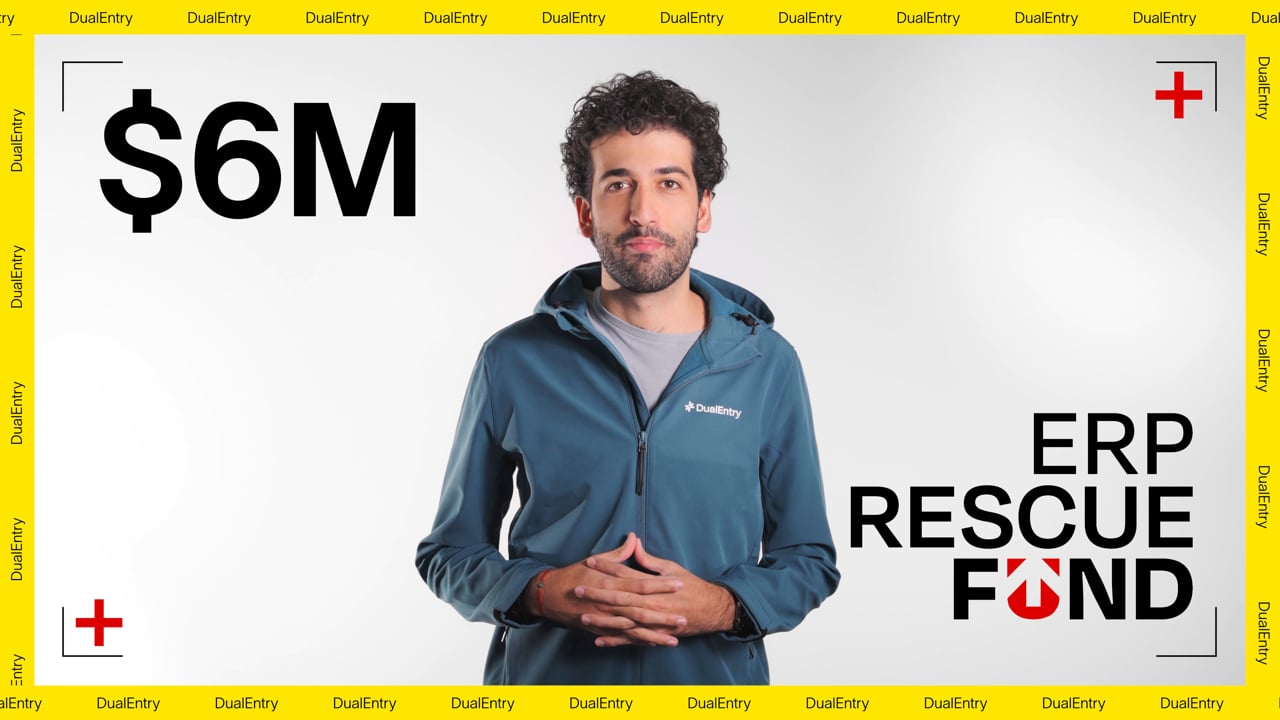
We’ve allocated $6M to buy you out of your ERP contract
Yes, Lensing applies.
See how customers use
DualEntry|Agentic ERP to grow better










Frequently asked questions
How is DualEntry different from Lensing?
Both are AI-native ERPs. Lensing, formerly Everest ERP, pairs its ERP with AiSpecify, a tool that builds custom objects, workflows and whole applications from a written specification, and it serves medium-to-large enterprises (Lensing, 2026). DualEntry is an agentic ERP for finance teams: agents prepare entries, reconciliations and close tasks for your team to approve. You see your own data in a sandbox before you sign, implementation is included, and most teams are live in under 30 days.
What is Lensing, and is it the same as Everest ERP?
Lensing is the new name of Everest Systems, the company behind the AI-native Everest ERP. It announced the change in summer 2026 and now sells the product as Lensing ERP at lensing.ai (Lensing, 2026). The company raised $140 million and came out of stealth in November 2024. It is a different product from IgniteTech's Everest ERP, which shares the old name. If you were comparing DualEntry with Everest ERP or Everest Systems, this is the comparison you want.
Is DualEntry as capable as Lensing?
For finance and accounting, yes. DualEntry runs finance for companies from $5M ARR to NYSE and NASDAQ listed. It handles multi-entity consolidation across 28 countries and multiple currencies, live intercompany eliminations, revenue recognition, inventory and multi-book fixed assets. Lensing covers more ground outside finance, including HR management, cloud cost management and professional services automation, and it has a localization for Germany, Austria and Switzerland (Lensing, 2026). If you need those inside your ERP, Lensing is built for that. Tell us what you rely on and we'll tell you up front whether DualEntry fits.
Why do finance teams choose DualEntry over Lensing?
Three things set DualEntry apart for teams comparing the two. You test it on your own data before you sign. Implementation is included in every plan, with no separate quote. And most teams are live in under 30 days. Teams that chose DualEntry after evaluating both also point to live intercompany eliminations, revenue recognition and reporting.
What do Lensing customers say about it?
The reviews Lensing has are positive. It is rated 4.8 out of 5 on G2, from fewer than ten reviews so far (G2, November 2026). Reviewers praise its automation and its support, and G2's summary of the drawbacks describes a newer product that is still maturing on edge cases and specialized workflows. Lensing's own comparison page acknowledges that it is the newer product, with a smaller base of reviews and partners (Lensing, 2026). DualEntry is rated 4.9 out of 5 on G2 from more than 120 reviews (G2, November 2026).
Is Lensing only for SaaS companies?
No. It launched as an ERP for SaaS companies and has since added inventory, professional services automation and a DACH localization, and it now describes its customers as medium-to-large enterprises (Lensing, 2026). DualEntry is not built for one industry either. Its customers run from $5M ARR startups to NYSE and NASDAQ listed companies.
How long does implementation take with DualEntry and with Lensing?
Lensing says most customers are live in 60 to 90 days, and within four to six weeks when fewer modules are in scope (Lensing, 2026). With DualEntry, your data can be migrated as soon as the next day, and most teams are fully live in under 30 days. Implementation is included in your subscription, and our team does the setup with yours. Reviewers on G2 score DualEntry 9.5 out of 10 for ease of setup (G2, November 2026).
How does migration to DualEntry work?
Most ERP migrations bring over a trial balance or summary journals. NextDay Migration moves your full transaction history, so your historical reporting, drill-downs and audit trail come with you. Mappings are deterministic and auditable, and you validate the result in a sandbox before you sign. You don't pay until you're live.
Can we test DualEntry before we decide?
Yes. You get a sandbox loaded with your own data before you sign. Run your real workflows, test in parallel with your current books, and compare the results before you commit. Lensing offers a demo and a weekly live demo, and its Live Sandbox is a feature customers use to test changes inside their own environment (Lensing, 2026). Neither product has a self-serve free trial.
Do I need an implementation partner or consultant?
No, with either product. Lensing implements with its own in-house team and quotes implementation up front (Lensing, 2026). DualEntry's implementation is also done by our own team, and it is included in every plan. After go-live, your team changes approval policies, workflows, reports and user roles themselves.
What if we're locked into an ERP contract?
Most teams time the switch to their renewal. If you're mid-contract, the DualEntry Rescue Fund can pay the rest of your current ERP subscription after you move to DualEntry. Send us your contract and we'll take it from there. Learn more at dualentry.com/rescue.
How is DualEntry's AI different from Lensing's?
Both products are AI-native, and Lensing lists more than 15 prebuilt agents. The difference is what the AI is pointed at. Lensing's AiSpecify builds custom objects, workflows and whole applications from a written specification, which are tested in its Live Sandbox and merged through a pipeline of nearly 3,000 tests (Lensing, 2026). DualEntry's agents do the accounting work inside the ledger. They prepare entries, reconciliations and close tasks, cite the source behind each one, and leave the approval to your team. MCP access is included, and DualEntry is the first ERP with a CLI.
Can I trust AI with my books?
Yes, because the AI never gets the final say. DualEntry is deterministic first: agents follow your rules and cite the source document behind every entry. Nothing posts without your team's approval, your approval policies also apply to work that arrives through MCP, and closed periods are locked with a full audit trail. DualEntry does not train or fine-tune AI models on your data. Lensing makes the same commitment about training (Lensing, 2026).
Does DualEntry handle multi-entity and intercompany?
Yes. Intercompany customers and vendors are created automatically, and DualEntry blocks posting only one side of an intercompany entry. Billbacks are automated too: a bill shared across subsidiaries is entered once, with the due-to, due-from and elimination entries booked for you. Eliminations happen live as transactions post, so consolidated financials across entities and currencies are always current. There's no consolidation run to wait for.
What does continuous close mean?
Your books stay current every day instead of catching up at month-end. Bank matching, accruals, reconciliations and eliminations happen as transactions come in. When the period ends, most of the work is review and approval.
Does DualEntry support revenue recognition and subscription billing?
Yes, both are built in. That includes ASC 606 and IFRS 15 revenue recognition, usage-based billing, and contract changes handled as change orders. Billing and rev rec are kept separate, so updating a contract doesn't mean rebuilding schedules by hand.
Does DualEntry support inventory accounting?
Yes. DualEntry includes an inventory subledger with FIFO and weighted-average costing, cost layers, and multiple locations. It handles receipts, fulfillments, transfers and adjustments, posts to the GL automatically and supports multiple currencies. Valuation reports are built in. Purchase orders, automatic COGS, units of measure, serial tracking and landed costs, with freight, duty and brokerage allocated into inventory cost, are built in too. Rolling out next are customer and vendor returns, inventory costed to a customer or job, aging, turnover and sell-through reports, and Shopify, Amazon, Walmart and EDI integrations, with kitting, assembly and manufacturing to follow. Lensing's recent releases add serial and batch tracking and landed cost (Lensing, 2026), so if those are central to your operation, compare both on your own data. DualEntry is an ERP, not a warehouse management system, so it works alongside your WMS, 3PL or commerce platform.
Does DualEntry handle fixed assets?
Yes. Multi-book fixed assets are built in, with depreciation schedules posted to the ledger automatically. It's included, not sold as a separate module.
Can I build my own reports?
Yes, as many as you want. Reports pivot across unlimited dimensions, so you can tailor them to how your business runs, from income statements with EBITDA to monthly balance sheets and board packs. Ask for a report in plain English and DualEntry builds it, and you can drill from any number down to the transaction behind it. Report packages can be scheduled to send automatically.
Can DualEntry handle our transaction volume?
Yes. DualEntry is built on a modern architecture designed for high volume. It loads over a million transactions in under 30 seconds, and reports stay fast as you grow.
Is DualEntry easy to use?
Yes. DualEntry has a modern interface designed for accountants, so teams pick it up quickly. Setting up user roles, permissions and approval policies takes minutes, without training courses or an admin. Reviewers on G2 score DualEntry 9.3 out of 10 for ease of use and 9.5 for ease of admin (G2, November 2026).
Will DualEntry evolve with our business?
Yes. Adding an entity, a currency, a new revenue model or an approval step is a configuration change your team makes, not a new implementation project. New agents and features ship continuously.
Lensing pricing vs DualEntry: how do the costs compare?
Neither company publishes a price list. Lensing describes one price for the whole system, set by the size and complexity of your business, with users, modules and support included and implementation quoted up front (Lensing, 2026). DualEntry pricing depends on your number of entities and the plan you need. Implementation is included in every plan, and you don't pay until you're live. Book a demo and we'll quote your exact setup.
Does DualEntry charge for API calls?
No. Unlimited API usage is included in your subscription with no monthly allowance or overage fees, along with MCP access and the CLI. Lensing has a public API with webhooks and an MCP server, and does not publish API pricing (Lensing, 2026).
Will we have to rebuild our integrations?
DualEntry connects natively to your banks and your finance and tech stack with 13,000+ bank and tech integrations, built and maintained by our own team. Anything else can connect through the REST API, with usage included and developer docs open to your team. Lensing lists 50 native integrations, including Salesforce, HubSpot, Stripe, Ramp, Brex and BILL, and gives customers a free Connector Engine to configure other connections themselves (Lensing, 2026).
How does DualEntry's support compare with Lensing's?
You reach an accountant on our team directly, through a dedicated Slack or Microsoft Teams channel, phone, video call, email or live chat, and support is included in your subscription. Lensing also includes support in its price, and its reviewers speak well of it (Lensing and G2, 2026). Reviewers score DualEntry 9.4 out of 10 for quality of support (G2, November 2026).
Is DualEntry audit-ready and secure?
Yes. Every entry traces back to its source document, and every change and approval is logged. Segregation of duties is built in, so the person who creates a journal entry can't approve it. Closed periods are locked with tiered permissions. DualEntry maintains independent SOC 1 and SOC 2 Type II attestations. Lensing lists SOC 2 Type II and ISO 27001 (Lensing, 2026).
Does DualEntry support international entities?
Yes. DualEntry is live in 28 countries and handles multi-currency entities, consolidation and FX revaluation. You can drill from any FX gain or loss down to the transactions behind it. Lensing has released a localization for Germany, Austria and Switzerland with local tax and books (Lensing, 2026), so if German statutory accounting is central to your group, compare both closely.
What track record do DualEntry and Lensing have?
Both are young companies, so ask each for proof at your size and in your industry. DualEntry is live in 28 countries, has posted more than $200B in journal entries, and is rated 4.9 on G2 by more than 120 reviewers (G2, November 2026). Customers such as Slash, which runs $600M of ARR with a finance team of two, share their results on this page. Lensing came out of stealth in November 2024 and features four customers on its site (Lensing, 2026).
How do customers rate DualEntry and Lensing?
DualEntry is rated 4.9 out of 5 on G2 from more than 120 reviews, with reviewer scores of 9.5 for ease of setup, 9.4 for quality of support and 9.3 for ease of use. Lensing is rated 4.8 out of 5 from fewer than ten reviews (G2, November 2026).
What are the best Lensing alternatives?
It depends on what you need. Teams evaluating Lensing ERP usually also look at other AI-native ERPs, including DualEntry, Rillet and Campfire, and at NetSuite and Sage Intacct. DualEntry is the Lensing alternative you can test on your own data before you sign, with implementation included and a 4.9 rating on G2 from more than 120 reviews (G2, November 2026). The comparison table on this page shows where DualEntry and Lensing differ.
Who is DualEntry built for?
Finance teams on NetSuite or Sage Intacct who want an ERP that's faster to run, and teams that have outgrown QuickBooks or Xero. It's built for companies with multiple entities, complex revenue or an audit coming up. If you're a large enterprise that wants HR, cloud cost management and custom-built applications inside your ERP, Lensing is designed for that. Our product team is made up of accountants, CPAs and former CFOs.
How do I claim the $150?
Book a demo through this page and attend it live with our team. After we confirm you attended, we'll email you instructions to claim your $150 bonus. One bonus per company. Terms and conditions apply.